





Framed Fishing Boat Art
Framed fishing boat art brings the movement and salt of the nineteenth and twentieth-century maritime world straight onto your wall.
Framed Fishing Boat Art
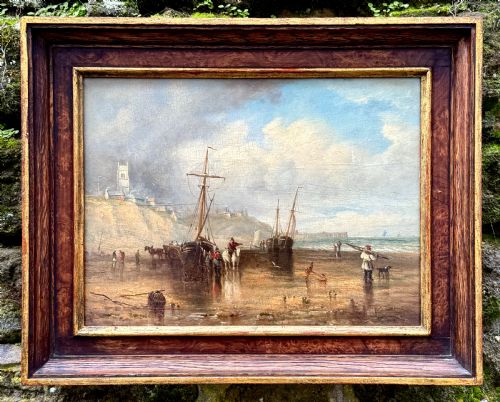
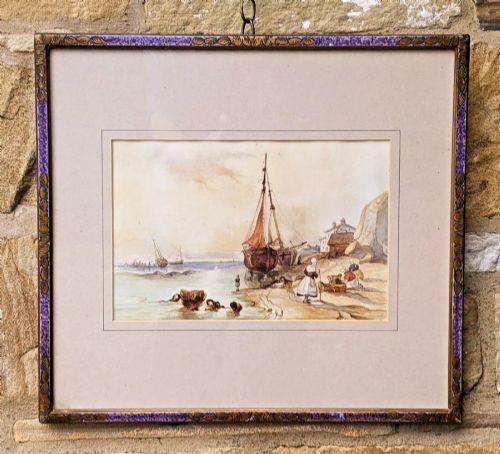
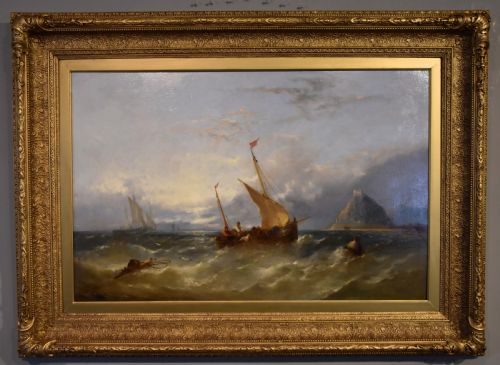
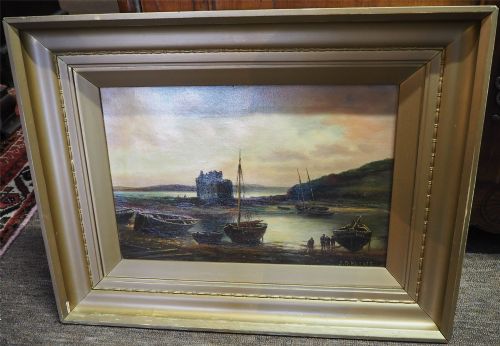
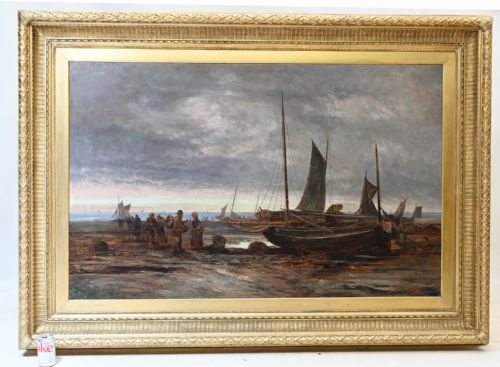
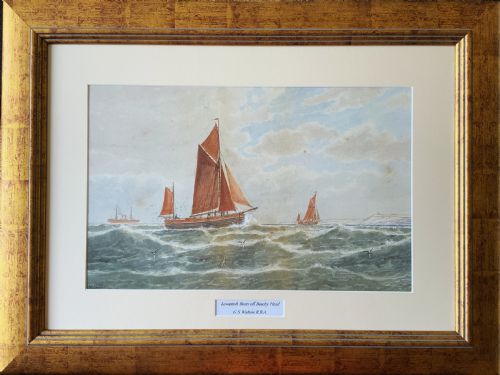
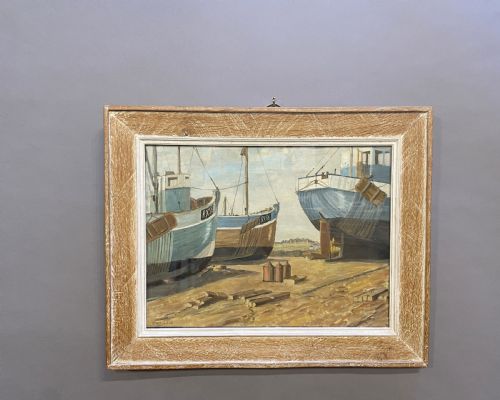
When you search for framed fishing boat art, you encounter maritime oil paintings and watercolours that capture coastal harbours, choppy seas, and working vessels from the nineteenth and twentieth centuries. These works span Victorian marine art, British Impressionism, and Dutch School influences, reflecting the everyday life of fishermen along British and European shores.
You are most likely to meet mid-sized oil paintings on canvas or board, alongside delicate watercolours on paper, all preserved within period giltwood or wood frames. The subjects range from tranquil Cornish harbours at low tide to dramatic stormy seas off the Norfolk coast.
The makers and artists represented include established painters such as Thomas Bush Hardy, Charles Napier Hemy, and Gustave de Bréanski, whose works document maritime heritage with documentary precision and artistic flair.
How they were made
Artists built these coastal scenes using oil paint on canvas or board, or applied watercolours and pastels onto prepared paper and card. Oil pigments provided depth and texture for churning waves and billowing sails, while watercolours offered luminous transparency for atmospheric skies and tidal harbours.
The mounting and framing relied on traditional timber construction, frequently finished with gold leaf gilding that added warmth and presence to the maritime subjects.
The inventory records coastal scenes from Cornwall, Norfolk, Normandy, and the Isle of Man.
What varies in quality
Quality rests primarily in the handling of light and movement, where superior brushwork conveys the genuine weight of a fishing trawler and the restless motion of the sea. Master hands capture accurate marine anatomy and atmospheric tension rather than relying on formulaic waves and generic hulls.
The integrity of the original frame and the preservation of the pigment layer without heavy overpainting also elevate a piece, ensuring the artist's original vision remains undisturbed by time.
James Orrock·Thomas Creswick·William Henry Williamson·George Stanfield Walters·Edward Matthew Elliott·Charles Napier Hemy·William Lee Hankey·Gustave De Bréanski·Pieter Cornelis Dommersen·Thomas Bush Hardy·George Gregory·George Morland·Ernest F Hill·Walter Sweet·Hendrik Yan Wolter
The Framed Fishing Boat Art Glossary
- Oil on Canvas
- Pigments mixed with drying oils applied to a stretched woven fabric support. This technique allowed artists to build rich, textured layers that captured the turbulent weight of the sea.
- Watercolour
- A paint consisting of water-soluble pigments applied to paper. It was frequently utilised by marine artists for its translucent ability to render coastal light and open skies.
- Giltwood
- Wood carved and coated with a thin layer of gold leaf. This finish was standard for framing significant nineteenth-century paintings to enhance their presence on a wall.
- Seascape
- A work of art depicting the sea or marine subjects. These pieces focus on coastal views, harbours, and working vessels rather than inland landscapes.
- Impressionism
- An art style characterised by relatively small, thin yet visible brush strokes and an accurate depiction of light. In marine art, this approach captured the shifting atmosphere of coastal air and water.
Framed Fishing Boat Art: Frequently Asked Questions
How do I hang a heavy framed oil painting?
Ensure your wall fixing is anchored securely into a stud or uses heavy-duty wall plugs suited to plaster or brick. Heavy giltwood frames require picture wire or robust D-rings capable of supporting the combined weight of the wood and canvas.
Position the centre of the artwork at average eye level to create a balanced focal point in your room, and avoid placing it in direct sunlight to protect the oil pigments.
Can I display watercolours in bright rooms?
Watercolours are sensitive to ultraviolet light and can fade if exposed to direct, strong sunlight over long periods. Hang them on interior walls away from direct windows or utilise glass with UV-filtering properties to preserve the pigments.
Keeping the room climate stable also prevents the paper support from buckling or attracting humidity.
How do I distinguish a watercolour from an oil painting?
Oil paintings feature a textured, thicker paint layer that sits on top of canvas or board, sometimes showing visible brush ridges. Watercolours have a flat, transparent quality where the white of the paper shows through thin washes of pigment.
Oils are typically displayed under glass only if unvarnished or very old, whereas watercolours require glass protection to shield the paper surface.
What period do most fishing boat paintings come from?
The majority of these framed maritime works date from the nineteenth and early twentieth centuries, coinciding with the height of British marine painting and coastal documentation. During this era, artists travelled extensively to Cornish and Norfolk harbours to record traditional fishing fleets.
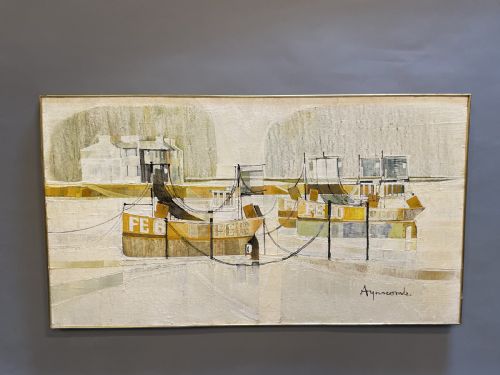
Later mid-century modernist interpretations also appear, offering simplified interpretations of the same working boat subjects.