
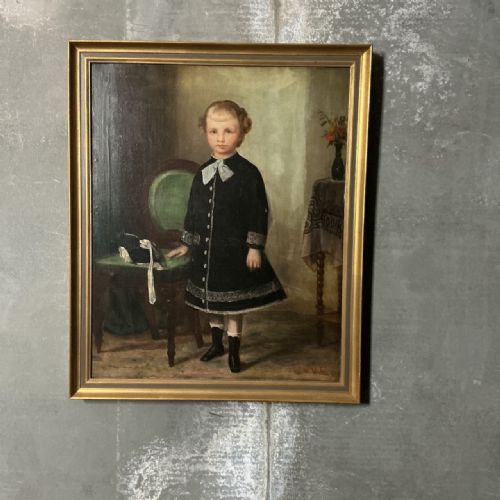
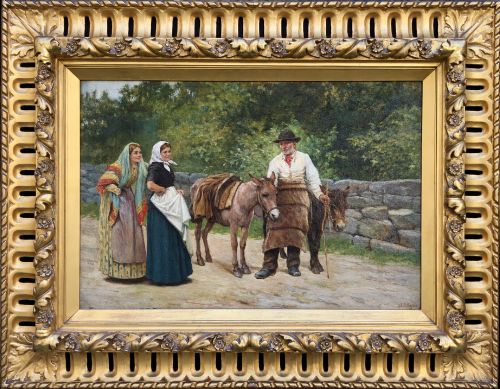
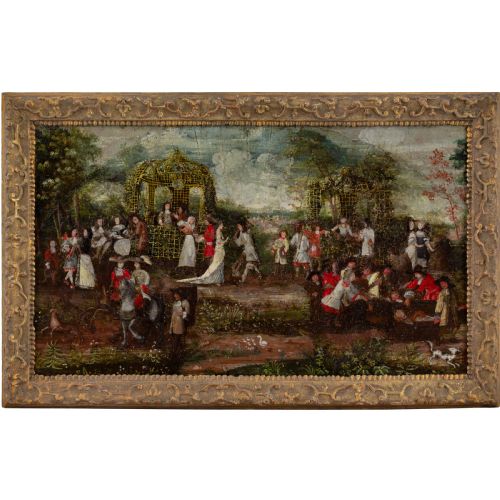
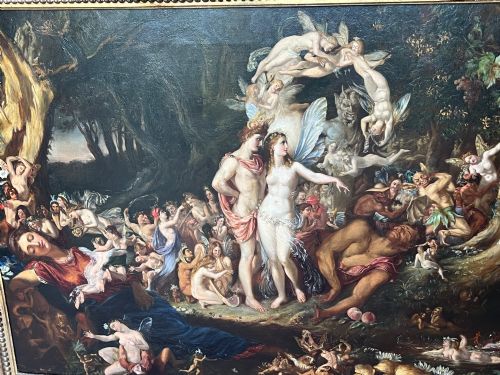
Framed Figurative Canvas Painting
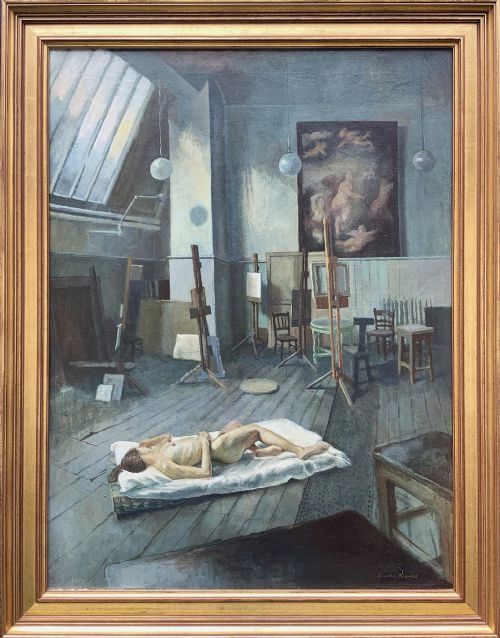
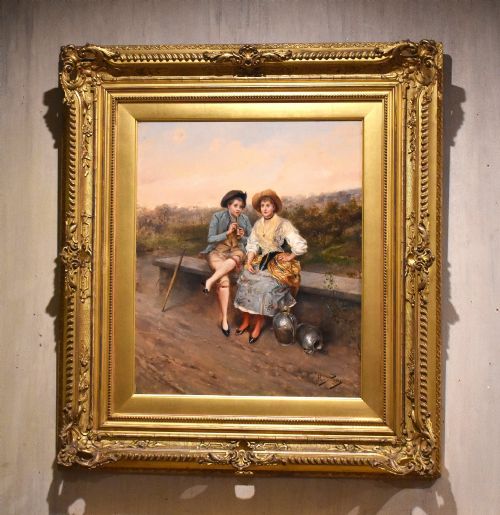
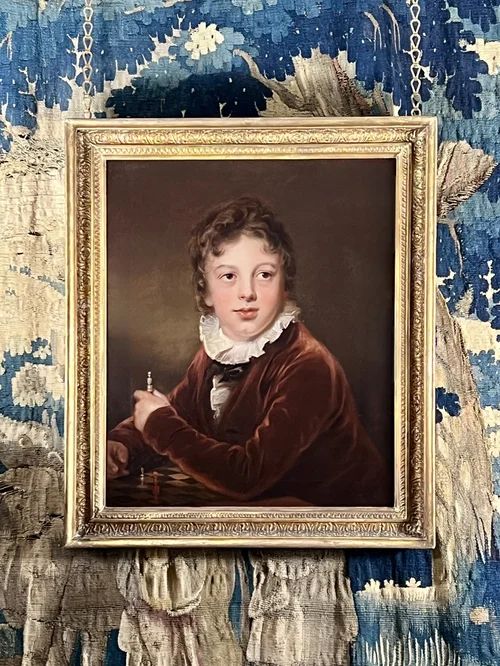
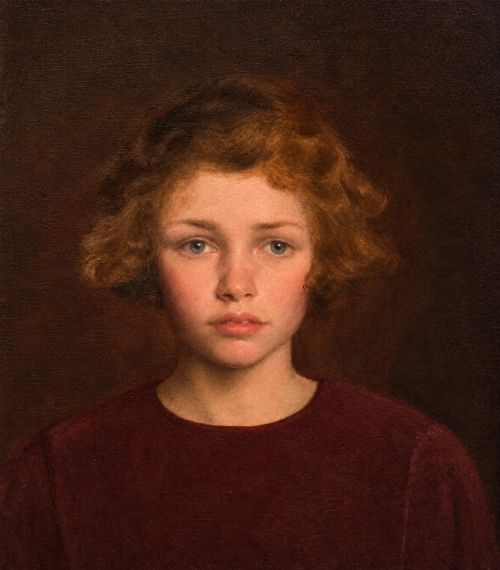
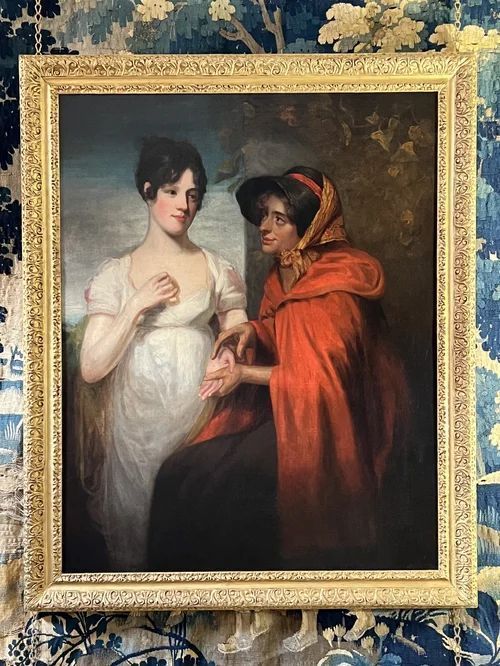
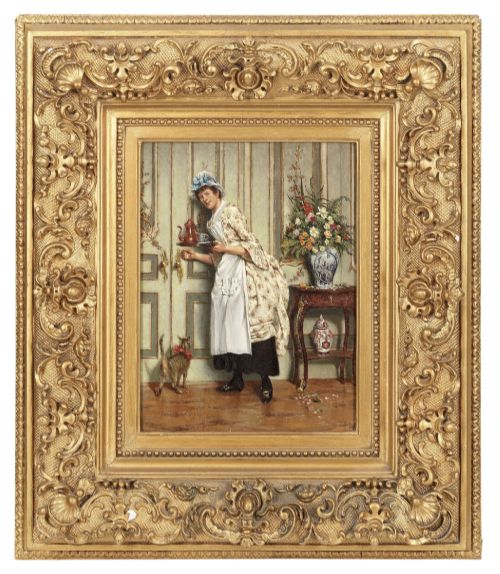
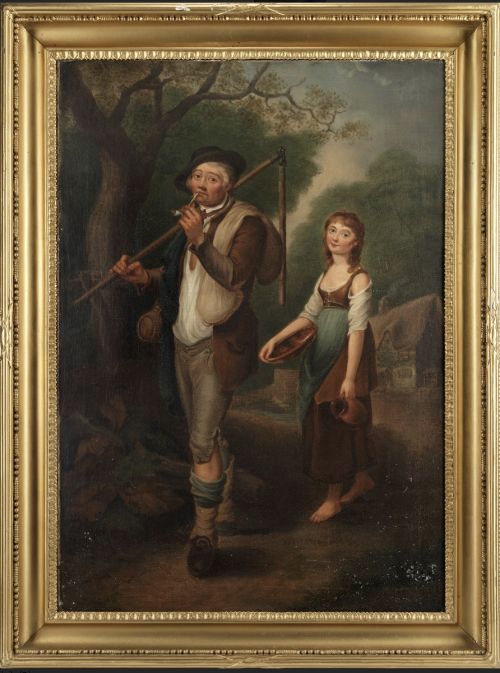
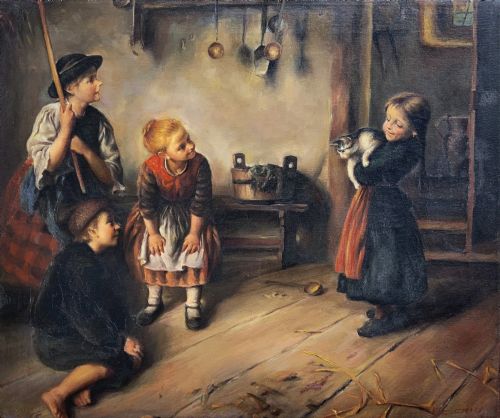
A framed figurative canvas painting brings historical humanity and narrative directly into a room, spanning intimate portraits and lively genre scenes.
Framed Figurative Canvas Painting
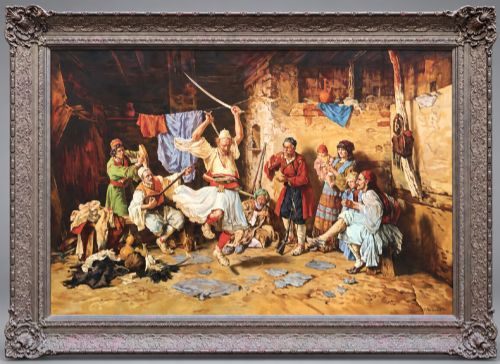
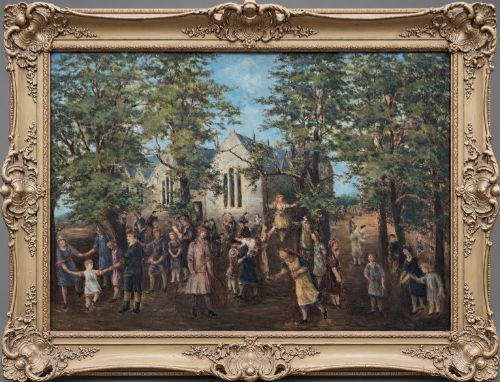
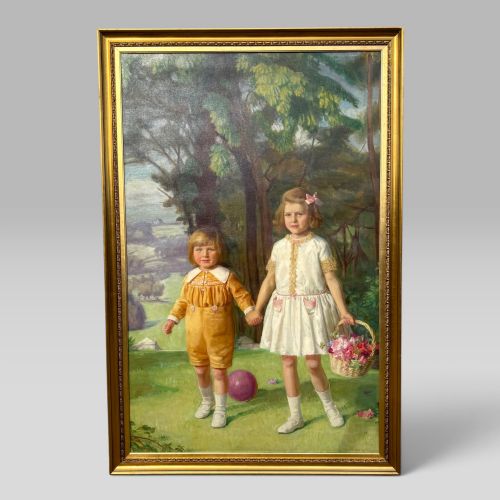
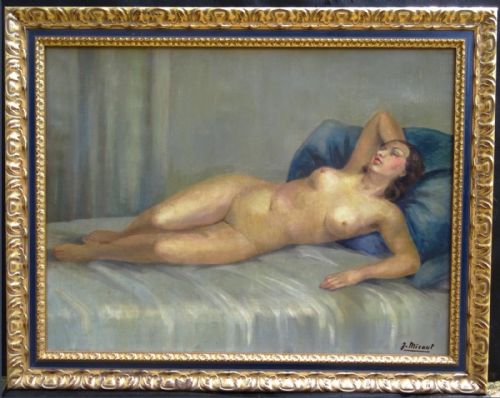
When you search for framed figurative canvas painting, you encounter works depicting people, from single portraits to bustling interior scenes and seaside gatherings. These artworks range from seventeenth-century depictions of gentlemen to mid-century studies of dancers and children, captured by various European and British schools.
The selections on this page are predominantly oil on canvas, housed within period surrounds such as worn gilt frames and wooden mouldings. They document changing social histories, domestic moments, and artistic movements from the seventeenth century through to the mid-twentieth century.
How they were made
Makers built these pieces using woven canvas stretched over wooden frames, providing a stable foundation for the application of oil paint. Pigments were worked with brushes and knives, often layered to build depth in clothing, skin tones, and background shadows.
Surrounds were constructed from wood, then finished with gesso and gilt or left as plain timber mouldings. These frames were designed to protect the perimeter of the canvas while complementing the tonal palette of the artwork within.
Materials recorded across the inventory include oil paint, prepared canvas, gesso, and carved wood frames.
What varies in quality
The ability of the artist to render anatomy, expression, and light accurately dictates the visual strength of each piece. Works by listed academic painters demonstrate superior brush control and psychological depth compared to anonymous school copies or simpler decorative works.
The preservation of the original paint surface and the matching quality of the period frame influence the integrity of the object. Surviving canvases retain their original tension and unretouched pigment layers, whereas heavily restored examples show altered passages.
Felix Stone Moscheles·Constantyn Netscher·Stephen Samuel Lewin·Thomas Barker of Bath·Alfred Lyndon Grace·Howard Helmick·Adelaïde Salles-Wagner·Lucy Pratt·Joseph Biel·Louis Charles Verwee·Charles Stuart Forbes·James Hamilton·Lena Gurr·Henry Windsor Fry·William Oliver·Philippe de Rougemont·Charles James McCall·Umberto Volpato·Valdemar Magaard·Renato Moretti·Jacob Akkersdijk·Philip Naviasky·William Watt Milne
The Framed Figurative Canvas Painting Glossary
- Canvas
- A heavy woven fabric, typically linen or cotton, stretched tightly across a wooden support to serve as the ground for oil paintings.
- Genre painting
- Artwork that depicts scenes from everyday life, ordinary people, and domestic interiors rather than grand historical or mythological subjects.
- Gesso
- A plaster-like mixture applied to wooden frames as a smooth base before gilding or painting.
- Giltwood
- Wood that has been coated with a thin layer of gold leaf or gold paint, frequently seen on antique picture frames.
- Post-Impressionism
- An artistic movement following Impressionism that extends its use of vivid colours and thick application while emphasising geometric forms and expressive content.
Framed Figurative Canvas Painting: Frequently Asked Questions
How do I hang a heavy framed canvas?
These works require secure wall fixings, such as screws placed directly into masonry or wooden wall studs, to support the combined weight of the canvas, wooden stretcher, and heavy frame.
Picture wire should be checked for strength and attached firmly to the frame or stretcher bars rather than relying on old, brittle fixings.
What lighting suits an oil painting?
Display these artworks away from direct, harsh sunlight to prevent the oil pigments and varnishes from fading or yellowing over time. Soft, adjustable picture lights or ambient room illumination help reveal the fine brushwork and rich colours without damaging the canvas.
Maintain stable indoor humidity levels to protect both the wooden stretcher and the paint layer from cracking.
How can I tell the age of a frame?
Older frames often feature hand-carved wooden mouldings, layered gesso showing natural age cracking, and traditional joinery at the corners. Later replacements or reproductions tend to use machine-cut uniform profiles and modern synthetic bonding materials.
The backboards and fixings also provide clues, with handmade nails and old paper tapes indicating earlier periods.
Are unsigned paintings valuable?
Unsigned works can still possess significant artistic merit and historical interest if the execution, subject matter, and materials match known period styles. Many academic and provincial artists did not sign every canvas, leaving attribution to stylistic comparison rather than a signature.
Quality of composition and handling remain the primary indicators of a noteworthy piece.