

Framed Embroidery Picture
A framed embroidery picture brings centuries of needle craft onto the wall, offering tactile depth and vivid historic character.
Framed Embroidery Picture
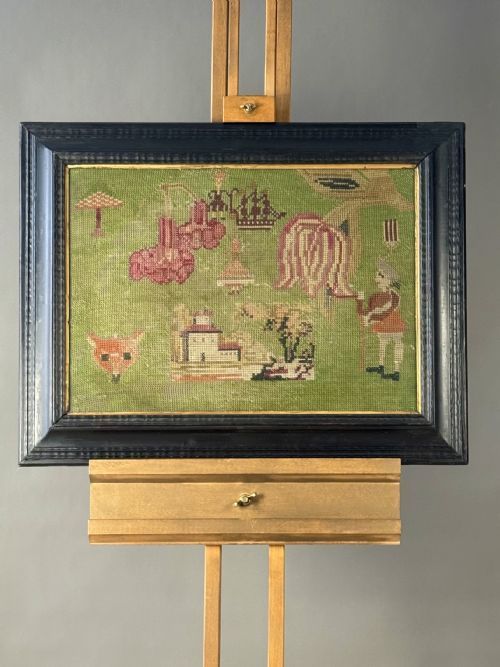
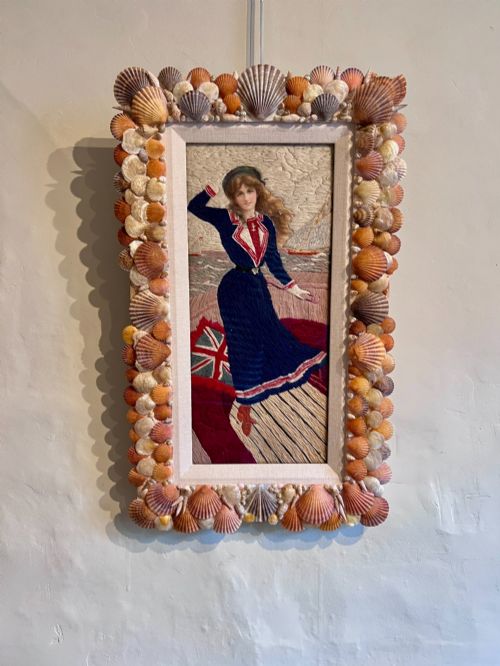
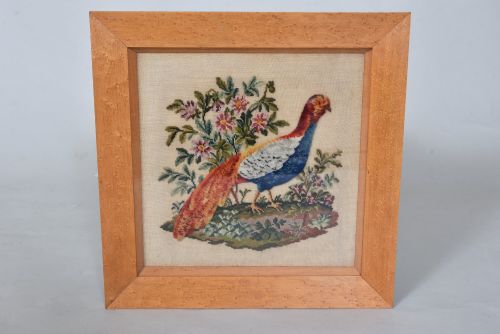
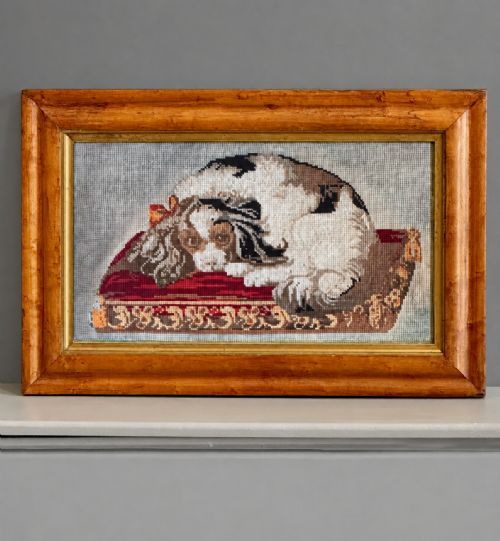
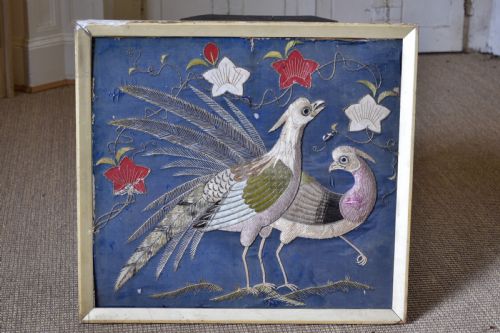
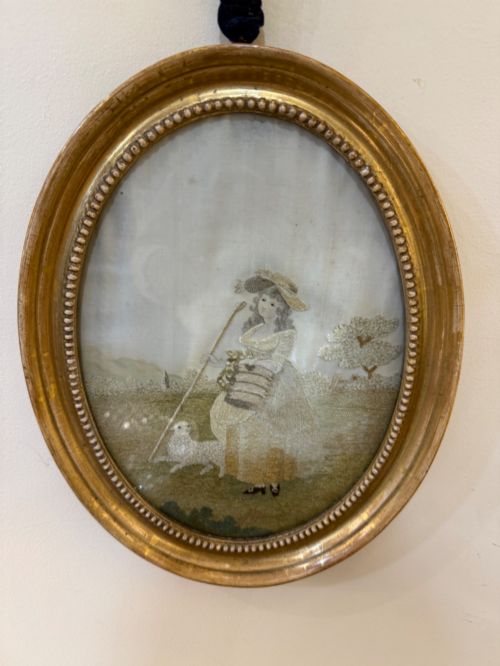
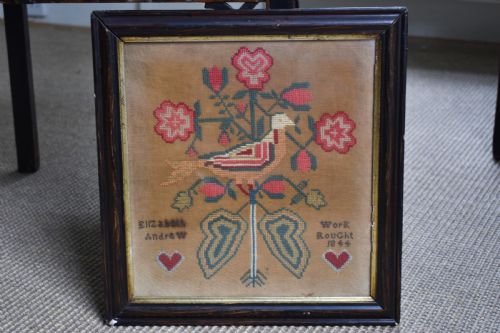
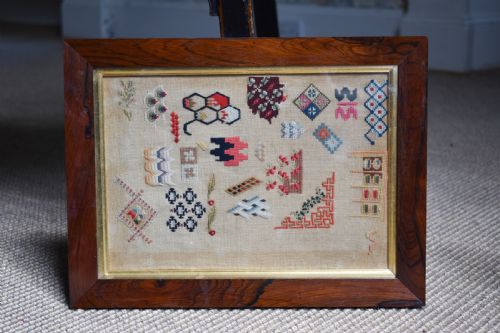
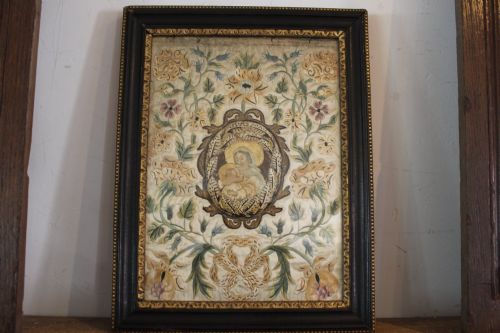
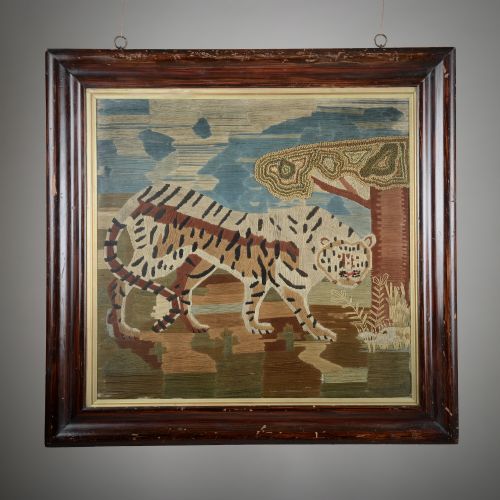
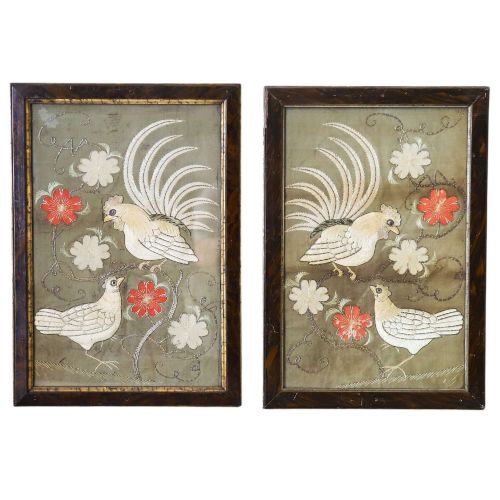
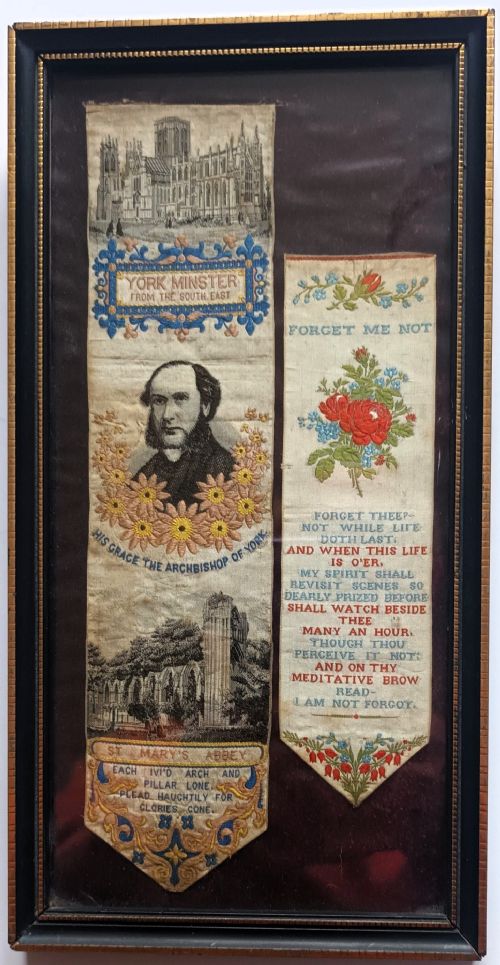
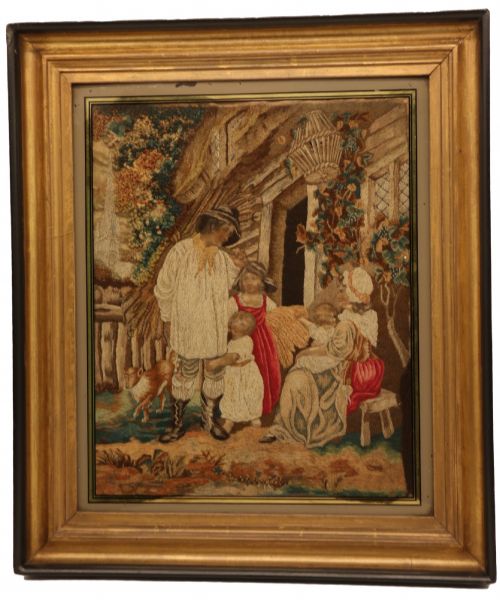
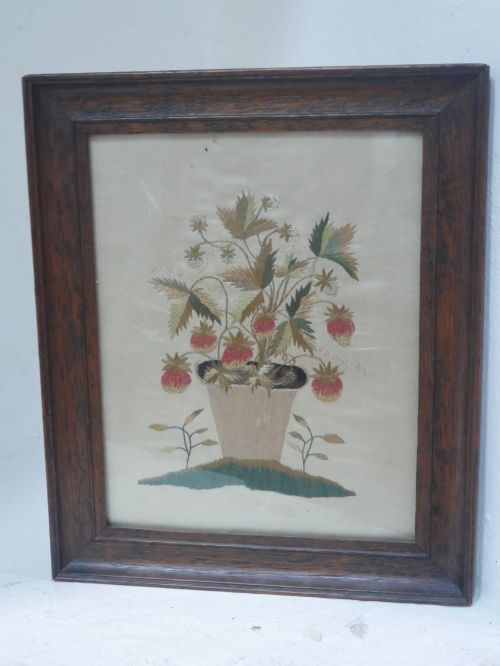
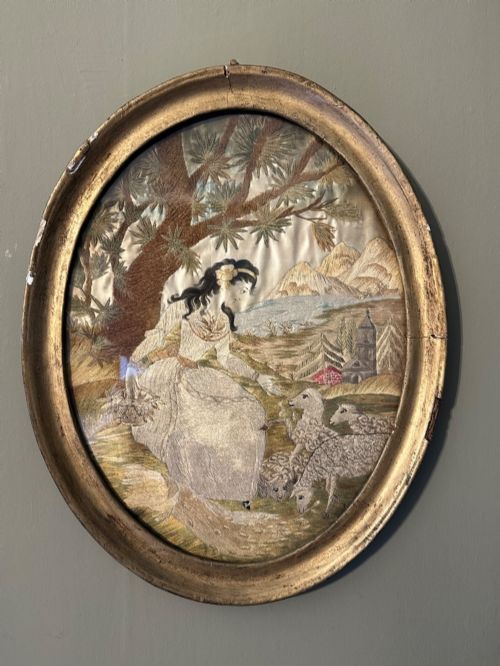
A framed embroidery picture spans several centuries of domestic needlework, encompassing pastoral landscapes, portraiture, and intricate samplers. These wall hanging artworks range from early seventeenth century stumpwork panels to nineteenth century Berlin woolwork and plushwork depictions of animals.
The most frequent examples encountered on this page date from the nineteenth and eighteenth centuries, often executed in silk and wool upon linen or canvas grounds. Pieces vary from naive folk art samplers to finely painted silk pictures framed in burr maple or giltwood.
Materials and construction
Needlework pictures rely on natural fibres such as silk floss, wool yarn, and linen canvas, frequently combined with hand painted silk backgrounds or watercolour details. Artisans utilised varied stitches including long stitch, gros-point, and beadwork to build texture and dimension within the textile.
Original surrounds play a defining role, utilising materials like giltwood, burr maple, and verre églomisé glass to protect and complete the framed embroidery picture.
Current listings feature textile art spanning from the seventeenth century through to the twentieth century, utilising silk, wool, and beadwork.
Judging quality in textile art
Quality rests upon the fineness of the stitch execution, the complexity of the design, and the stability of the textile ground. Early needlework panels demonstrate immense dexterity through padded stumpwork or detailed silk floss rendering, whereas simpler pieces rely on bold wool work impact.
The survival of original framing, whether burr maple or gilt wood, elevates the integrity of a piece, as does the clarity and preservation of the silk or wool colours against light degradation.
Stevens of Coventry
The Framed Embroidery Picture Glossary
- Berlin work
- A style of needlepoint embroidery worked on canvas from printed point paper grids coloured by hand. It gained immense popularity during the nineteenth century.
- Stumpwork
- A raised embroidery style popular in the seventeenth century where figures and motifs are padded over wooden moulds or stump foundations. This technique creates a three dimensional sculptural effect on the panel.
- Verre églomisé
- A process of applying gold or silver leaf to glass combined with engraving and painting on the reverse side. It frequently provides a dark reflective border to nineteenth century frames.
- Plushwork
- A textile technique utilising clipped pile loops to create a raised, velvety surface texture. It appears on Victorian animal and bird depictions.
- Sampler
- A piece of cloth embroidered with various alphabets, numerals, and stitches to demonstrate needlework proficiency. They often record dates and maker names.
Framed Embroidery Picture: Frequently Asked Questions
How do I date an antique embroidery?
Dating relies upon the stitching technique, the fabric ground, and any inscribed dates or alphabets. Seventeenth century panels often feature stumpwork, whilst nineteenth century pieces favour Berlin woolwork.
Material analysis of the silk or wool threads and the style of the original frame also offer reliable chronological markers.
What is Berlin work?
Berlin work is a type of needlepoint embroidery charted on squared paper that became fashionable in the nineteenth century. It allowed stitchers to create intricate pictorial scenes using brightly coloured wools.
These pieces typically display rich floral designs or narrative subjects such as animals and historical figures.
How should I hang silk needlework?
Silk embroidery requires protection from direct sunlight to prevent the delicate floss from fading. Position pieces on interior walls away from windows and heat sources.
Ensure the frame is properly sealed with glass to keep dust and atmospheric moisture away from the historic textiles.
Are samplers always signed?
Many samplers include the maker name, age, and date stitched directly into the border or base of the composition. Schoolgirl samplers frequently display this personal documentation.
Other historical embroidered panels remain anonymous, reflecting domestic production rather than signed workshop output.