



Framed Embroidered Picture
These framed embroidered picture examples span centuries of textile art, offering a glimpse into domestic needlework traditions preserved beneath glass in period frames.
Framed Embroidered Picture
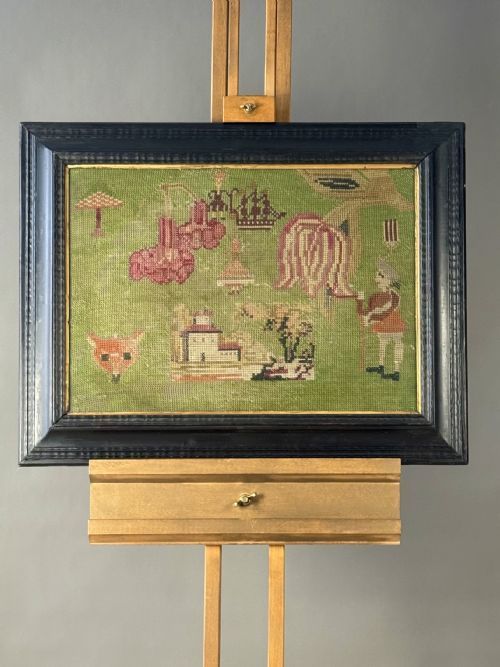
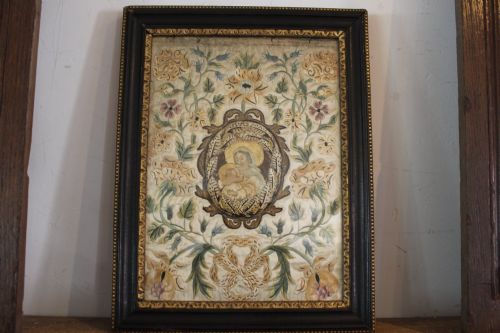
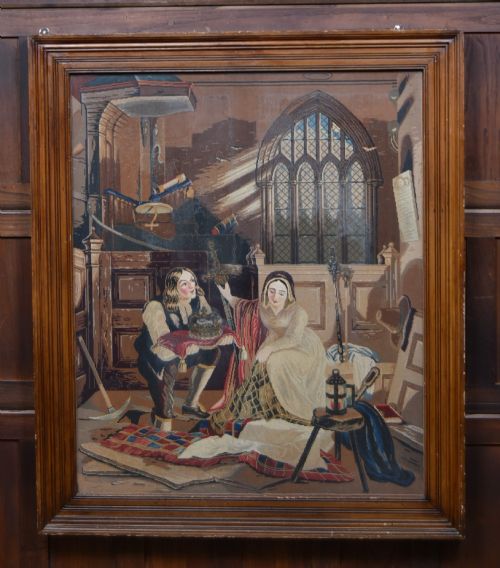
When searching for a framed embroidered picture, buyers encounter wall art ranging from seventeenth-century stumpwork panels to nineteenth-century woolwork pictures and samplers. These pieces combine textile art with protective wood or gilt frames, preserving historical needlework for display.
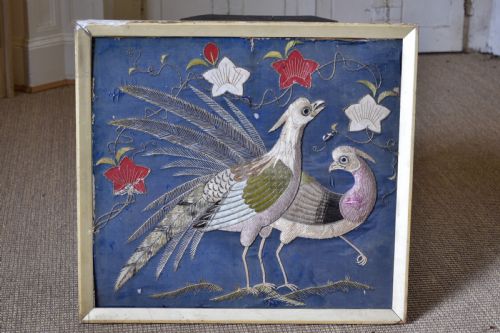
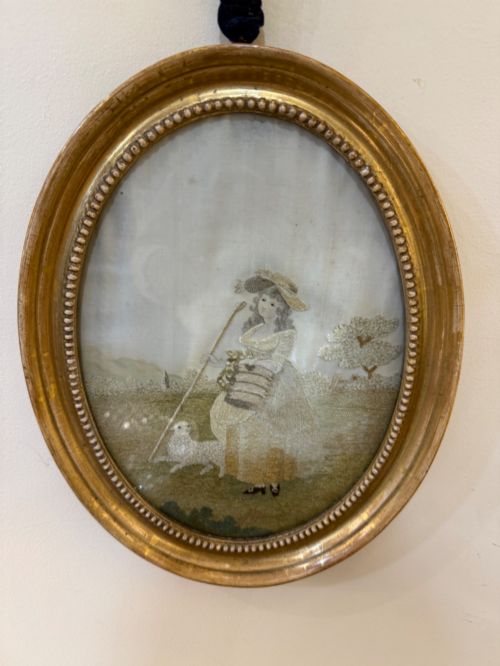
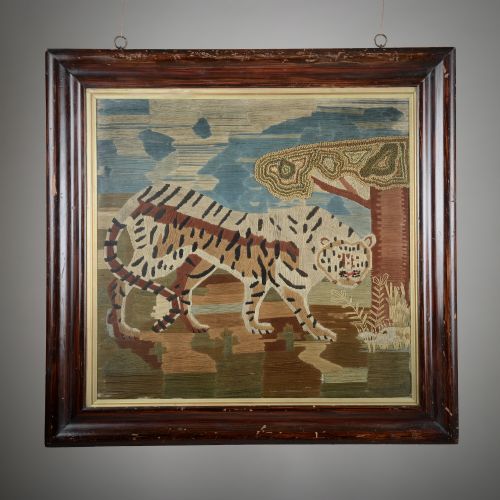
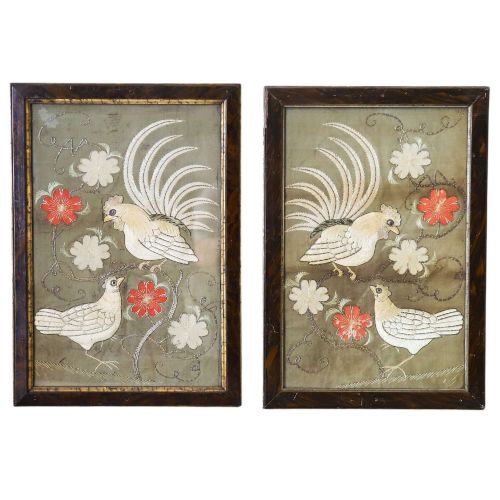
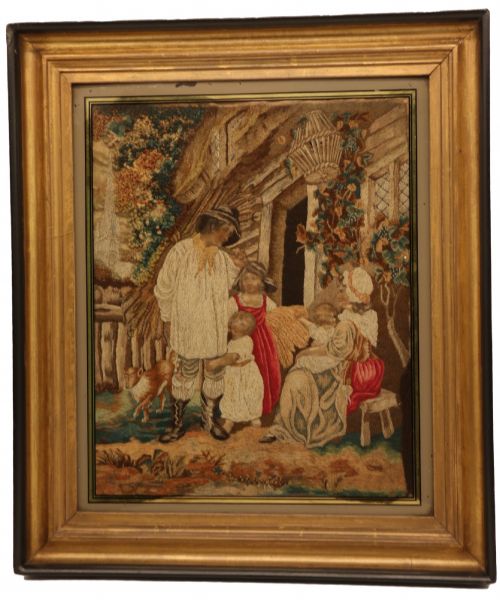
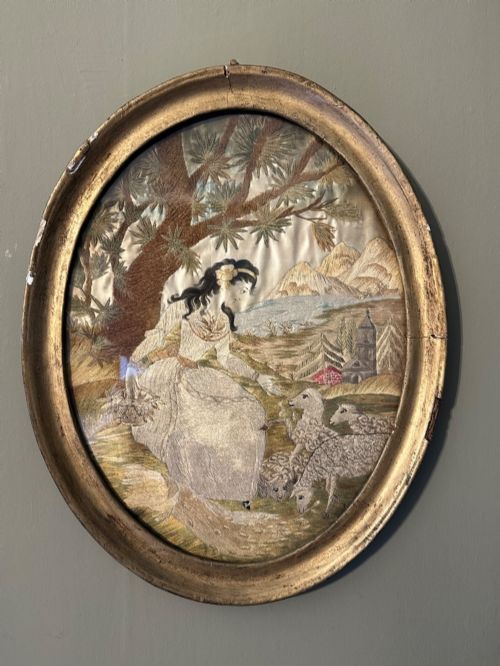
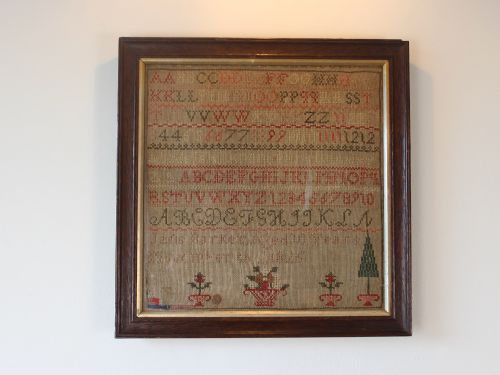
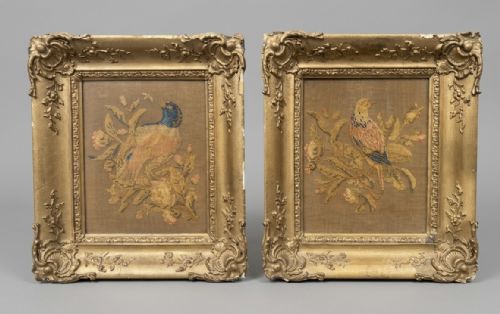
The nineteenth-century examples appear most frequently on this page, often depicting pastoral scenes, birds, animals, or alphabet samplers worked in silk and wool. Alongside these, earlier pieces from the seventeenth and eighteenth centuries bring complex iconography and raised stumpwork into the category.
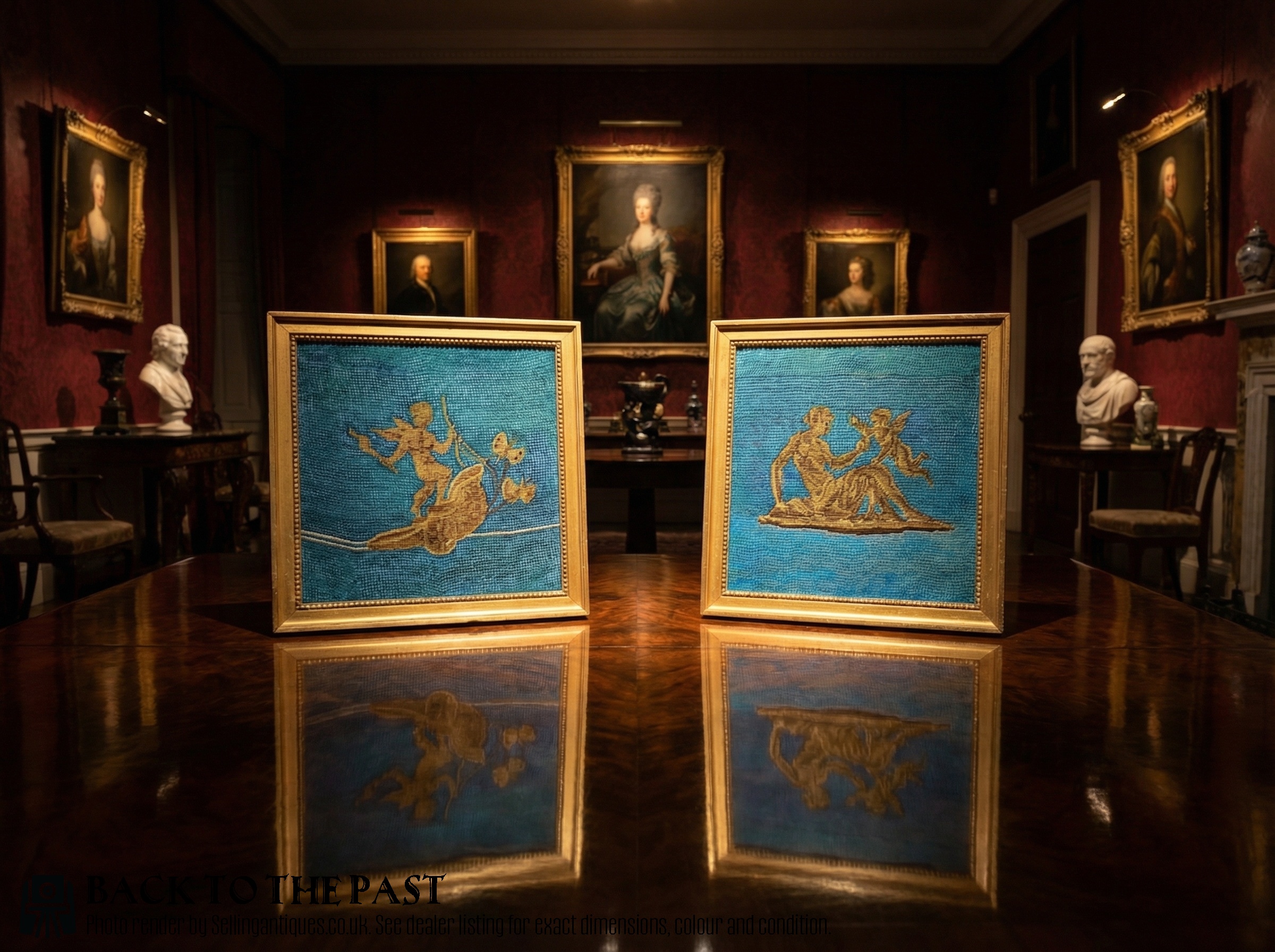
Makers and makers' hands include young scholars working schoolgirl samplers as well as skilled artisans producing silk embroidery panels in Baroque or Chinoiserie styles. The forms stretch from small oval frames to large tapestry hangings and framed beadwork fragments.
Materials and technique
Stitches vary from simple long and short stitch to intricate gros-point and raised stumpwork padding. Once completed, these textiles were mounted within wood, giltwood, or faux tortoiseshell frames, often protected behind glass.
Stumpwork figures often feature tiny carved wooden heads wrapped in silk, peering out from the fabric with surprising realism.
What varies in quality
The skill of the needlework separates ordinary school exercises from masterworks of textile art. Fineness of detail in silk floss or wool work, combined with the preservation of colour and the stability of the ground material, dictates the standing of a piece.
Original framing adds significantly to the character of a piece, particularly when held in period gilt frames or verre églomisé glass mounts that complement the age of the textile.
The Framed Embroidered Picture Glossary
- Stumpwork
- A raised embroidery style popular in the seventeenth century, using padded underlays to create three-dimensional figures and motifs. It often depicts historical or biblical scenes.
- Sampler
- A piece of needlework produced to demonstrate proficiency in various stitches and alphabets. These frequently include dates and the maker's age.
- Verre Églomisé
- A process of applying gold or silver leaf to glass and etching a design into it. Frames using this technique surround the picture with a decorated glass border.
- Gros-point
- A type of counted thread embroidery executed on canvas using a coarse wool yarn. It produces durable tapestries with bold pictorial depth.
- Silk Floss
- Unspun silk fibres used to create smooth, glossy stitches with a high sheen. It appears frequently in Georgian and Regency pictorial needlework.
Framed Embroidered Picture: Frequently Asked Questions
Are these pieces original or reproductions?
The inventory consists of period works spanning the seventeenth through to the early twentieth centuries. Materials, stitching techniques, and framing correspond to their stated eras.
Checking the reverse of the frame and the condition of the ground linen or canvas helps confirm the age of the textile.
How were these pictures displayed originally?
Needlework pictures were framed and hung in parlours and drawing rooms to display the accomplishments of household members. Wealthy patrons commissioned professional silk embroideries for interior decoration.
Smaller samplers served as educational exercises before being mounted and kept as family records.
What subjects do these embroideries show?
Motifs range from religious figures and classical portraits to pastoral farming scenes and racing tracks. Animals also feature prominently, including birds, cockerels, and hunting dogs.
Map samplers and alphabet pieces provide historical records of geography and domestic education.