

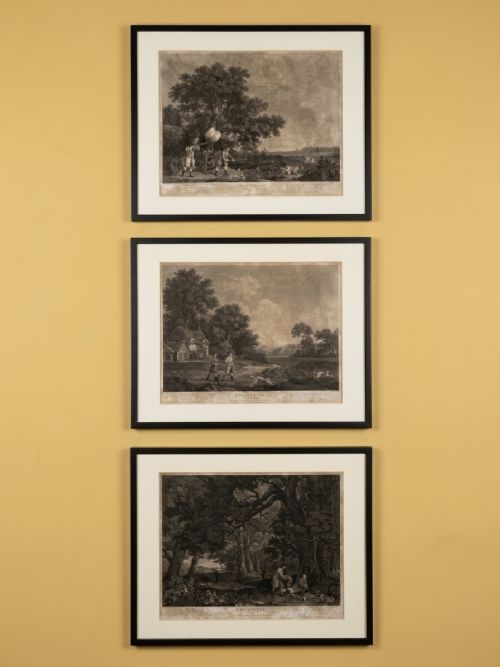
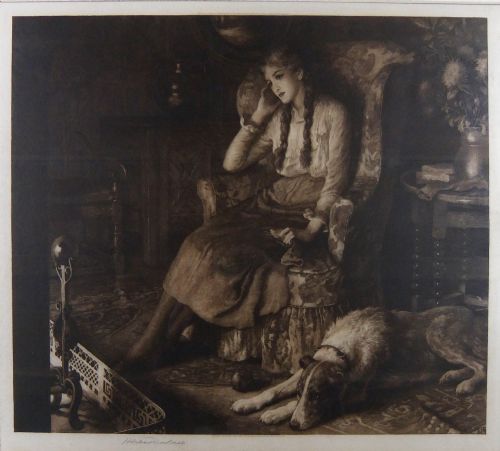
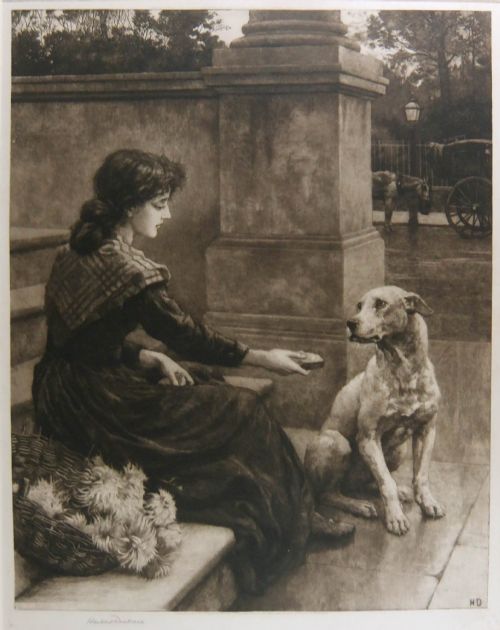


Framed Dog Etching
A framed dog etching brings character to a room, capturing canine personality through fine ink lines on paper preserved behind glass.
Framed Dog Etching
A framed dog etching represents a distinct intersection of canine art and printmaking history, spanning from the eighteenth century through the early twentieth century. Buyers encounter works rendered in Georgian, Victorian, and Edwardian styles, alongside early twentieth century realism and English country house aesthetics.
The material composition of these pieces consists of paper, ink, wood, and glass. Etchings and prints appear alongside wall art categorisations, forming a cohesive group of framed works that focus primarily on hounds, terriers, and bulldogs.
The selection here draws heavily from the early twentieth century, particularly works associated with Herbert Dicksee, alongside eighteenth century engravings after George Stubbs and nineteenth century studies of notable bulldogs.
Materials and construction
Makers utilised paper sheets to receive the inked impressions pulled from metal plates, employing techniques that include standard etching and drypoint. The resulting lines capture the texture of dog coats and the subtle expressions of various breeds with notable precision.
Finished works are housed within wooden frames and protected behind glass panels. This traditional method of framing preserves the delicate paper and ink surfaces from environmental degradation over the decades.
Framed Dog Etching Retail Price Guide 2026
Typical asking prices for framed dog etching among the pieces listed under this phrase on Sellingantiques today, from the lower quarter to the upper quarter. They describe what is for sale here now, not the wider market.
Listings span four distinct centuries, utilising paper, ink, wood, and glass across Georgian, Victorian, and Edwardian aesthetic traditions.
Distinctions in quality
Quality rests upon the strength of the impression pulled from the plate and the clarity of the lines on the paper. Stronger impressions exhibit deeper contrast and sharper detail in the rendering of the canine subject.
The condition of the paper and the preservation provided by the wood and glass housing influence the overall standard of the piece. Works that retain their original tonal depth without excessive fading demonstrate superior craftsmanship and survival.
William Woollett·George Stubbs·Herbert Dicksee·Blockey
The Framed Dog Etching Glossary
- Etching
- A printmaking process where acid bites lines into a metal plate to hold ink. This technique allows for fine, fluid lines that resemble hand drawings.
- Drypoint
- A printmaking method where an artist scratches directly into the metal plate with a sharp needle. This creates a raised burr that yields rich, velvety lines when inked.
- Engraving
- A technique where an artisan cuts lines directly into a hard plate using a burin. The resulting prints offer crisp and precise geometric detail.
- Paper
- The thin sheet material receiving the ink impression during the printing process. Historic examples utilise rag-based stocks suited for long-term preservation.
Framed Dog Etching: Frequently Asked Questions
What is a drypoint etching?
A drypoint etching involves scratching the image directly into a metal plate with a sharp point rather than using acid. This method produces a distinctive burr on the plate edge that transfers a rich, soft quality to the ink on paper.
Such works often display deep texture in the depiction of animal fur and are typically found behind glass in wooden frames.
How do I date these pieces?
Dating relies on the stylistic markers of the period, the specific artist signatures, and the overall aesthetic of the framing and paper. Pieces from the eighteenth century often reflect classical engraving traditions, while Edwardian examples lean toward realistic portraiture.
Examining the paper type and printing technique also helps place the work within Georgian, Victorian, or early twentieth century eras.
Where should I hang them?
These framed works suit studies, hallways, and living rooms where traditional English country house aesthetics are desired. Their modest scale allows them to be grouped together or hung individually in smaller wall spaces.
Placement should avoid direct sunlight to protect the ink and paper surfaces behind the glass.
How do I care for the glass and frame?
Maintenance involves dusting the wooden frame regularly and cleaning the glass with a mild cleaner applied to a cloth rather than directly to the surface. This prevents moisture from seeping under the edge of the glass and damaging the paper.
Keeping the piece away from damp environments ensures the wood and paper remain stable over time.