


Framed Dog Art Print
A framed dog art print captures canine character through Victorian and early twentieth century engravings, etchings, and paintings.
Framed Dog Art Print
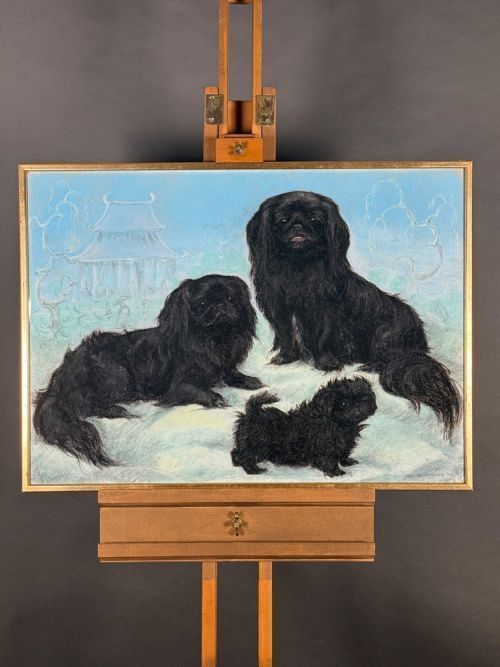
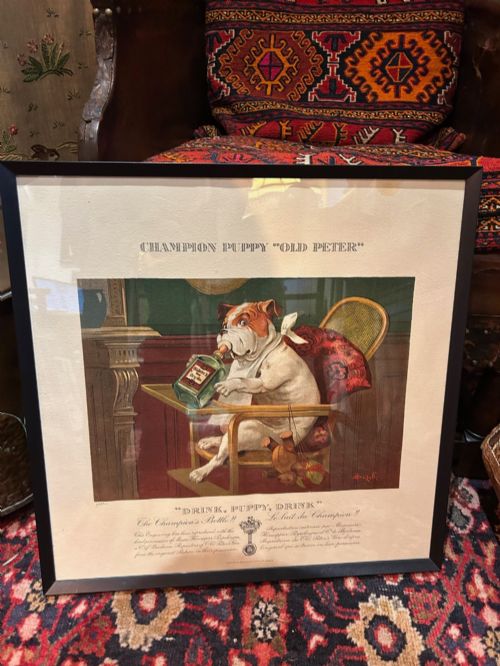
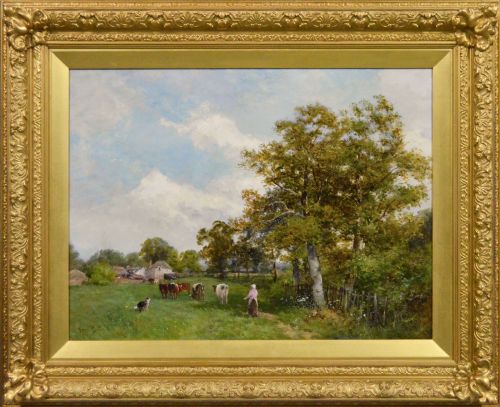
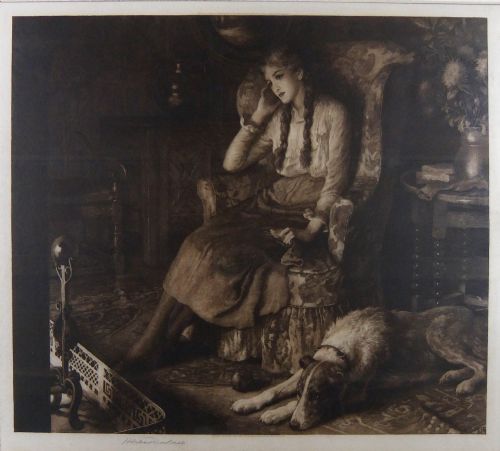
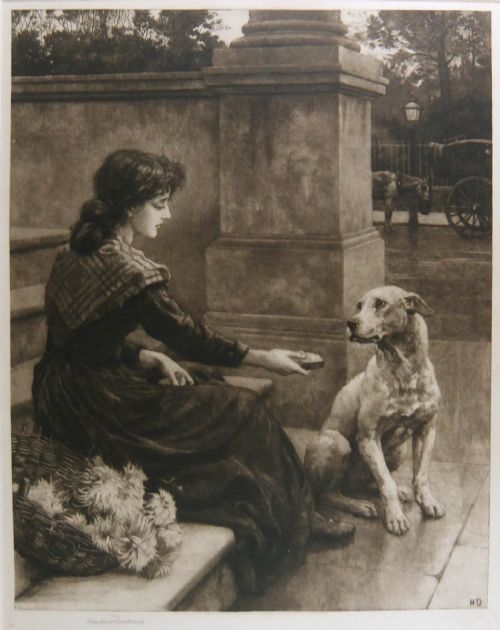
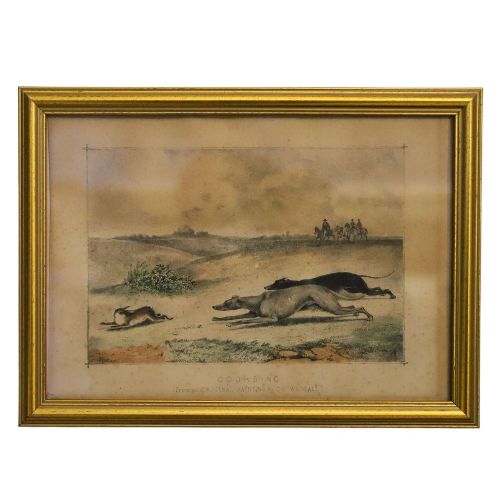
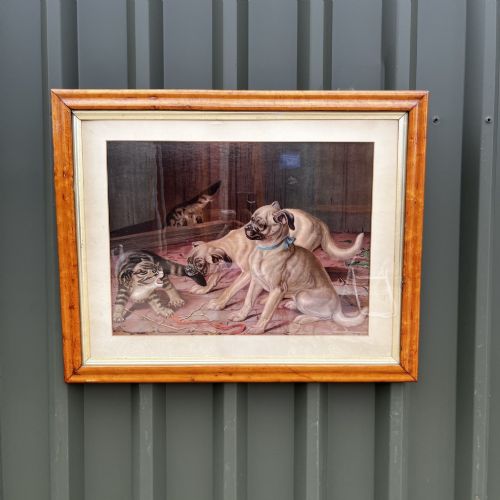
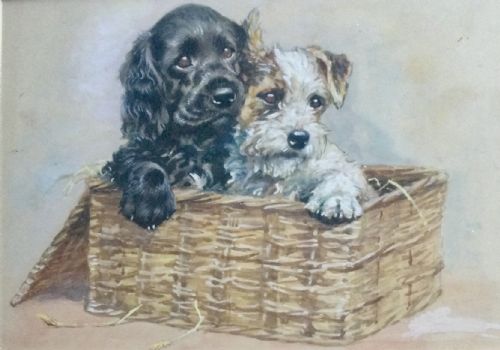
A buyer examining a framed dog art print encounters a diverse selection ranging from nineteenth century engravings and chromolithographs to early twentieth century original etchings. These pieces capture sporting subjects, pastoral scenes, and intimate animal portraits across various historical periods.
The selections available on this page lean heavily toward framed prints and etchings alongside original pastel drawings, watercolours, and oil paintings. Works from the Victorian era and the early twentieth century dominate the selection, offering framed presentations ready for display.
Subjects stretch from working gun dogs and bull terriers to Pekingese and greyhounds, reflecting centuries of affection for hounds and working breeds. Each framed piece preserves a specific historical technique, whether through delicate drypoint lines or rich colour lithography.
Materials and techniques
Makers utilised paper surfaces for delicate ink etchings, drypoints, lithographs, and pastels, while others applied oil paint directly onto canvas. These graphic works and paintings rely on traditional media applied by hand or press.
Framing materials incorporate wood, giltwood, and glass to protect the paper and canvas components from environmental damage. Original frames often complement the period of the artwork, enclosing the image securely behind glass.
The listings span the Victorian, Edwardian, and Art Deco eras, utilising paper, canvas, glass, and giltwood.
Evaluating quality and condition
Quality separates through the crispness of the impression in etchings and engravings, where earlier pulls retain finer detail than worn later strikes. The artist's hand, particularly in signed works, elevates the status of the piece significantly.
The preservation of the paper and the integrity of the original frame contribute heavily to overall desirability. Clean margins on prints and stable paint surfaces on canvases indicate superior care over the decades.
Marcellin Auzolle·David Bates·Herbert Dicksee·C. H. Weigall·Horatio Henry Couldrey·Mabel Gear·G Morland·Florence Mabel Hollams·Charles Burton Barber·Landseer·Sonia Lawson R.A.·Jules Le Roy
The Framed Dog Art Print Glossary
- Etchings
- Intaglio printmaking methods where lines are bitten into a metal plate with acid before being inked and pressed onto paper. These produce fine, detailed tonal lines.
- Chromolithography
- A planographic colour printing technique using multiple limestone blocks to build up rich hues. This process created vibrant Victorian reproductions of paintings.
- Drypoint
- A printmaking process where an artist scratches directly into a metal plate with a sharp needle, creating a distinctive burr that holds ink for velvety lines.
- Giltwood
- Wood carved and coated with gold leaf or gold paint to form decorative frames. This material provides a traditional polished border for antique artworks.
- Pastel
- A dry medium composed of powdered pigment and a binder, rubbed directly onto paper. It yields soft textures well suited to intimate animal portraits.
Framed Dog Art Print: Frequently Asked Questions
How do I date a framed dog print?
Examine the printing technique, paper type, and framing style to establish an approximate era. Signatures and publishing details on the margin often provide specific dates or artist active periods.
Compare the subject's breed characteristics and attire with historical fashion and breeding standards of the nineteenth and twentieth centuries for further confirmation.
What is the difference between an etching and a lithograph?
Etchings involve incising lines into a metal plate with acid, producing raised ink lines that sit slightly proud of the paper. Lithographs are printed from a flat stone or metal surface treated to repel ink where no image is required.
Under magnification, an etching shows distinctive plate marks and ink texture, whereas a lithograph displays a smoother pattern of tiny dots or flat colour areas.
How should I care for antique paper art?
Keep framed pieces away from direct sunlight to prevent fading of inks, watercolours, and pastel pigments. Maintain stable indoor humidity levels to protect the paper from warping or foxing.
Ensure the glass does not touch the paper surface directly, as trapped moisture can cause permanent damage to the artwork underneath.
Are these prints original antique works?
Many listings feature original period productions, such as early twentieth century etchings and nineteenth century lithographs or engravings printed close to the stated date. Some pieces represent vintage printing after earlier masters.
Check the individual listing details to confirm whether the item is a contemporary period print or a later reproduction.