






Framed Country Estate Painting
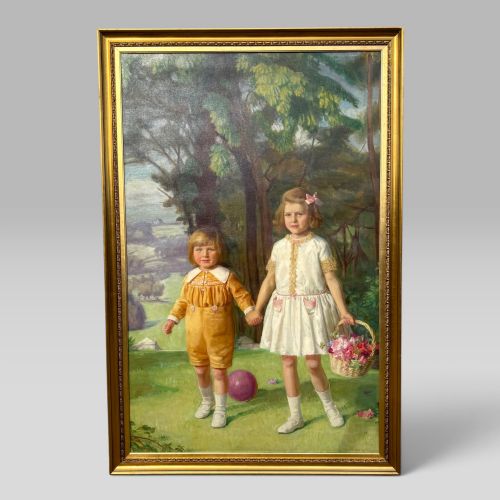
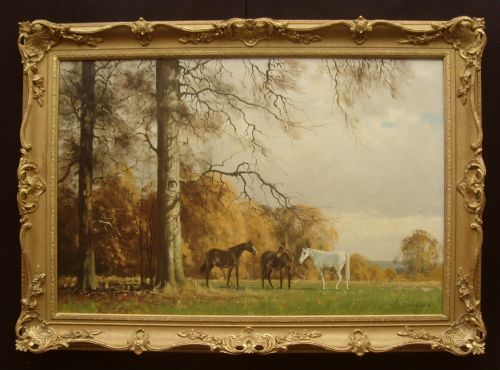
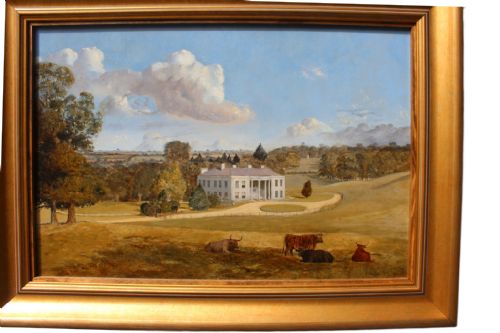
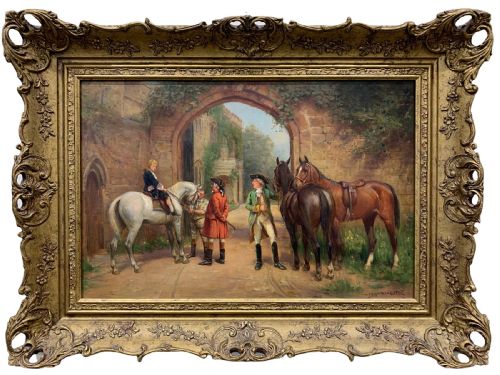
Framed country estate painting works capture historic houses, stables, and parklands in oil paint and canvas, offering a direct view into landed gentry life.
Framed Country Estate Painting
A framed country estate painting depicts significant British and European seats, from grand castles and ducal halls to rural manors and hunting stables. These works record historic properties such as Arundel Castle, Trentham Hall, and Newstead Abbey alongside their surrounding parklands and lakes.
The selections available here span from the eighteenth century through the Victorian and Edwardian eras, capturing shifting architectural tastes and landscape designs. Alongside large oil paintings on canvas, buyers encounter works on paper utilising monochrome ink and watercolour.
Many of these paintings document specific estates with named horses, hunts, and royal or aristocratic figures. They function simultaneously as fine art and historical records of landed wealth.
How they were made
Artists painted primarily with oil paint on stretched canvas or applied monochrome ink and watercolour to paper. Canvases are housed in period frames constructed from wood, including gilded wood and gilt wood.
Techniques range from detailed British sporting art conventions to broader topographical studies of country seats. Protected behind glass in many instances, works on paper preserve delicate wash and ink details.
Framed Country Estate Painting Retail Price Guide 2026
Typical asking prices for framed country estate painting among the pieces listed under this phrase on Sellingantiques today, from the lower quarter to the upper quarter. They describe what is for sale here now, not the wider market.
A painted royal coach party pauses by an ornamental lake and fountain while horses and hounds gallop through centuries of landed estate history.
What varies in quality
The distinction between works rests upon the skill of the hand and the documentary value of the subject matter. Superior pieces offer accomplished brushwork and specific, identifiable architectural or equine records rather than generic rural scenes.
Frame craftsmanship also defines the tier of a piece, with period gilded wood frames contributing significantly to the object's historic integrity. The reputation of the recorded artist or the historical importance of the depicted estate elevates the standing of the work.
Clifton Tomson·Samuel Sidley·James Canter·John Sanderson Wells·Robert Thomas Buttery·Fred Merriman·Martin Pierre Denis
The Framed Country Estate Painting Glossary
- Oil on Canvas
- Pigments bound in a drying oil applied to a woven fabric support. This traditional medium allowed artists to achieve rich colour depth and lasting durability.
- Gilded Wood
- Timber treated with a thin layer of gold leaf or metallic powder. It provides a decorative and protective border for historic artwork.
- British Sporting Art
- A genre focusing on horses, hounds, hunts, and rural pursuits. These works document country estate life through the lens of field sports.
- Monochrome Ink
- A drawing medium employing a single colour of ink, often paired with watercolour washes. It was frequently used for detailed topographical renderings.
- Topographical Painting
- Art that accurately records specific geographical locations and architectural landmarks. Such pieces serve as visual archives of historic country houses.
Framed Country Estate Painting: Frequently Asked Questions
What periods do these paintings cover?
The works span from the eighteenth century through the Regency, Victorian, and Edwardian periods up to the early twentieth century. This timeline captures evolving artistic styles across two hundred years of country house depiction.
Buyers encounter both formal eighteenth-century topographical views and lively Victorian or Edwardian sporting scenes set against historic parklands.
Are all the depicted estates British?
While the majority of listings feature prominent British houses such as Arundel Castle, Gwydir Castle, and Newstead Abbey, continental subjects also appear. European country seats, including French royal châteaux, form part of the broader selection.
Each piece roots itself in a specific geographic and architectural context, whether in rural England or abroad.
How do I identify the subject of a painting?
Titles and historical records frequently name the specific house, estate, or parkland depicted, alongside notable figures, hunts, or horses. Reference to archives helps connect visual representations to actual architectural history.
Signatures from recorded painters further assist in tracing the provenance and context of the work.