





Estate Landscape Painting
An estate landscape painting captures notable country houses and their grounds, offering a direct view into historic British and continental properties.
Estate Landscape Painting
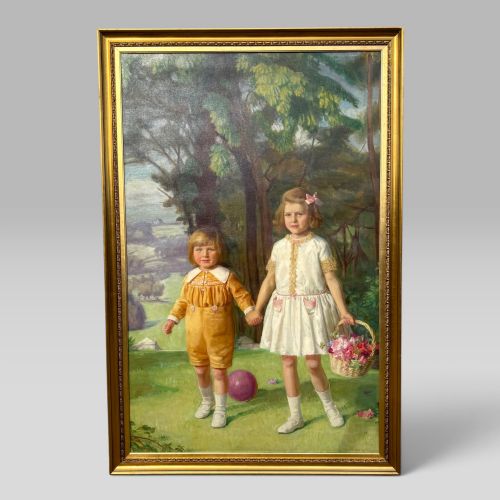
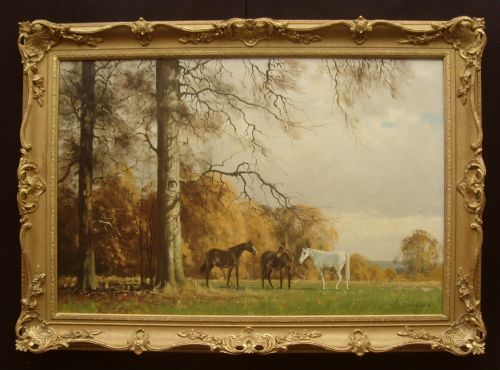
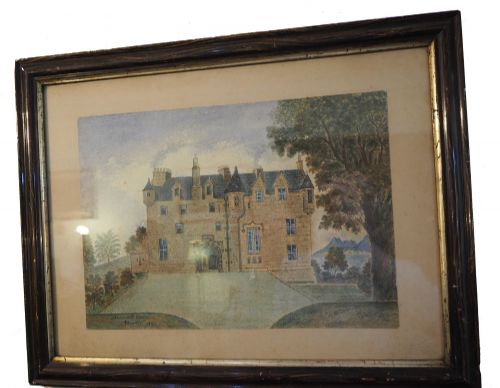
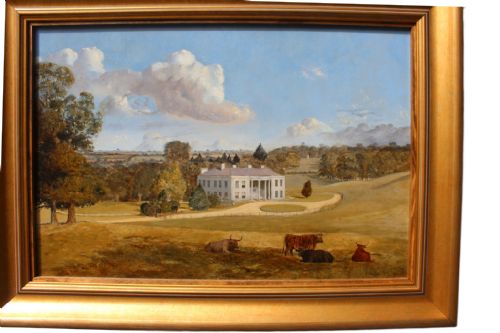
An estate landscape painting depicts specific country houses, castles, and their surrounding parklands, often commissioned by landowners to record their estates. When you search for this phrase, you encounter works spanning the eighteenth, nineteenth, and early twentieth centuries, capturing notable properties from Skelmorlie Castle to Newstead Abbey. These pieces frequently record historic seats, parks, lakes, and local landmarks.
The objects on this page appear primarily as oil paintings on canvas or wood panel, alongside watercolours on paper. Many retain their original frames in gilded wood or gilt wood, which complement the domestic interiors they originally hung in. The subjects range from expansive prospects showing cattle in the park to detailed portraits of country house architecture.
Distinguishing quality across works
Quality in an estate landscape painting rests on the precision of the architectural draughtsmanship and the artist's ability to render light and atmosphere across the parkland. Finer examples capture specific topographical details of named houses like Gwydir Castle or Trentham Hall with clarity, while lesser works rely on formulaic foliage and generalized buildings.
The handling of figures and animals within the landscape also marks the distinction between competent studio output and superior artistry. Works by recorded painters or recognised followers demonstrate careful composition and confident brushwork in the depiction of horses, cattle, and estate staff.
Estate Landscape Painting Retail Price Guide 2026
Typical asking prices for estate landscape painting among the pieces listed under this phrase on Sellingantiques today, from the lower quarter to the upper quarter. They describe what is for sale here now, not the wider market.
Several country house views include miniature herds of cattle and passing royal coach parties that quietly supervise the vast estate lawns.
Clifton Tomson·James Canter·Robert Thomas Buttery·Fred Merriman·Martin Pierre Denis·Henri Harpignies·Edwin Moore·Samuel Sidley
The Estate Landscape Painting Glossary
- Oil on Canvas
- A painting technique where pigment mixed with drying oil is applied to a woven fabric support stretched over a wooden frame. This combination allows for rich blending of colour and varied brush textures.
- Gilded Wood
- Timber decorated with a thin layer of gold leaf applied over a prepared gesso ground. It provides a reflective, ornamental border suited to period artworks.
- Wood Panel
- A rigid flat wooden support used as a base for painting before canvas became dominant. Panels offer a stable surface that preserves fine brushwork.
- Watercolour
- A painting method where coloured pigments are suspended in a water-soluble vehicle on paper. It produces translucent washes of colour well suited to topographical views.
- British School
- A designation for artists working within Britain or sharing a common stylistic tradition during a particular period. It groups works by regional origin rather than a single academy.
Estate Landscape Painting: Frequently Asked Questions
Where were these paintings displayed originally?
Estate landscape paintings traditionally hung in the principal reception rooms, libraries, or long galleries of the country houses they portrayed. They served to document the scale and prosperity of the family seat for visiting guests and future generations.
Today, these works suit domestic interiors seeking a connection to architectural history and traditional British landscape art.
What is the difference between canvas and panel works?
Canvas supports allow for larger compositions and a textured surface created by the underlying woven fabric. Wood panels provide a completely smooth, rigid surface that often preserves fine detail in early works.
Both supports were widely used across the eighteenth and nineteenth centuries depending on the artist's preference and the intended scale of the commission.
How do I care for an antique painting?
Keep paintings away from direct sunlight, heating vents, and damp environments to protect the canvas, wood panel, and oil paint from warping or fading. Dust frames gently with a dry cloth and avoid touching the painted surface.
Consult a professional conservator if the canvas requires cleaning, re-stretching, or repair to the original gilded wood frame.