




Framed Cottage Watercolour
A framed cottage watercolour brings the quiet charm of rural life into a room through delicate pigment on paper.
Framed Cottage Watercolour
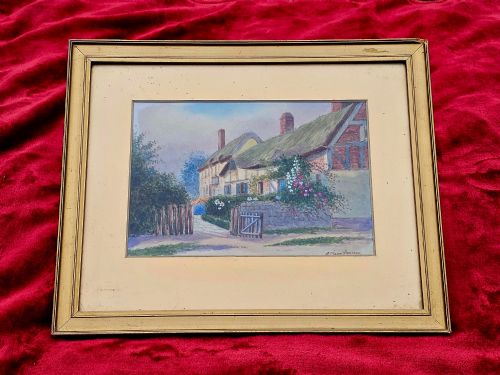
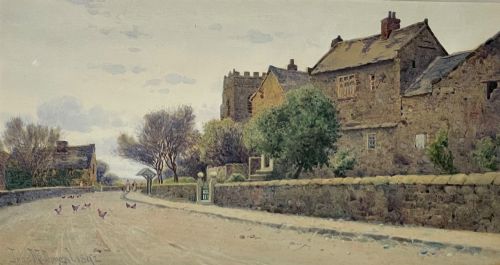
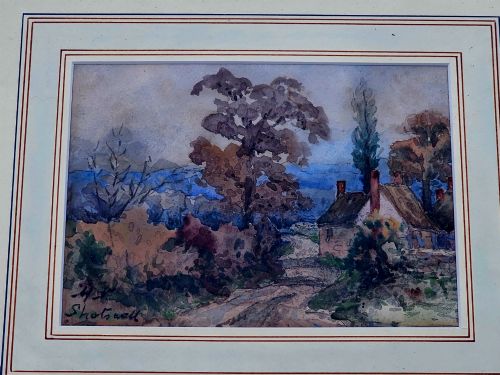
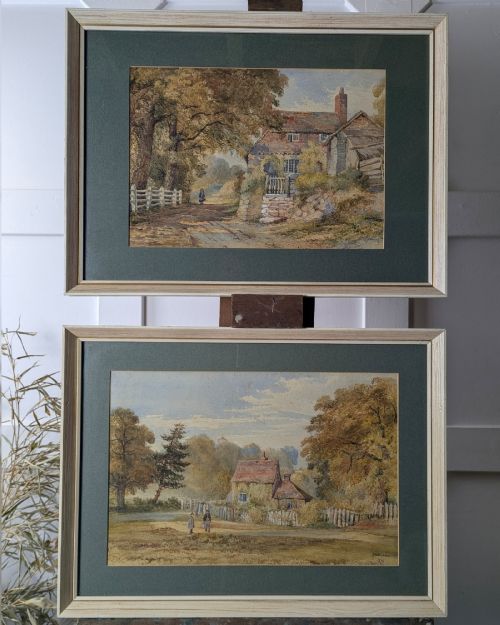
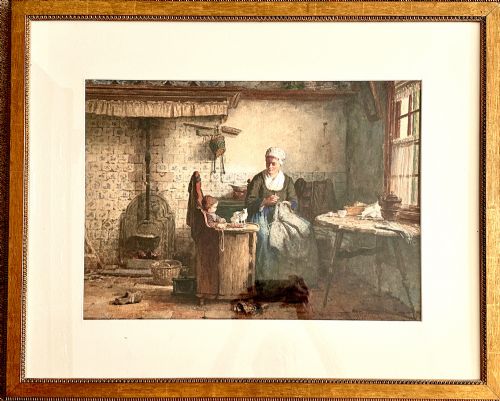
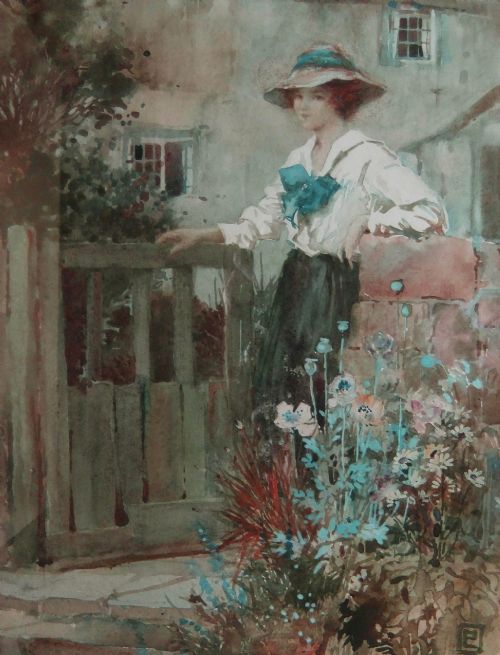
A framed cottage watercolour captures pastoral scenes, rural cottages, and village gardens across the nineteenth and twentieth centuries. The version you are most likely to meet on this page dates from the Victorian era up to the mid-twentieth century, reflecting enduring domestic and rural themes.
These works typically emerge from British artistic traditions, encompassing Victorian pastoral, Edwardian pastoral, and British Impressionism. Subjects frequently feature thatched roofs, cottage gardens, figures by doorways, and surrounding countryside.
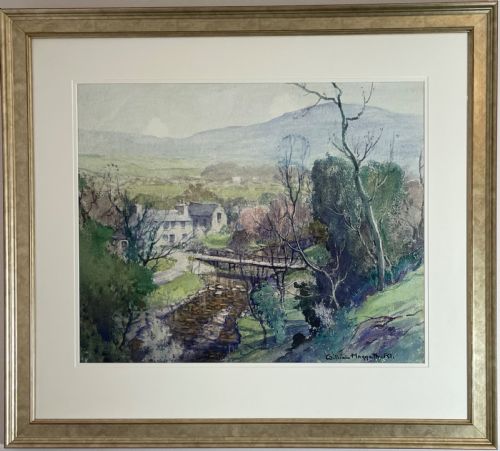
Compositions range in scale from intimate pastoral studies to larger landscapes recorded by named painters of the period. Each piece preserves a specific location, from Devon and Somerset villages to rural Yorkshire and Sussex.
Materials and technique
Artists worked primarily with watercolour paint and watercolour pigment applied directly onto paper supports. This water-based medium allowed for translucent washes and fine linear detail, capturing natural light and atmospheric weather conditions.
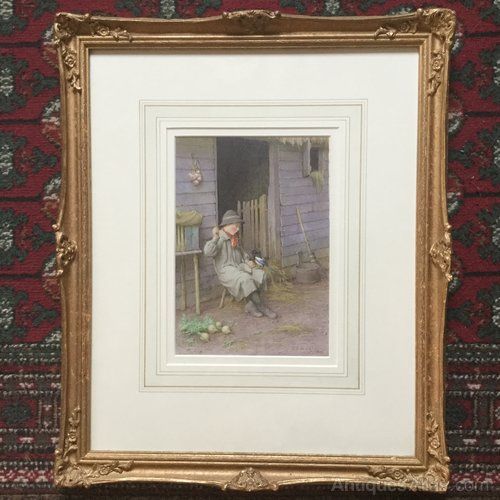
Finished paintings were protected behind glass and housed within wooden frames, frequently incorporating gilt wood moulding. The combination of paper, pigment, glass, and timber secures the fragile medium against environmental wear.
The archive includes original rural cottage landscapes and village street scenes from nineteenth-century makers.
Distinctions in quality
Quality rests upon the artist's handling of light, brushwork confidence, and the subtlety of colour mixing within the pigment. Works by established practitioners demonstrate superior draughtsmanship in rendering architectural structures and human figures alike.
The integrity of the original frame and the preservation of the paper support contribute significantly to the standing of a piece. Retaining clear provenance and legible signatures distinguishes finer examples from anonymous decorative studies.
A. Marie Parsons·John McDougal·Robert A. Nottingham·Hendrik Valkenberg·Percy Lancaster·Charles Edward Wilson·Fred Lawson·J S Ainley·William Hoggatt·James Hardy Junior·Theresa Stannard·Helena Maguire·Owen Bowen·Lilian Stannard·Harry Sylvester Stannard·Henry Charles Fox·Will Anderson·Thomas James Lloyd·B. Kaufmann·David Woodlock·Henry Spernon Tozer·Joseph Kirkpatrick·J.V.R.Parsons·Arthur Claude Strachan·John Abernethy Lynas-Gray
The Framed Cottage Watercolour Glossary
- Watercolour pigment
- The finely ground colour substance mixed with a binder to create water-soluble paint. It provides the translucent hues characteristic of these paintings.
- Gilt wood
- Timber framing coated with a thin layer of gold leaf or metallic gilt. This finish enhances the visual weight and presentation of the artwork.
- Victorian pastoral
- An artistic style focusing on idealized rural scenes and country life popular during the nineteenth century. It often depicts cottages, farm animals, and agricultural workers.
- Pastel
- A dry drawing medium composed of powdered pigment and a binder, sometimes associated with related works on paper. It offers soft, velvety colour tones.
Framed Cottage Watercolour: Frequently Asked Questions
What subjects do these watercolours show?
These works depict rural cottages, village streets, gardens, and pastoral landscapes across Britain. Common motifs include figures tending animals, thatched roofs, and coastal village views.
Scenes often capture specific localities in Devon, Somerset, Yorkshire, and the Isle of Man, reflecting regional British vernacular architecture.
How should I hang a watercolour?
Watercolour paintings require protection from direct sunlight to prevent the pigments from fading over time. Position them on interior walls away from strong, prolonged natural light.
Maintaining stable room humidity also helps preserve the paper support and prevents the wooden frame from warping.
How do I date a framed watercolour?
Dating relies upon stylistic markers, artist biographical dates, and the construction methods of the frame. Victorian works often feature heavier gilt wood frames and detailed genre scenes.
Later pieces from the Edwardian and mid-century periods show shifts towards impressionistic brushwork and lighter framing materials.
Were these paintings made for exhibition?
Many works were created as finished cabinet paintings intended for domestic display within middle-class homes. Artists also produced them for regional art societies and annual exhibitions.
Signed pieces indicate works intended by the maker for formal sale and collection rather than casual sketching.