
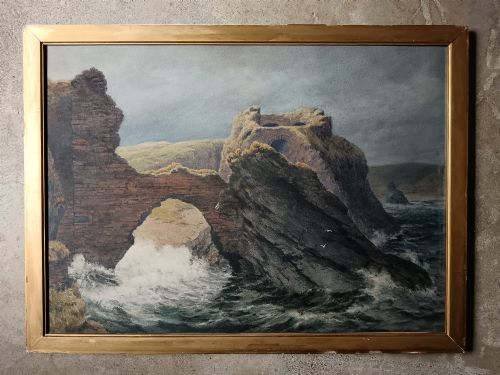


Framed Coastal Watercolour Picture
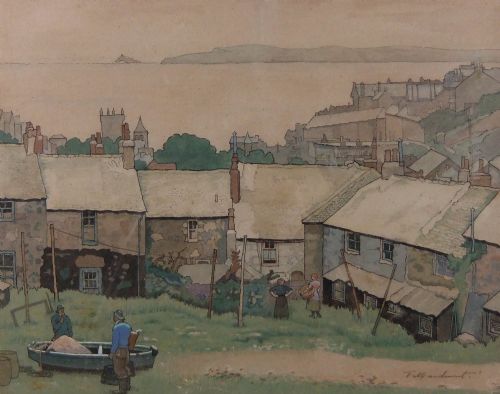
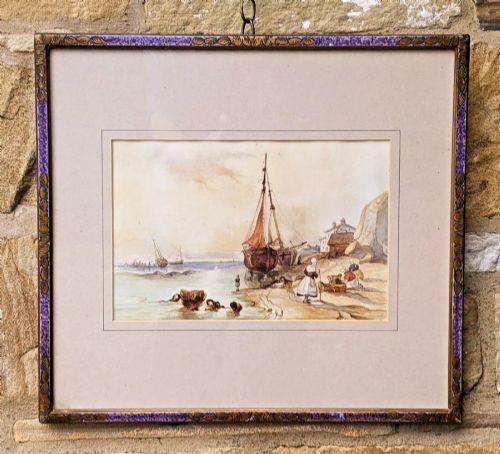
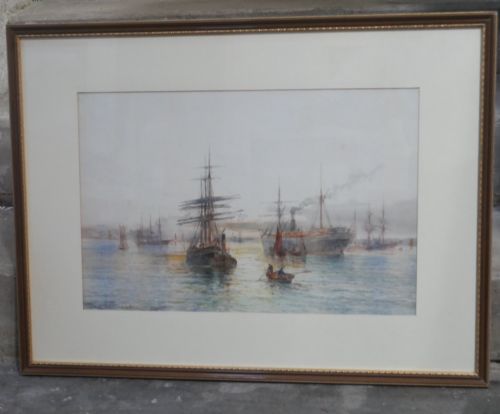
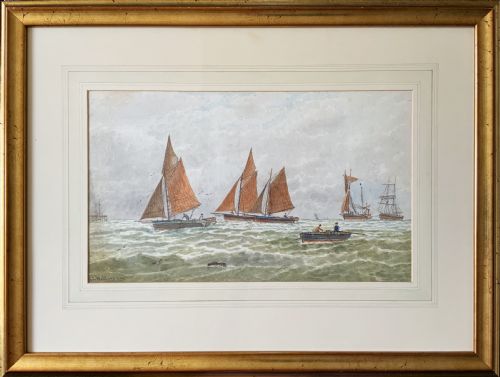
A framed coastal watercolour picture captures maritime life and shorelines through delicate pigment on paper, preserved behind glass within timber and gilt surrounds.
Framed Coastal Watercolour Picture
A framed coastal watercolour picture represents maritime views, fishing harbours, and rocky shores painted across the nineteenth and twentieth centuries. These works emerge from British Impressionism, the British School, and Modern British movements, recording specific coastal locations from Cornwall to Scotland.
Most examples found here date from the Victorian and Edwardian eras through to the nineteen-forties, capturing harbours, castles overlooking the sea, and shipping lanes. Artists utilised watercolour pigment on paper to render transient effects of light on water, protecting the fragile medium beneath glass.
The prevailing formats range from intimate topographical studies to large gallery pieces depicting named locations such as Whitby, St Ives, and various Scottish fishing ports. Each framed coastal watercolour picture preserves a direct observation of historical maritime landscapes.
How they were made
Artists applied watercolour paint and pigment onto paper supports, often using washes for skies and seas alongside fine brushwork for rigging and architecture. These watercolours rely on the white of the unpainted paper to create luminosity and highlights.
Finished paintings were set behind protective glass and housed within wooden frames, frequently carved and finished with gilt wood or gilding to complement the delicate tones of the artwork.
Several artists braved stormy northern tides to paint Whitby and Staithes, returning with salt spray on their boots and seaweed stuck to their folding easels.
What varies in quality
The success of a framed coastal watercolour picture rests on the artist's handling of light, atmosphere, and the transparency characteristic of the medium. Stronger works demonstrate confident brushwork and precise topographical draftsmanship rather than stiff mechanical rendering.
Framing also distinguishes the examples, with period gilt wood frames offering greater harmony with the age of the paper than later replacements. The preservation of the pigment against fading determines the visual impact of the composition.
George Stanfield Walters·John Moxon·Alfred George Morgan·John Bedloe Goddard·William Lee Hankey·Arthur Tucker·Fred Waugh·John McDougal·James Watson·Robert Buchan Nisbet·Frederick William Hattersley·Frank Wood·James Thomas Watts·John Mitchell·R P Noble·Sir Herbert Hughes Stanton·Ernest F Hill·John Hobson Nicholson·Frederick Stuart Richardson·Frederick Williamson·Thomas Bush Hardy·Alfred Robert Quinton·Rowland Henry Hill·Frank Wasley·Hirst Walker
The Framed Coastal Watercolour Picture Glossary
- Watercolour
- A paint consisting of colour pigment suspended in a water-based solution. It is traditionally applied to paper to create translucent washes and fine linear details.
- Gilt wood
- Wood that has been coated with a thin layer of gold leaf or metallic gilt powder. This finish is commonly found on traditional frames surrounding nineteenth-century paintings.
- British Impressionism
- An art movement focusing on light and everyday subjects painted outdoors. Artists within this style captured shifting coastal atmospheres and harbour scenes.
- Gouache
- An opaque water-based paint sometimes used alongside transparent watercolour to add solid highlights. It provides greater opacity for rendering foam and sail canvas.
Framed Coastal Watercolour Picture: Frequently Asked Questions
How should I hang a watercolour?
Watercolours are sensitive to direct sunlight, which can fade pigments over time. Hang these pictures away from bright windows and damp walls to preserve the paper and the surrounding wooden frame.
Ensure the hanging wire and fixings match the weight of the framed artwork. Secure wall hooks suited to your wall type will keep the piece stable and safe.
How do I date these paintings?
Dating relies on artist signatures, period framing styles, and inscriptions often found on the reverse of the paper or frame. Victorian and Edwardian works frequently exhibit specific handwriting and label types from nineteenth- and twentieth-century framers.
Subject matter and costume details within the coastal scenes also offer clues to the era. Harbour vessels and architectural additions help narrow down the decade of creation.
What is British Impressionism?
British Impressionism refers to painting styles influenced by French movements but adapted to British light and landscapes. Artists painted outdoors to capture transient weather effects along the coast.
These works feature loose brushwork and vibrant colour mixing. They depart from rigid academic painting to emphasise atmosphere and immediate visual experience.