




Maritime Landscape Watercolour
A maritime landscape watercolour captures coastal havens, tidal rivers and open seas through the fluid interplay of pigment upon paper.
Maritime Landscape Watercolour
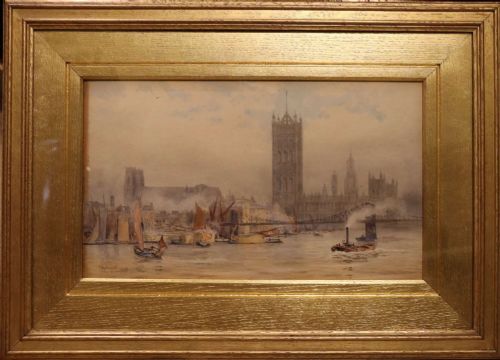
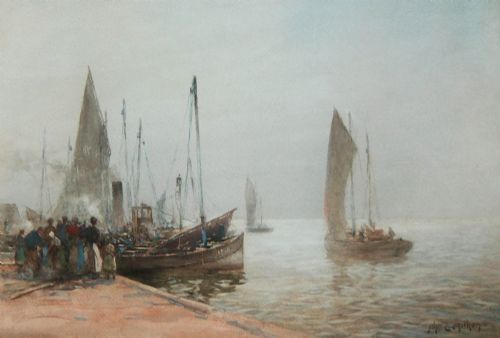
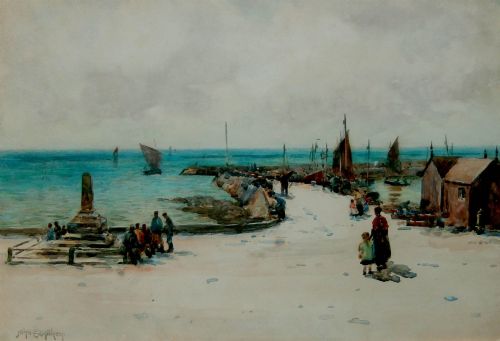
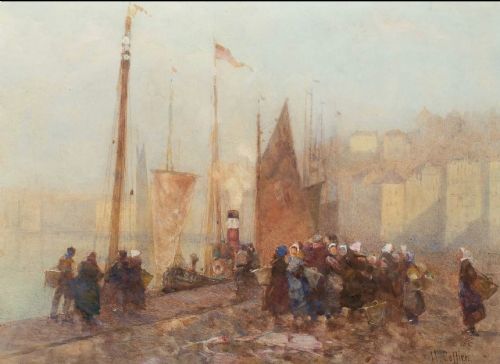
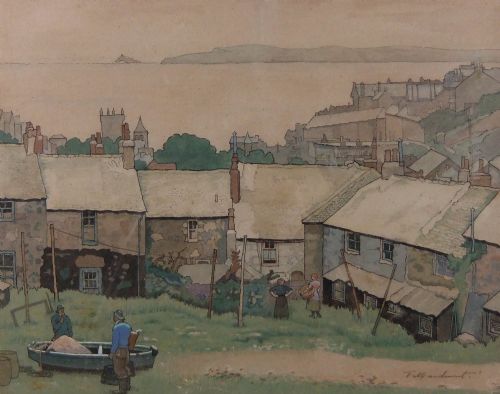
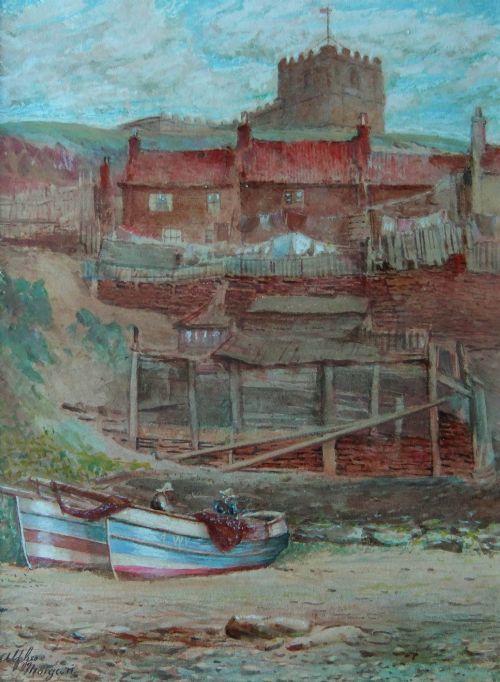
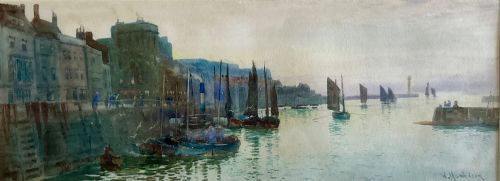
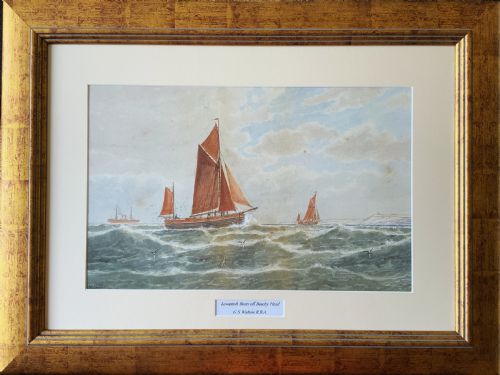
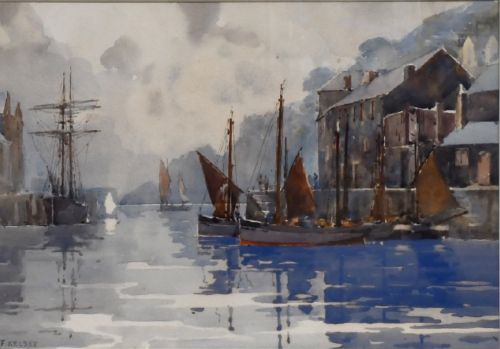
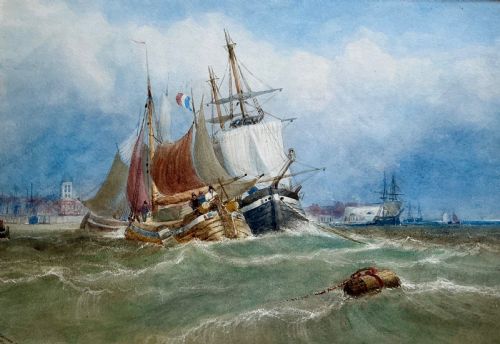
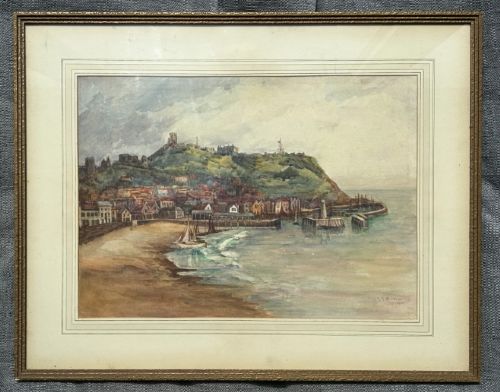
A maritime landscape watercolour portrays coastal scenes, fishing harbours, and tidal estuaries executed by British and European artists during the nineteenth and early twentieth centuries. These paintings frequently depict specific locations along the Yorkshire coast, Cornish ports, and Dutch waterways, often featuring working vessels such as cobles and fishing smacks alongside historic townscapes.
The works span the Victorian, Edwardian, and British Impressionist periods, utilising paper supports framed behind glass within wood or gilt wood surrounds. Buyers encounter compositions ranging in date from the late nineteenth century through to the mid-twentieth century, encompassing both intimate harbour studies and broader coastal panoramas.
Materials and technique
Artists applied watercolour pigment and paint directly onto paper supports, often building translucent washes alongside opaque gouache highlights to capture shifting light upon water and sky. These watercolours rely upon the white of the unpainted paper to generate luminosity, particularly in depictions of breaking surf, clouds, and coastal foam.
Finished paintings were secured within protective wooden frames, frequently incorporating gilt mouldings and glass glazing to shield the delicate water-soluble pigments from atmospheric moisture and handling.
Listings feature works spanning the nineteenth and twentieth centuries, incorporating Victorian and Edwardian maritime styles rendered on paper supports.
Distinctions in execution
Quality rests upon the artist's handling of atmospheric perspective, the precision of architectural and maritime rigging details, and the confident command of fluid washes. Stronger examples demonstrate an assured sense of light and movement, avoiding heavy-handed overworking while retaining the spontaneous transparency inherent to the medium.
The sophistication of the palette and the structural integrity of the period framing contribute to the standing of an individual piece, alongside the documentary value of identified topographical coastal locations.
H. Medlycott·James Orrock·James E. Aitken·Thomas William Morley·Hector Caffieri·George Stanfield Walters·Henry Barlow Carter·William Frederick Settle·Charles William Adderton·William Lee Hankey·Edward Seago·Thomas Bush Hardy·Clara Montalba·Charles Harmony Harrison
The Maritime Landscape Watercolour Glossary
- Coble
- An open traditional fishing boat with a high bow and flat floor, commonly found along the northeast coast of England and frequently featured in regional watercolours.
- Gilt wood
- Timber framing treated with a thin layer of gold leaf or metallic gilding, characteristic of traditional picture framing from the Victorian era onwards.
- Watercolour pigment
- Finely ground colour particles suspended in a water-soluble binder, applied to paper to create translucent layers of tone and hue.
- British Impressionism
- A painting style adopted by British artists from the late nineteenth century onwards, focusing on light, everyday subjects, and open-air observation.
Maritime Landscape Watercolour: Frequently Asked Questions
How should I hang a vintage watercolour?
Watercolours are sensitive to prolonged direct sunlight, which causes the pigments to fade over time. Position the framed piece on an interior wall away from unshaded windows and heat sources to preserve the integrity of the paper.
Ensure the hanging wire and wall fixings match the weight of the wood frame and glass. Professional framing with acid-free backing materials additionally protects the paper from long-term chemical degradation.
How do I identify the coastal location?
Many nineteenth and twentieth-century marine paintings include legible signatures, monograms, or contemporary ink inscriptions on the reverse of the paper or the frame backing. Artists frequently titled their harbour scenes directly onto the front mount or lower margin alongside their signature.
Comparing architectural landmarks such as abbeys, piers, and harbour walls with historical records helps pinpoint locations like Whitby, St Ives, or Anstruther. Regional vessel types, including northern cobles or Dutch barges, provide further clues to the depicted body of water.
What is the difference between Victorian and Edwardian marine watercolours?
Victorian watercolours often embrace highly detailed topographical accuracy, capturing shipping traffic, rigging, and coastal architecture with precise brushwork. These works frequently reflect a narrative interest in the daily labour of fishing communities.
Edwardian and later works increasingly incorporate broader impressionistic brushstrokes and a focus on atmospheric light effects rather than minute descriptive detail. The palette in later pieces often shifts towards softer tonal harmonies characteristic of British Impressionism.
Are these works original paintings?
The listings comprise original paintings executed by hand directly onto paper supports using watercolour paint and pigment. Each piece represents a unique historical artwork rather than a mass-produced print or reproduction.
Signatures, artist ciphers, and distinct brush marks confirm the hand-painted nature of the works. Period framing often accompanies these original watercolours, retaining its historical character.