

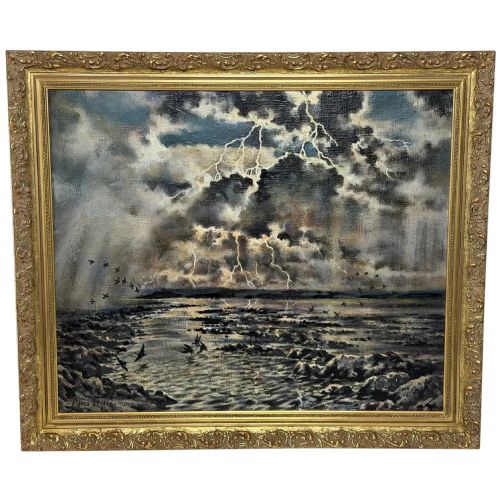
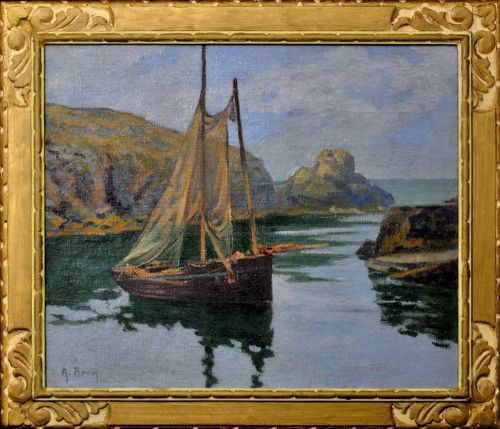
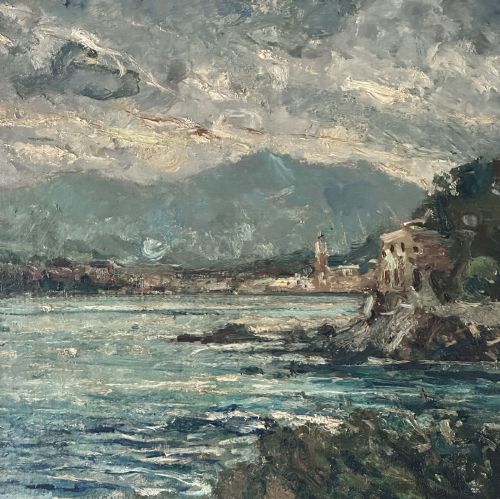
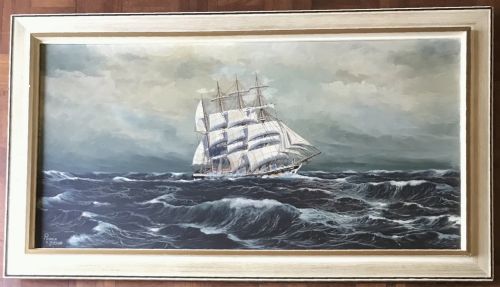

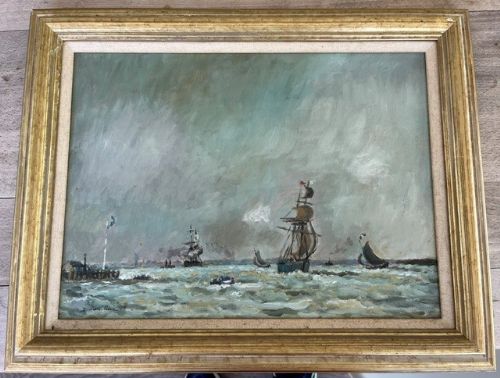


Framed Coastal Seascape Picture
A framed coastal seascape picture brings the motion of the tide and salt air directly into a room.
Framed Coastal Seascape Picture
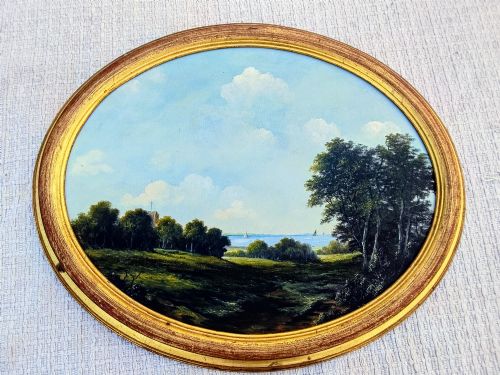
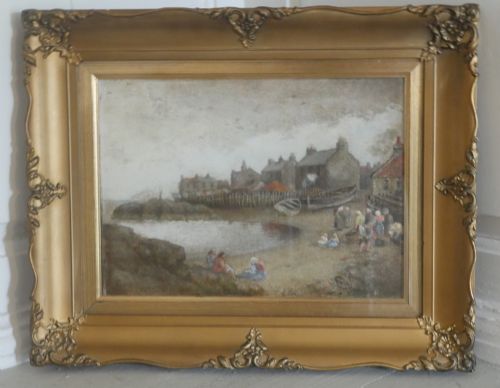
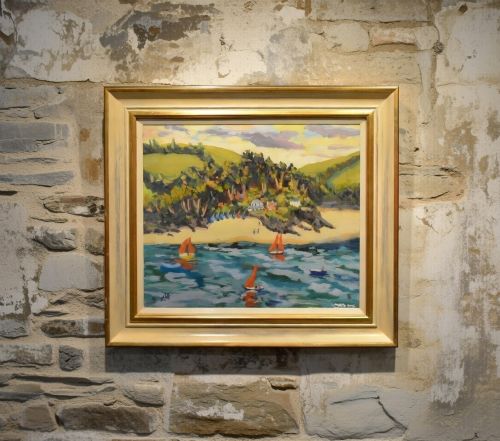
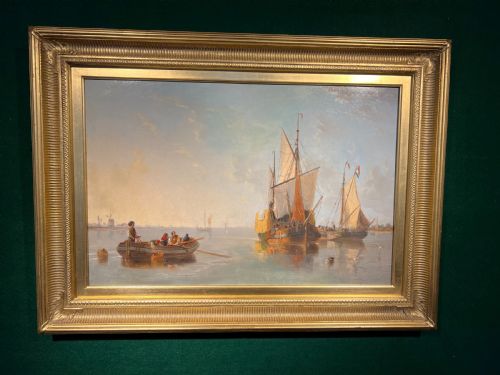
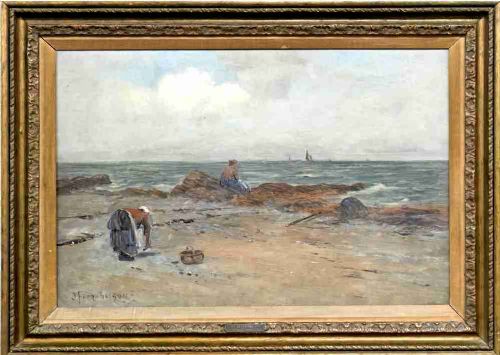
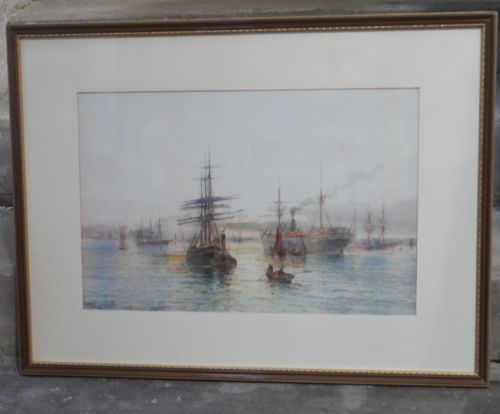
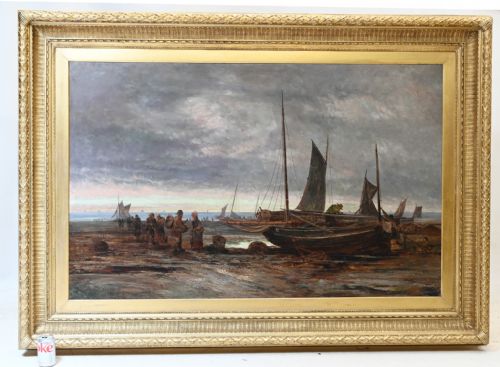
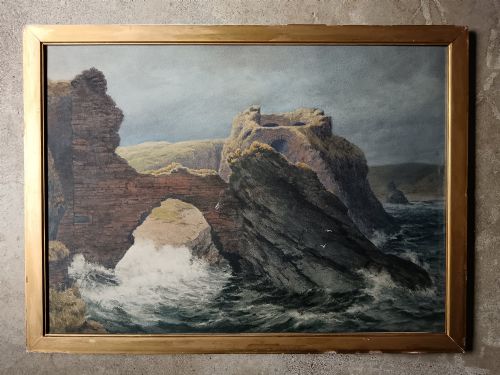
A framed coastal seascape picture captures harbours, open water, and coastal life through the eyes of artists working from the nineteenth century into the mid-twentieth century. The selection ranges from sweeping Victorian maritime canvases to lighter British impressionist watercolours.
Buyers encounter oil paintings on canvas alongside delicate paper watercolours, often preserved behind glass within period wood frames. These works record specific shores from Cornwall to Normandy, alongside imagined expanses of open sea.
How they were made
Painters built these coastal scenes using oil paint on stretched canvas or board, or applied translucent watercolour pigments onto heavy paper. Artists applied these materials to capture the shifting light of the sea and the texture of rocky shores.
The enclosing frames combine carved or moulded wood finished with gilt layers or plain paint, serving to protect the delicate paper or canvas within.
Framed Coastal Seascape Picture Retail Price Guide 2026
Typical asking prices for framed coastal seascape picture among the pieces listed under this phrase on Sellingantiques today, from the lower quarter to the upper quarter. They describe what is for sale here now, not the wider market.
Several artists braved howling gales on Cornish cliffs just to capture the exact shade of foam on a disgruntled wave.
What varies in quality
The strength of a maritime work rests on the artist's ability to render the weight of water and atmospheric coastal light with conviction. Finer examples display confident brushwork and precise atmospheric perspective rather than formulaic waves.
Preservation of the original paint surface or watercolour paper, together with a period-appropriate matching frame, elevates the standing of an individual piece.
Edward Mills·John Wilson Carmichael·Joseph Farquharson·Erich Mercker·George Stanfield Walters·John Moxon·Charles Napier Hemy·Gyrth Russell·William Lee Hankey·Gustave De Bréanski·Fred Waugh·John McDougal·T.S. Wallis·James Webb·John Douglas Perrett·Frederick William Hattersley·John Mitchell·Ernest F. Hill·Frederick Stuart Richardson·Alfred Henry Vickers·George Henry Knight·Thomas Rose Miles·Jeffrey Pratt·E Tucker
The Framed Coastal Seascape Picture Glossary
- Seascape
- A work of art depicting the sea or marine subjects. These scenes often feature shipping vessels, harbours, or rocky shorelines.
- Impressionism
- A style of painting focusing on light and its changing qualities rather than minute detail. Practitioners capture the immediate visual impression of a coastal moment.
- Watercolour
- A paint consisting of pigment suspended in a water-based solution. Artists use this medium on paper to achieve translucent washes of colour.
- Gilt wood
- Wood coated with a thin layer of gold leaf or metallic paint. This finish commonly appears on period picture frames.
Framed Coastal Seascape Picture: Frequently Asked Questions
How do I date a maritime painting?
Examination of the canvas stretcher, the pigments utilised, and the framing style helps determine the age of a work. Victorian pieces often feature heavy gilt wood frames alongside darker oil palettes.
Artist signatures and recorded biographical dates provide the most reliable chronological anchors for narrowing down the decade of creation.
Where should I hang a coastal picture?
These works suit rooms with steady ambient light, away from direct sunlight that might fade delicate watercolours on paper. Placing them at eye level allows the viewer to appreciate the fine details of the harbour or waves.
Pairing a maritime painting with neutral wall colours helps the blues and greens of the sea stand out clearly.
How do I care for antique watercolours?
Watercolour paintings require protection from moisture and direct ultraviolet rays to prevent the paper from yellowing and the pigments from fading. Keeping them behind glass with conservation-grade backing boards ensures long-term stability.
Dust the wooden frames gently with a dry cloth without applying liquid cleaners directly to the gilt surfaces.
What is the difference between oil and watercolour?
Oil paint utilises a drying oil binder, allowing artists to build thick, textured layers of pigment on canvas. This medium offers deep colour saturation and a glossy finish.
Watercolour employs water-soluble binders on paper, yielding translucent effects and lighter, more luminous coastal scenes.