





Framed Chinese Silk Panel
A framed chinese silk panel brings quiet texture and subtle narrative to a wall, working well in both traditional rooms and modern spaces.
Framed Chinese Silk Panel
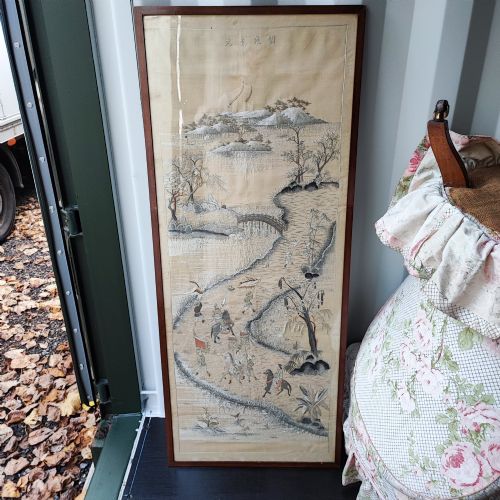
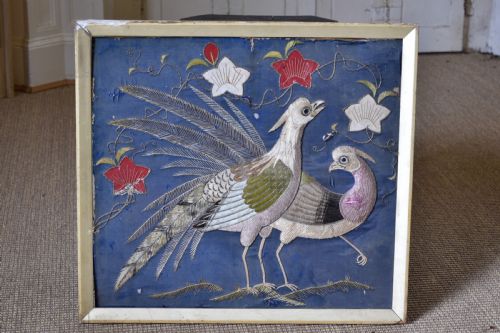
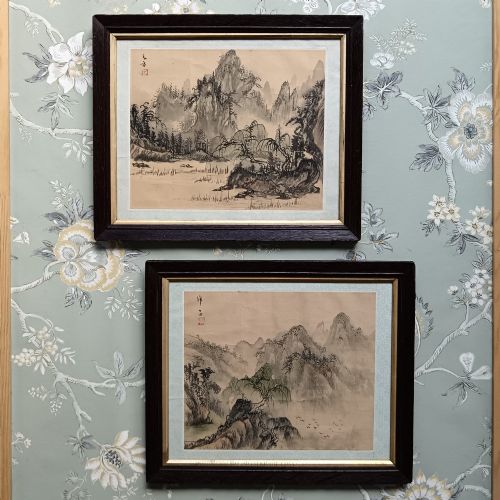
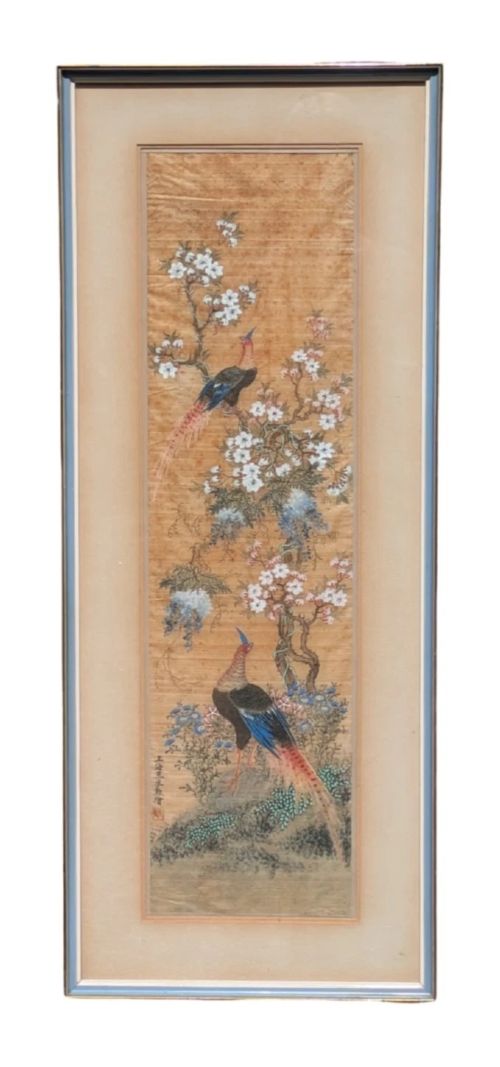
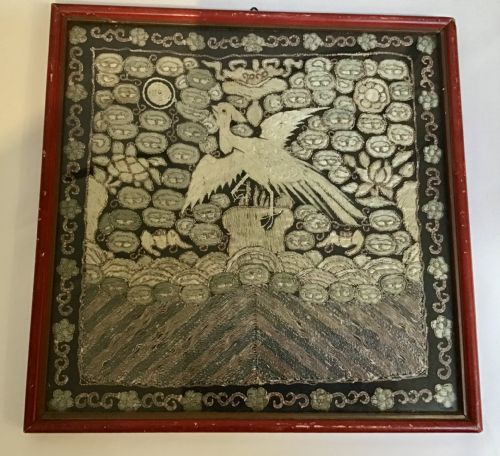
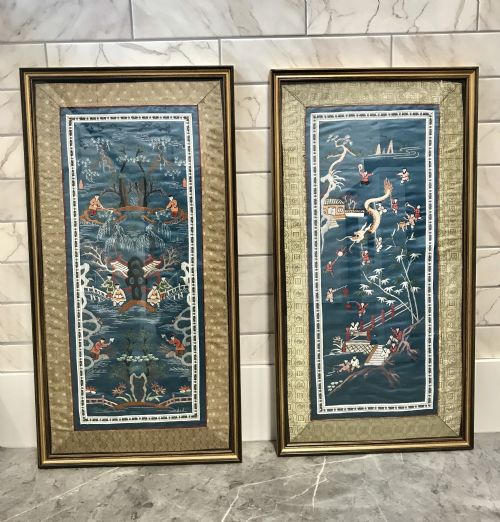
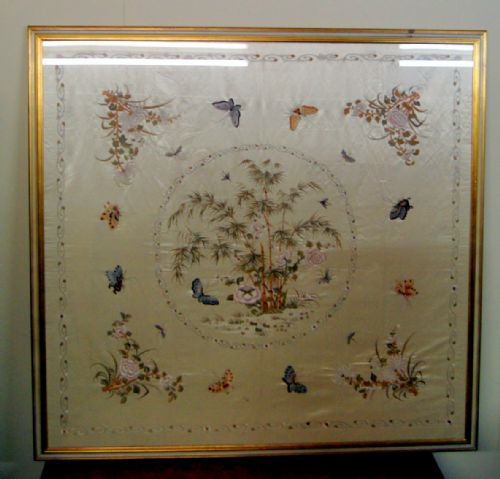
A framed chinese silk panel encompasses hand-sewn textiles, embroidered wall hangings, and paintings on silk set behind glass in wood frames. These decorative items range from nineteenth-century rank badges and garden bird embroideries to later table screens and wall art.
The versions most commonly met on this page date from the nineteenth century, including pieces from the Qing Dynasty and around nineteen hundred. They frequently feature traditional Chinese imagery such as figures, dragons, trees, flowers, and mandarin ducks.
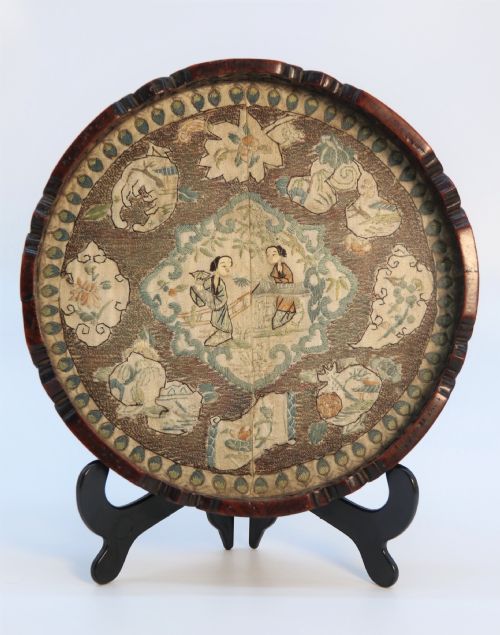
Beyond standard wall art, the selection includes related formats like carved hardwood trays with inset silk panels and textile fragments. Each piece demonstrates traditional needlework or pigment painting preserved within a protective frame.
How they were made
Maker's work relied on fine silk grounds decorated with hand sewing, embroidery, ink, and pigment. Artisans utilised metallic thread alongside coloured silks to build up detailed motifs of flora and fauna.
Many textile panels and paintings are preserved under glass within wooden frames, occasionally incorporating carved hardwood stands or trays. The combination of delicate fabric and sturdy structural timber protected the delicate silk from daily wear.
Framed Chinese Silk Panel Retail Price Guide 2026
Typical asking prices for framed chinese silk panel among the pieces listed under this phrase on Sellingantiques today, from the lower quarter to the upper quarter. They describe what is for sale here now, not the wider market.
Mandarin ducks appear frequently in these embroideries, serving as a traditional symbol of lifelong fidelity and happy unions.
What varies in quality
Quality rests in the precision of the hand sewing and the complexity of the painted or embroidered composition. Finer examples display meticulous needlework and well-balanced depictions of figures, birds, and botanical details.
The condition of the silk and the integrity of the original frame also influence the overall standard. Pieces retaining their early glass and carved hardwood surrounds demonstrate superior preservation.
The Framed Chinese Silk Panel Glossary
- Qing Dynasty
- The final imperial dynasty of China, lasting from sixteen forty-four until nineteen twelve. Many decorative textiles and paintings date from its later decades.
- Rank badge
- A square embroidered patch worn by officials to denote their status in the imperial court. These badges often appear repurposed as framed wall art.
- Shan Shui
- A style of traditional Chinese painting featuring natural landscapes such as mountains and rivers. These works are frequently executed in ink and pigment on silk.
- Khotan rug
- A textile originating from the oasis town of Khotan in East Turkestan. Fragments of these woven pieces occasionally appear mounted and framed.
- Table screen
- A decorative panel supported by a carved stand, designed to sit on a desk or table. Some variations incorporate framed silk embroidery.
Framed Chinese Silk Panel: Frequently Asked Questions
How do I hang a heavy framed silk panel safely?
Ensure your wall fixings match the weight of the timber frame and glass. Use appropriate picture wire or sturdy brackets attached securely to the back.
Position the piece away from direct sunlight to protect the delicate silk fibres and pigments from fading over time.
What is the difference between a rank badge and a standard panel?
A rank badge was originally a specific garment accessory indicating official imperial status, featuring distinct square compositions and symbolic animals or birds.
Standard decorative panels were created purely for ornamentation, often depicting broader scenes with figures, flowers, and garden birds.
How should I clean the glass on these framed textiles?
Apply a mild glass cleaner to a soft cloth rather than spraying it directly onto the frame. This prevents moisture from seeping past the edges and damaging the silk inside.
Keep liquids well away from any exposed fabric or unsealed wooden sections.
Can I date a piece by its frame style?
Frames can offer clues, though many textiles were reframed later in their lifespan. Original hardwood surrounds often match the period of the embroidery or painting.
Look at the backing materials, fixings, and glass type alongside the frame construction to help establish age.