


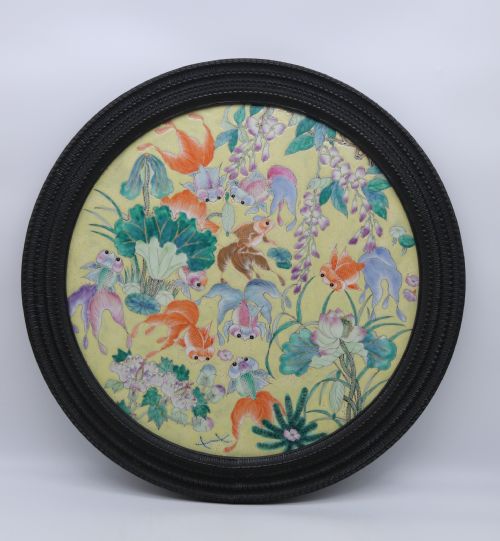


Framed Ceramic Wall Art
Framed ceramic wall art brings together glazed panels, tiles and porcelain plaques mounted for display, offering vibrant surface decoration and enduring colour for domestic interiors.
Framed Ceramic Wall Art
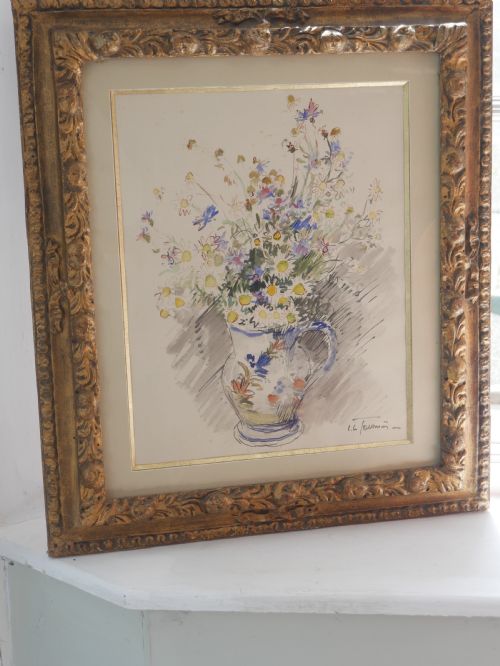
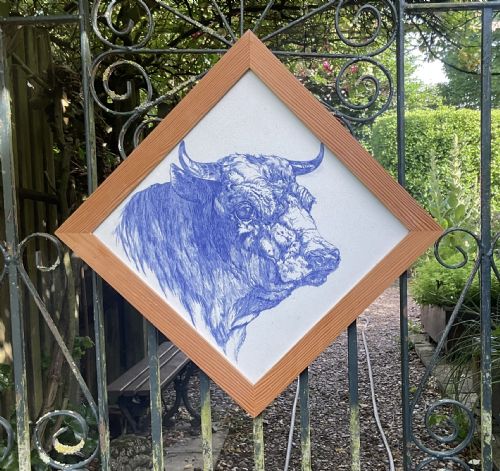
When you search for framed ceramic wall art, you encounter a diverse group of objects including hand-painted porcelain plaques, glazed earthenware wall tiles, and decorative pottery panels secured within protective wooden, giltwood or metal surrounds.
The pieces on this page span several periods and movements, ranging from Victorian and Arts and Crafts examples to Art Nouveau designs, Edwardian creations, and mid-century modern works.
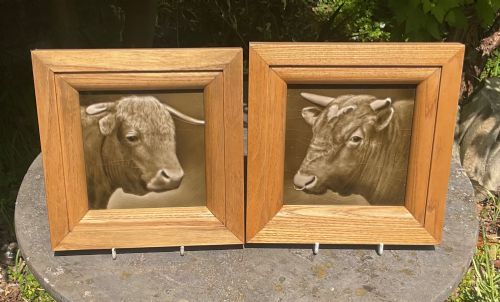
Forms include single portrait plaques, framed pairs of pictorial tiles, and large figural wall panels originating from British potteries and European Continental manufactories.
Materials and production methods
Makers utilised ceramic bodies such as porcelain, earthenware and fine faience, applying hand-painted pigments, enamels and pate-sur-pate decoration directly onto the clay surface before firing.
Many works combine the fired ceramic element with supportive timber frames, carved wood, giltwood accents or glass frontages to protect the delicate glazed surface.
Specialised techniques involve copper mounting, relief moulding, and meticulous hand-finishing by ceramic artists working within established potteries.
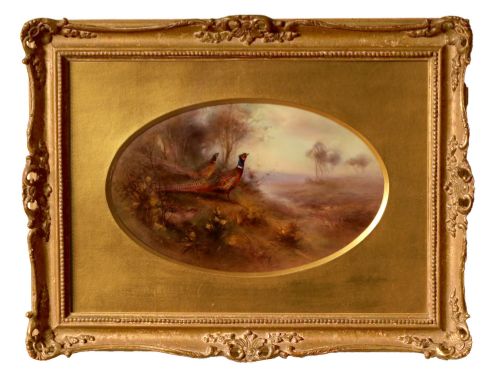
Cheetahs and birds peer out from framed tiles, proving that fierce cats make surprisingly polite wall companions.
Distinctions in execution and finish
Quality rests upon the skill of the brushwork and the complexity of the ceramic technique, distinguishing finely detailed portraiture and pate-sur-pate layering from simpler transfer-printed decoration.
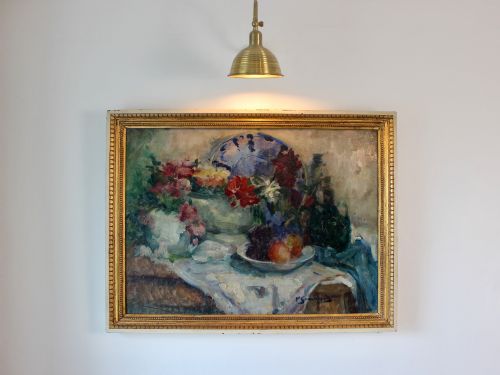
The integrity and age of the surrounding frame, whether carved wood, giltwood or metal, contribute significantly to the overall resolution and visual balance of the piece.
Royal Worcester·Sherwin and Cotton·Mintons·Longwy·Richard Ginori
The Framed Ceramic Wall Art Glossary
- Plaque
- A flat, ornamental panel of ceramic, porcelain or enamel designed specifically for mounting on a wall. These objects often display painted figural scenes, portraits or botanical studies.
- Pate-sur-pate
- A method of ceramic decoration where relief designs are built up using successive layers of liquid white clay on a coloured, unglazed body. This intricate technique creates a cameo-like effect.
- Earthenware
- Porous pottery fired at lower temperatures, commonly utilised for decorative tiles and wall plaques. It provides an absorbent surface well suited for vibrant glazes.
- Faience
- Tin-glazed earthenware decorated with opaque metallic oxided colours. It offers a smooth canvas for detailed painted compositions on wall panels.
- Arts and Crafts
- A design movement prioritising handcraftsmanship and natural motifs. Pieces from this tradition often feature stylized flora, fauna or handcrafted metal mounts.
Framed Ceramic Wall Art: Frequently Asked Questions
How do I hang ceramic wall art securely?
Ceramic wall plaques and framed tiles carry considerable weight due to the density of the fired clay and the protective wooden frame. Ensure your wall fixings are anchored properly into solid masonry or studwork rather than relying solely on plasterboard.
Check the integrity of the hanging wire and structural fixings on the reverse of the frame before installation. Position the piece away from areas prone to excessive moisture or abrupt temperature shifts.
What periods do these ceramic pieces represent?
The pieces span the nineteenth and twentieth centuries, encompassing Victorian, Edwardian, Arts and Crafts, and Art Nouveau movements. Each era brought distinct aesthetic priorities, from floral tile panels to Continental portrait plaques.
Twentieth-century examples often lean towards mid-century modern sensibilities and Republican period Chinese porcelain panels. Examining the reverse of the tile or frame frequently reveals clues regarding the date of manufacture.
Are these ceramic panels hand-painted?
Many examples feature hand-painted artistry executed by named artists or skilled factory decorators. Techniques range from delicate watercolor-style brushwork on porcelain to raised enamel relief and pate-sur-pate detailing.
Signatures or factory marks on the front or reverse often verify individual authorship. Inspecting the surface under magnification reveals the subtle brushstrokes characteristic of manual execution.