


Framed Ceramic Tile Art
Framed ceramic tile art brings together painted earthenware and porcelain panels mounted for display, prized for rich glaze colours and decorative detail.
Framed Ceramic Tile Art
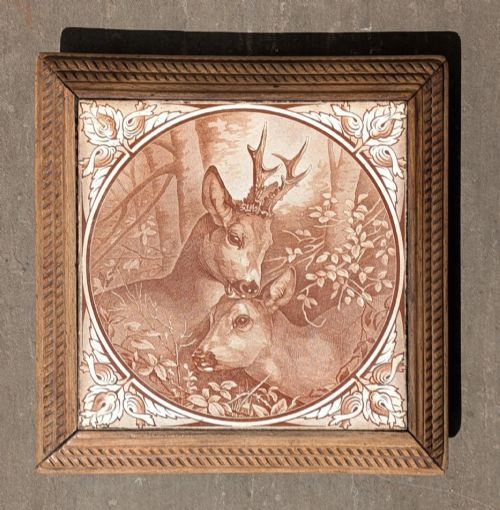
Framed ceramic tile art covers wall plaques, decorative panels, and mounted tiles created across the nineteenth and early twentieth centuries. These pieces translate ceramic manufacturing into domestic decoration, using fired earth and glaze to capture pictorial scenes.
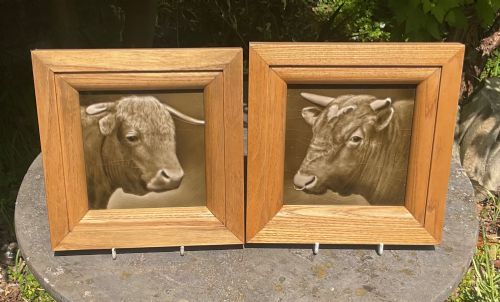
The selections found here draw from Victorian, Edwardian, and Arts and Crafts movements, alongside French Country and Mid-Century Modern examples. You encounter everything from figural plaques and animal studies to architectural butcher shop scenes.
Makers mounted these ceramics in wood frames, wooden stands, or incorporated them into functional furniture like coffee tables. The format preserves fragile earthenware and porcelain for wall hanging and tabletop display.
How they were made
Makers shaped earthenware and porcelain bodies before applying liquid glazes, gold leaf, and hand-painted pigments. Firing fixed the colours beneath glass-like surfaces, creating durable finishes that resist fading over generations.
Moulded relief work added physical depth to subjects like children and animals, while flat surfaces received detailed brushwork. Wooden surrounds, including oak frames and stands, were built to house the heavy ceramic centres securely.
Materials recorded across the inventory include oak, porcelain, earthenware, and gold leaf.
What varies in quality
The artistic ambition of the painted or modelled subject sets individual pieces apart, distinguishing factory production from works attributed to named designers and major potteries. Finer examples display precise brushwork, controlled glaze reactions, and detailed relief moulding.
The quality of the mounting affects the overall piece, with solid oak frames and period wooden stands supporting the ceramic weight better than later replacements. Well-preserved surfaces retain their original glaze lustre without excessive crazing or restoration.
Sherwin and Cotton·Mintons·Reginald Robert Tomlinson·Longwy·KPM·Gio Ponti·Richard Ginori
The Framed Ceramic Tile Art Glossary
- Earthenware
- A porous pottery body fired at lower temperatures, commonly used for nineteenth-century tiles and plaques. It requires an impermeable glaze to hold water and resist staining.
- Porcelain
- A dense, vitrified ceramic fired at high temperatures, valued for its white body and smooth surface. It allows for fine detail in painted pictorial plaques.
- Glaze
- A glassy coating fused to the ceramic body through firing, providing colour, pattern, and protection. Variations in thickness create subtle shifts in tone.
- Faience
- Tin-glazed earthenware decorated with opaque coloured enamels, often featuring hand-painted figural scenes. The technique creates a smooth, paint-like surface on porous clay.
- Relief
- Raised moulding that projects from the flat background of a tile, creating a three-dimensional effect. This technique highlights figures and botanical motifs.
Framed Ceramic Tile Art: Frequently Asked Questions
How do I hang heavy ceramic tiles safely?
Heavy framed tiles require sturdy picture hooks rated for the combined weight of the ceramic and wood frame. Secure the fixings directly into wall studs or use appropriate wall anchors rather than relying on standard plaster pins.
Ensure the hanging wire or brackets on the back of the frame are tightly fastened to the wooden structure. Period frames benefit from professional inspection of their hanging hardware before mounting.
How can I tell Victorian tiles from later pieces?
Victorian tiles often feature characteristic clay bodies, heavy glaze pooling at the edges, and specific maker marks stamped on the reverse. Stylistic cues such as dense floral patterns or gothic revival motifs also point to the nineteenth century.
Later pieces from the Arts and Crafts or Mid-Century periods display cleaner lines, different colour palettes, and framing styles typical of the twentieth century. Comparing backstamps with pottery records helps confirm exact production eras.
Where were these ceramic plaques displayed originally?
Plaques and framed tiles hung in Victorian and Edwardian parlours, hallways, and dining rooms as decorative focal points. They served as durable alternatives to canvas paintings in spaces prone to moisture or smoke.
Some pieces functioned as architectural inserts for fireplaces, sideboards, or bespoke furniture before being framed for wall display. Their robust construction suited both domestic interiors and public spaces like butcher shops.