




Framed Asian Print
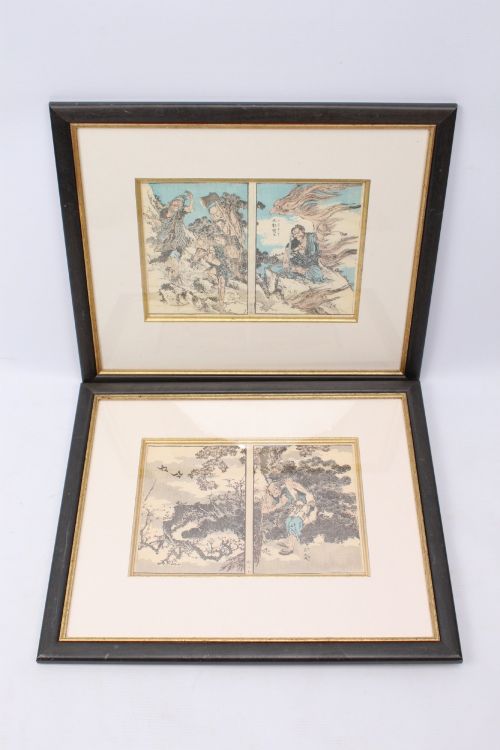
These framed asian print examples bring together centuries of woodblock printing, watercolour and gouache across Japanese and Chinese traditions.
Framed Asian Print
A framed asian print unites historical Far Eastern artistry with traditional western framing methods, offering wall art that spans from the eighteenth century to the early twentieth century. You find Japanese ukiyo-e woodblock prints alongside Chinese export pieces, pith paper gouache paintings and brass rubbings.
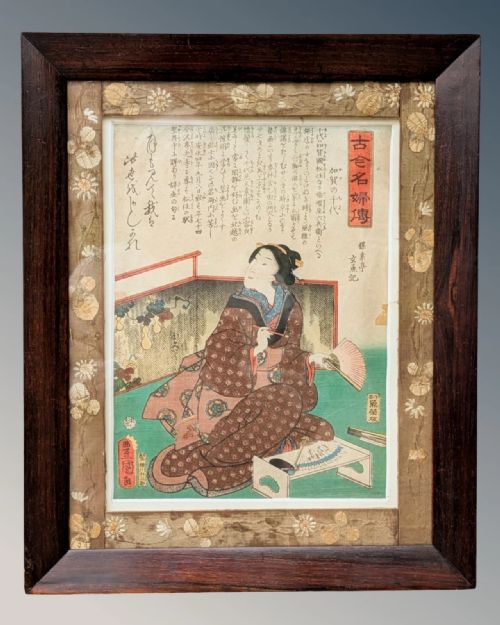
The most common examples on this page are nineteenth century Japanese woodblock prints, often presented in timber frames behind glass. These works frequently depict traditional subjects such as the Seven Lucky Gods or feature the recognised names of ukiyo-e masters.
Works range from single sheet woodcuts to pairs and sets of four, mounted on card or silk brocade. They preserve delicate ink and paper mediums by enclosing them securely within protective wooden structures.
How they were made
Makers produced these works using traditional hand printing and painting techniques on organic supports like paper, card, pith paper and silk. Printers applied ink directly to carved blocks of wood for Japanese woodblock prints, while painters utilised watercolours and gouache for pictorial compositions.
Framing involves timber such as rosewood alongside glass protection to preserve fragile paper surfaces. Mounts utilise silk brocade fabrics to frame the central image, complemented occasionally by gold leaf detailing.
Framed Asian Print Retail Price Guide 2026
Typical asking prices for framed asian print among the pieces listed under this phrase on Sellingantiques today, from the lower quarter to the upper quarter. They describe what is for sale here now, not the wider market.
Even horses from the Tang dynasty found a way to be rubbed in brass.
What varies in quality
The distinction between tiers rests upon the clarity of the ink impression and the preservation of the original paper or silk support. Early sheets by identified masters command attention through crisp lines and careful colour registration.
Framing materials influence the overall presentation, where examples featuring rosewood frames and silk brocade mounts elevate the piece above standard timber surrounds. The integrity of the underlying paper or pith and the vibrancy of surviving pigments determine the stature of each work.
Katsukawa Shunshō·Kitagawa Utamaro·Kunisada
The Framed Asian Print Glossary
- Woodblock print
- A relief print created by carving an image into a block of wood, inking the raised surface, and transferring it to paper. This technique defines traditional Japanese ukiyo-e production.
- Ukiyo-e
- A genre of Japanese art translating as pictures of the floating world, depicting scenes of daily life, actors and landscapes. These works form the core of historical Japanese printmaking.
- Pith paper
- A delicate material formed from the pith of the Tetrapanax papyrifer plant, utilised in nineteenth-century Chinese export paintings. Gouache and watercolour adhere distinctively to this fibrous surface.
- Silk brocade
- A heavy decorative woven fabric, often utilising silk threads, employed as a traditional mounting border around Asian artworks.
- Brass rubbing
- An impression taken by placing paper over a brass plaque and rubbing pigment across the surface to capture the engraved design, as seen in representations of Tang horses.
Framed Asian Print: Frequently Asked Questions
What periods do these prints date from?
The pieces span from the eighteenth century through the Victorian era and into the early twentieth century around nineteen twenty.
Edo period examples sit alongside nineteenth-century works and later nineteenth-century Chinese paintings.
How are the artworks framed?
Works utilise wood frames, including rosewood, fitted with glass to protect the fragile paper and silk contents.
Many incorporate silk brocade mounts that surround the print or painting within the frame.
What subjects appear in the prints?
Subjects include Japanese ukiyo-e scenes, figures such as the Seven Lucky Gods in the Takarabune, and large scale Tang horse rubbings.
Watercolours and gouache paintings on pith paper also feature among the visual themes.
Are the prints original period works?
The listings comprise historical productions including woodblock prints from the eighteenth and nineteenth centuries.
Individual pieces originate from recognised Japanese printmakers and Chinese export workshops of the period.