




Framed Artwork with Cattle
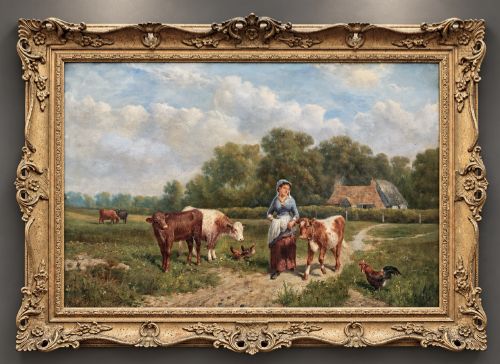
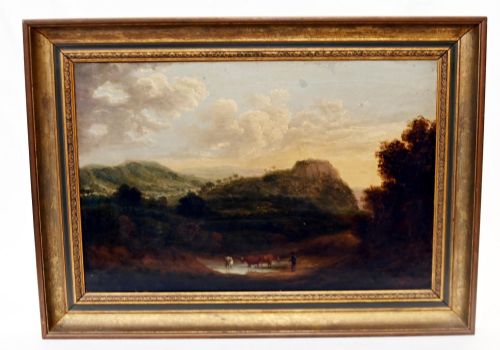
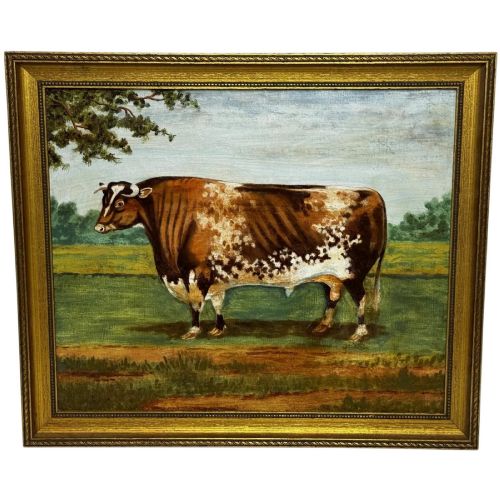
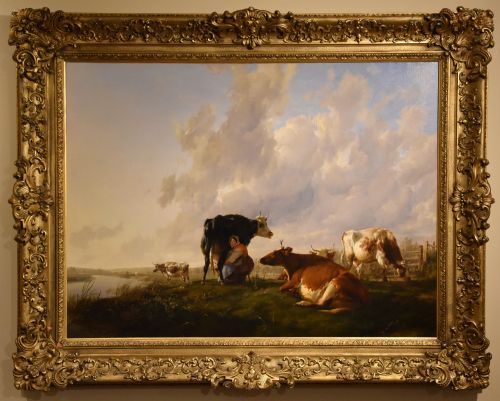
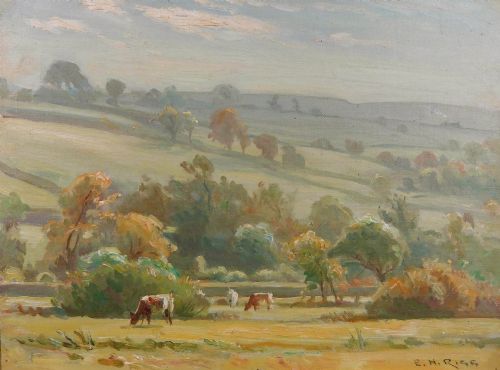
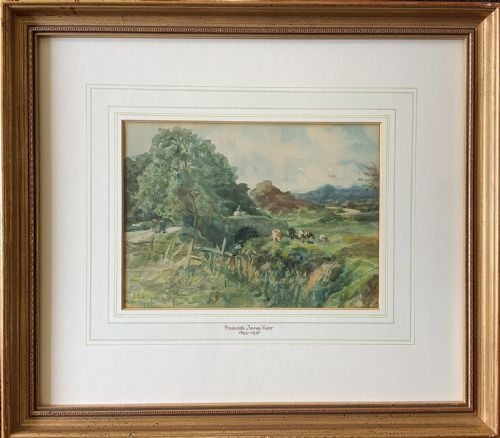
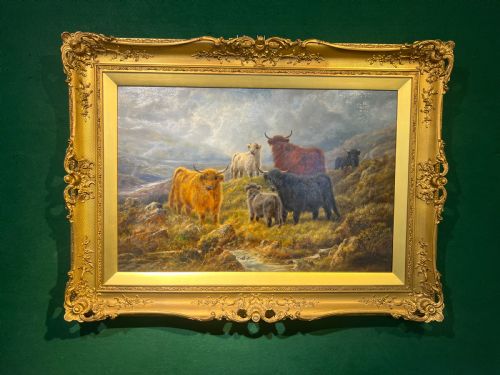
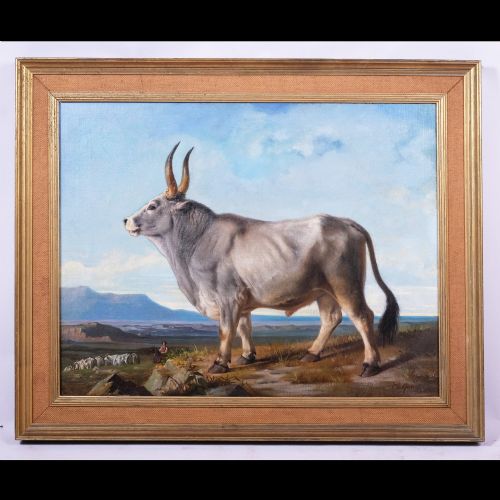
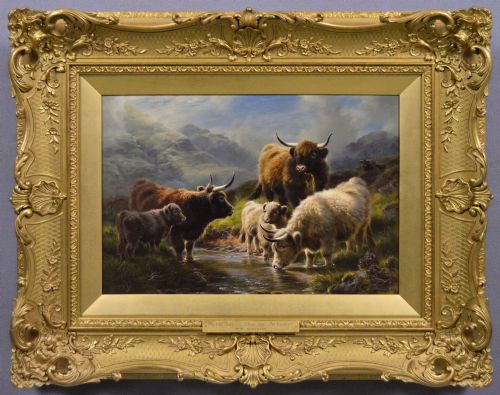
Framed artwork with cattle captures nineteenth-century pastoral life through oils on canvas and watercolours housed in giltwood.
Framed Artwork with Cattle
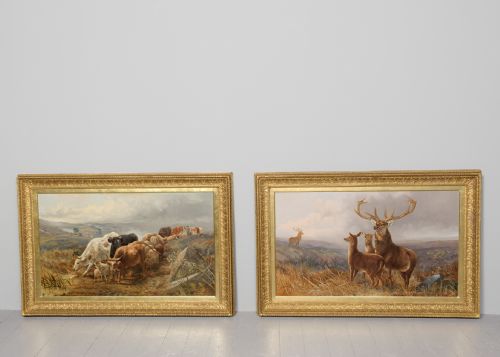
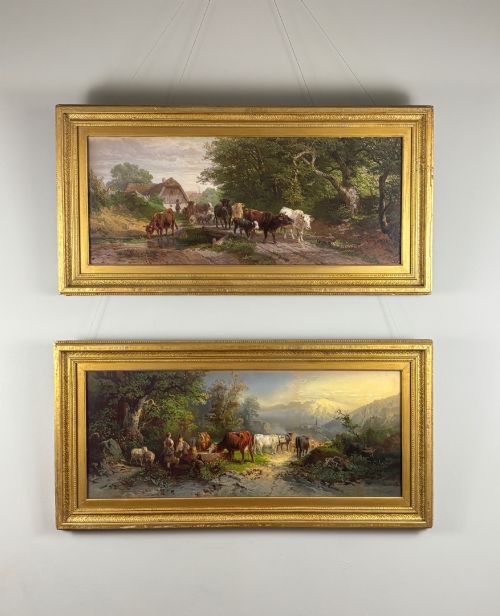
Buyers seeking framed artwork with cattle encounter nineteenth-century British school and Victorian pastoral pieces created across several decades. The selection centres on oil paintings and watercolours depicting farmyard scenes, river landscapes, and Highland settings.
Most examples date from the Victorian era, including specific years such as 1860, 1870, 1880, and 1890. These works combine landscape views with domestic animals and figures, reflecting nineteenth-century romanticism and realism.
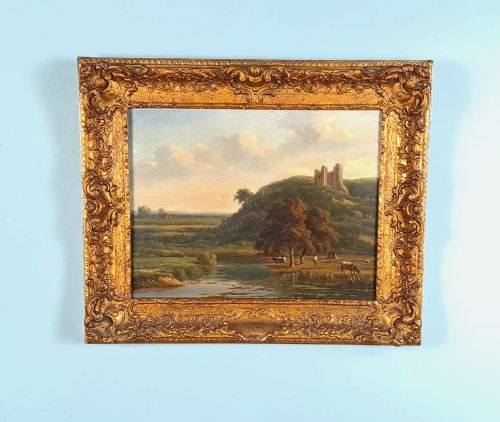
The subjects range from tranquil riverbanks to rugged Welsh landscapes and castle backdrops. Cattle appear alongside horses, pigs, goats, and poultry in detailed rural compositions.
Materials and construction
These works rely on oil paint applied to canvas or watercolour pigment on paper. Artists utilised these mediums to render natural light, animal textures, and atmospheric landscape backgrounds.
Framing typically involves giltwood and wood enclosures, often protected by glass in the case of watercolours. The combination of canvas, oil paint, and gilded frames defines the physical structure of the surviving pieces.
Artists occasionally crowded farmyards so thoroughly that pigs, goats, and poultry share the pasture with the titular cattle.
Distinctions in quality and execution
Quality rests upon the artist's handling of animal anatomy, light, and landscape depth. Finer examples demonstrate detailed observation in the rendering of cattle, figures, and surrounding foliage.
The execution of the surrounding frame, specifically carved and gilded wood, contributes to the overall presence of the piece. Works by recognised nineteenth-century painters exhibit superior brushwork and compositional balance compared to anonymous school pieces.
Henry Hillier Parker·Thomas Hunn·Eugene Verboeckhoven·Pierre Emmanuel Dielmans·George Turner·John Frederick Herring Jnr·Henry Brittan Willis·John R. K. Duff·Thomas Thomas
The Framed Artwork with Cattle Glossary
- Oil on Canvas
- Pigment mixed with drying oil applied to a stretched woven fabric support. This combination allowed artists to build rich layers of colour and texture.
- Watercolour Pigment
- Finely ground colour mixed with a water-soluble binder, applied to paper surfaces. It produces translucent washes suited to luminous atmospheric effects.
- Giltwood
- Wood carved and covered with a thin layer of gold leaf or gold paint. It provides a decorative boundary that isolates the artwork from its surroundings.
- Victorian Pastoral
- A nineteenth-century artistic style focusing on idealized rural life and agricultural scenes. These works celebrate the harmony between livestock, farmers, and the countryside.
Framed Artwork with Cattle: Frequently Asked Questions
What periods do these paintings come from?
The available works date entirely from the nineteenth century, spanning specific years from 1860 through 1890.
Victorian naturalism and pastoral styles dominate this period, reflecting contemporary rural interests.
How are these artworks framed?
Most pieces retain their original or period frames constructed from wood and giltwood.
Watercolour works on paper additionally feature protective glass coverings to prevent environmental damage.
What subjects accompany the cattle?
Compositions frequently incorporate human figures, farmyard buildings, rivers, and Welsh or Highland scenery.
Selected works also feature other farm animals such as horses, pigs, goats, and poultry.
Are these works painted on canvas?
Many examples utilise oil paint on canvas supports, while others consist of watercolours executed on paper.
Both methods were standard for nineteenth-century British and continental landscape painting.