


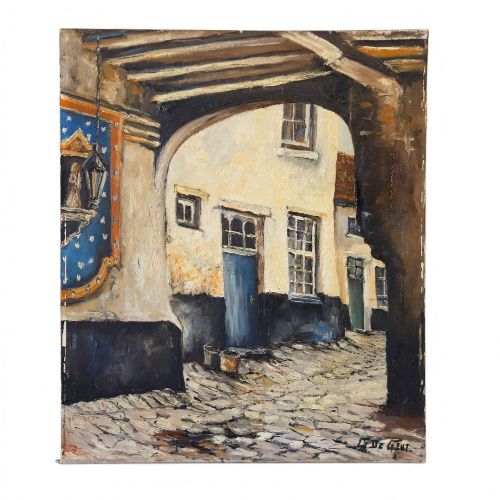
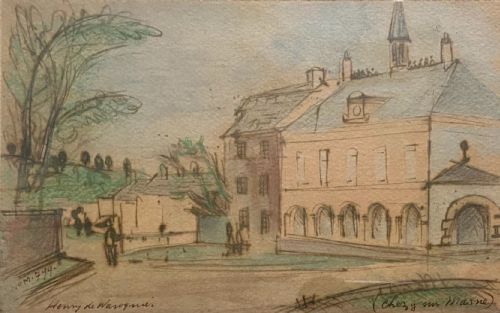
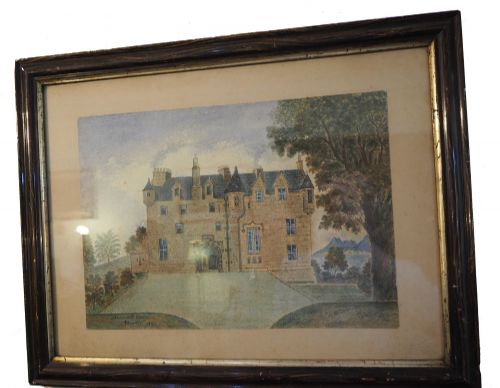
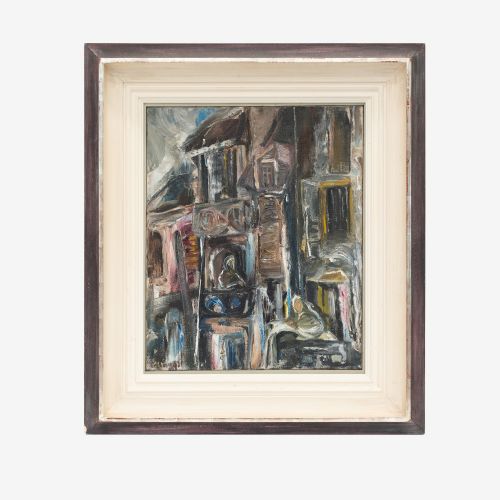
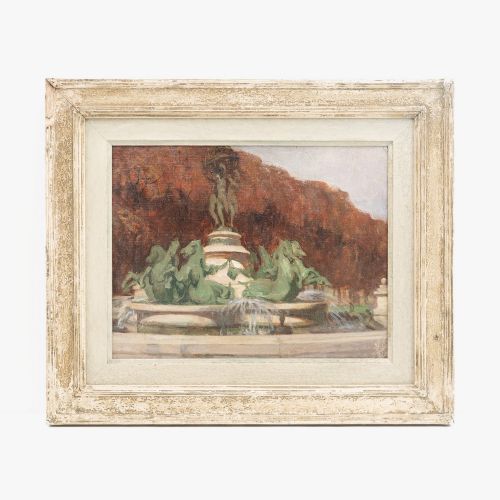

Framed Architectural Landscape Painting
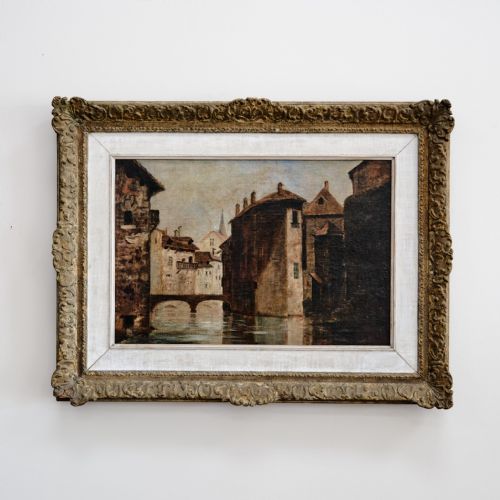
A framed architectural landscape painting brings urban geometry and natural space together, capturing townscapes, monuments, and buildings within environments that span multiple centuries.
Framed Architectural Landscape Painting
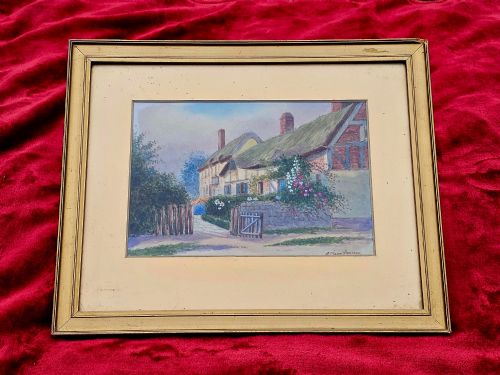
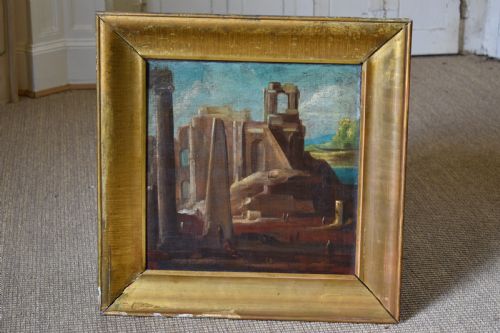
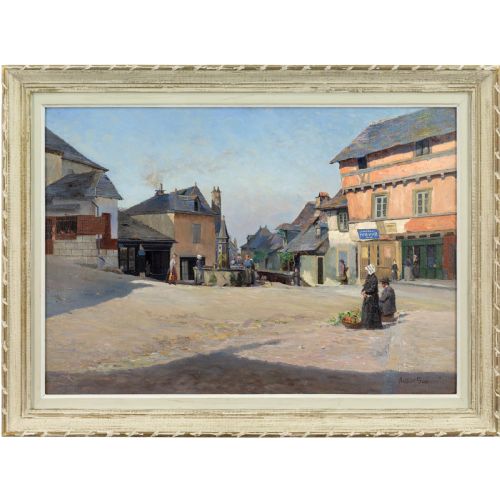
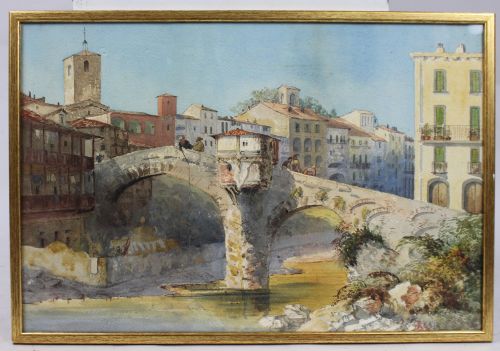
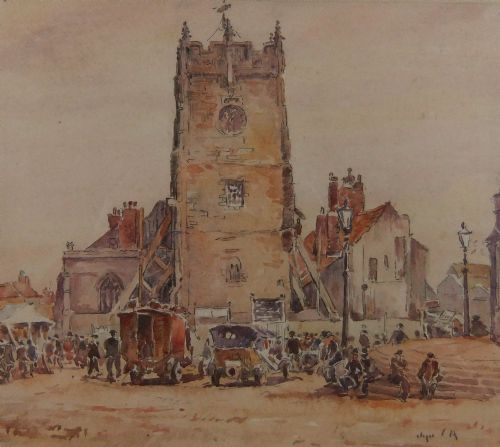
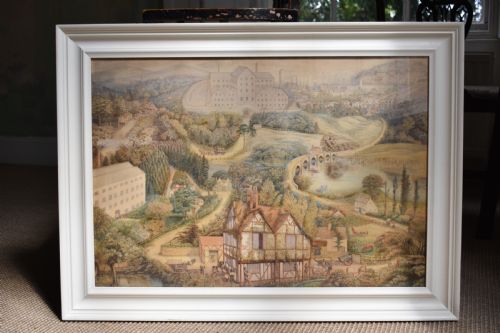
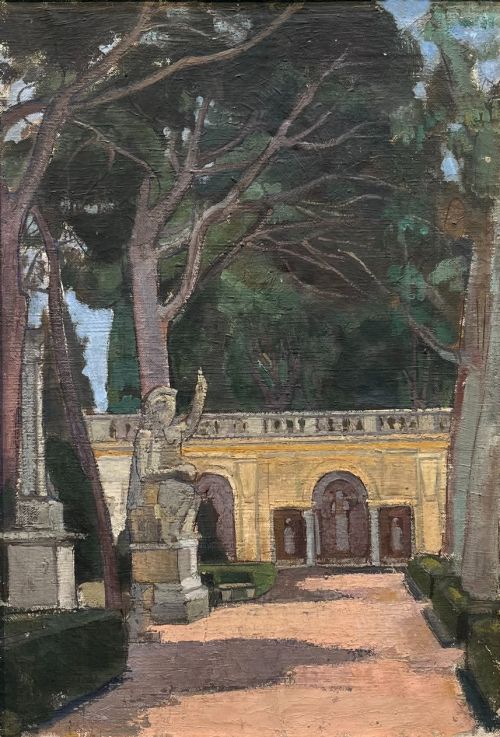
A framed architectural landscape painting combines built structures with natural surroundings, presenting scenes such as Venetian canals, market squares, and classical ruins. These works range from grand 19th-century oil canvases to mid-century impressionist cityscapes and delicate watercolours.
The selections on this page draw heavily from British and continental European traditions, including Edwardian watercolours, Victorian townscapes, and modernist street scenes. Buyers will encounter both intimate works on paper and large-scale oil paintings set within period frames.
Subject matter often includes specific locations like Prague Castle, Rome, Paris, and regional market towns, anchored by accurate depictions of bridges, castles, and civic buildings. The physical framing ranges from simple wooden mouldings to elaborate giltwood designs that complement the era of the artwork.
How They Were Made
Artists utilised oil paint on canvas, panel, and board to build rich textures, frequently applying impasto techniques for architectural surfaces and atmospheric skies. Watercolours and mixed media on paper offer a lighter, more translucent approach to capturing town halls, street scenes, and gardens.
The physical support often consists of stretched canvas over wood frames or paper secured behind glass within protective wooden and giltwood surrounds. These materials dictate the preservation of each piece, requiring stable environmental conditions to protect both the painted surface and the framing.
Several artists travelled across Europe simply to paint foreign bridges, market squares, and ancient castles.
What Varies in Quality
Depth of perspective and spatial control separate proficient architectural compositions from rigid or flat renderings of buildings and streets. The artist's handling of light and shadow across stone facades and natural landscapes determines the visual impact of the painting.
The integrity of the original support, the sensitivity of the brushwork, and the harmony between the painting and its period frame dictate the overall standing of the work. Superior examples demonstrate a confident command of proportion when integrating human figures with monumental architecture.
Thomas Ellison·A Marie Parsons·Arthur Gué·John Smith Atherton·Lilian Colbourn·Alexander Jamieson·Paul Élie Gernez·Alfred George Morgan·Fred Lawson·Ron Folland·Caroline Burnett·Stanley Orchart·Cornelis Christian Dommersen·E A Minardo·J W Hogley
The Framed Architectural Landscape Painting Glossary
- Grand Tour
- A cultural journey undertaken by European elites in the 18th and 19th centuries, which inspired topographical and architectural paintings of foreign cities. These artworks served as pictorial souvenirs of classical ruins and Mediterranean monuments.
- Giltwood
- Wood that has been coated with a thin layer of gold leaf or gilt paint, commonly used for ornate antique picture frames. It adds reflective warmth and historical context to the presentation of the canvas.
- Impasto
- A technique where paint is laid onto a surface in very thick layers, usually thick enough that the brush or painting-knife strokes are visible. It brings tactile dimension to stone walls and urban pavements.
- Watercolour
- A painting method in which the paints are made of pigments suspended in a water-based solution, typically executed on paper. This medium allows for luminous washes and precise architectural line work.
- Oil on Canvas
- Pigment mixed with a drying oil, applied to a woven fabric stretched across a wooden frame. This durable combination allows for rich colour blending and extensive layering.
Framed Architectural Landscape Painting: Frequently Asked Questions
What periods do these paintings cover?
The works span from the 17th century through the Georgian and Victorian eras, extending into Edwardian and mid-20th-century modernist movements.
Each period brings distinct stylistic approaches to urban and rural landscapes, reflecting changing artistic techniques over time.
How should I hang a framed architectural painting?
Select a wall with stable ambient temperature and minimal direct sunlight to protect the canvas, paper, and giltwood frame from degradation.
Ensure the hanging hardware matches the weight of the frame and securely engages with the wall structure.
What is the difference between an oil painting and a watercolour?
Oil paintings utilise pigment bound in drying oil on canvas or panel, offering deep colour saturation and visible texture like impasto.
Watercolours use water-soluble pigments on paper, presenting a lighter, transparent aesthetic that often highlights delicate architectural lines.
Are these paintings signed by the artists?
Many listings feature works bearing artist signatures, monograms, or contemporary inscriptions detailing locations and dates.
Some pieces originate from defined regional schools or circles of known painters, while others represent anonymous historical hands.