

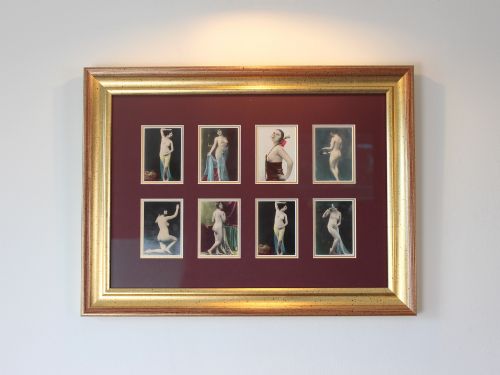


Framed Art Collection
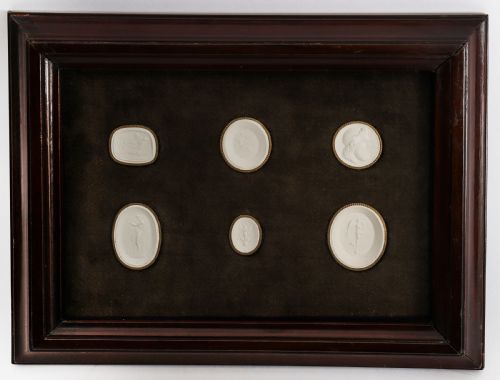
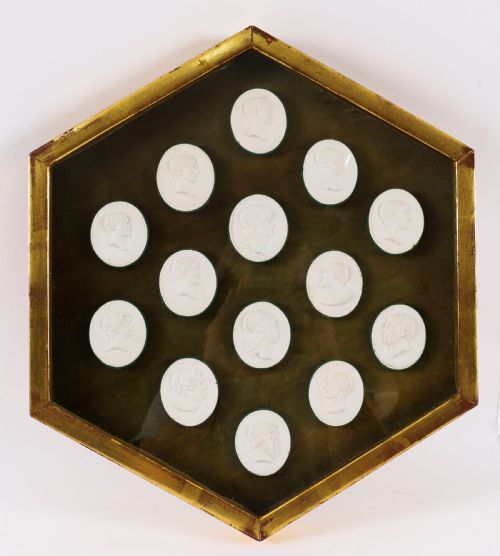
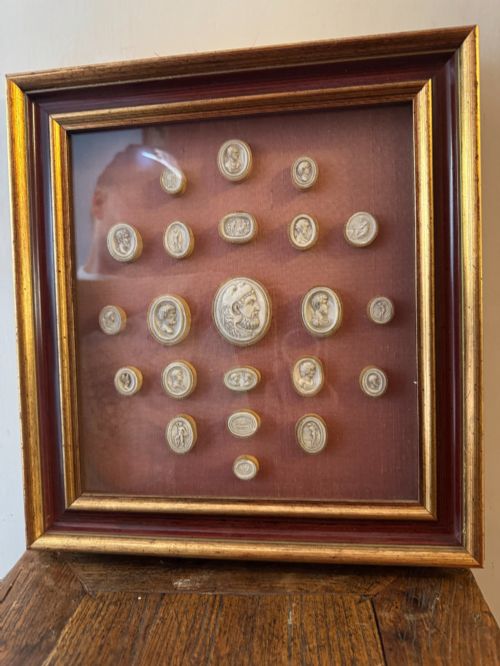
A framed antique art collection gathers miniature portraits, intaglios, and botanical specimens into unified wall displays, offering a focused study of historic craftsmanship.
How they were made
Makers utilised wood, glass, and gilt to construct secure frames that protected delicate interior components. Velvet and fabric backings often provide the contrasting background necessary to highlight plaster, wax, and paper elements.
Internal components incorporate diverse manual techniques including hand tinting on photographs, engraved line work on prints, and cast gypsum or sulfur for classical intaglios. Paper and textile elements rely on careful mounting to survive centuries of display.
What varies in quality
The integrity of the original arrangement distinguishes superior assemblies from random groupings. Collections that retain their period mounts and uniform framing present a more cohesive historical record.
Materials dictate the refinement of individual elements, such as the crispness of detail in plaster cast medallions or the depth of tone in hand-tinted prints and early photographs.
Listings feature 19th Century, Regency, 18th Century, 1920, Victorian, 1880, Edwardian, and 1900 periods.
Julian Mandel·Giovanni Liberotti·W Edward Grey·Lord Peter Bauer
The Framed Art Collection Glossary
- Grand Tour
- A traditional journey through Europe undertaken by upper-class young men in the eighteenth and nineteenth centuries. Souvenirs from these travels frequently included collections of classical intaglios and cameos.
- Intaglio
- A design carved into a material such as stone, shell, or glass so that the impression sinks below the surface. Plaster and wax casts were often made from these to form framed study sets.
- Autochrome
- An early colour photography process patented by the Lumière brothers in the early twentieth century. These transparencies produce distinctive textured colour images on glass plates.
- Decoupage
- The art of decorating a surface by applying paper cutouts and painting them with layers of lacquer or varnish. Framed sets of these prints reflect meticulous eighteenth and nineteenth-century craft.
- Pratt Ware
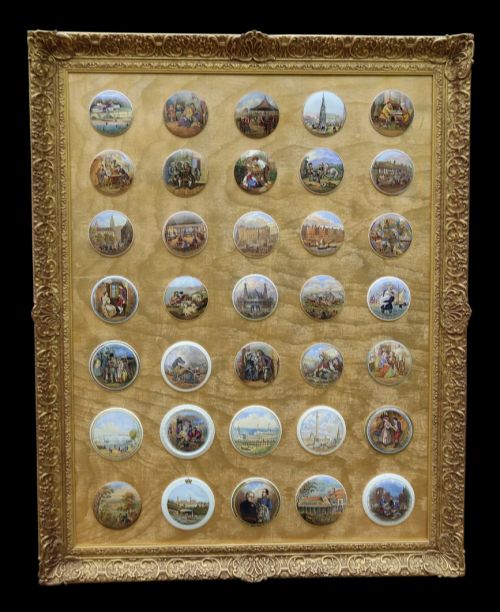
- A type of English earthenware popular in the nineteenth century, known for multicoloured underglaze prints. Framed pot lids from this tradition preserve miniature ceramic histories.
Framed Art Collection: Frequently Asked Questions
What is a framed antique art collection?
A framed antique art collection brings together multiple historic pieces, such as prints, intaglios, or photographs, within a single protective display frame.
These groupings allow makers or collectors to present related subjects as a cohesive visual narrative for interior walls.
How should I hang these collections?
These framed pieces require stable wall space away from direct sunlight to protect delicate paper, fabric, and photographic elements.
Because many sets contain heavy wooden frames or glass plates, secure wall fixings suited to the specific weight of the assembly are essential.
How do I identify the period of the framing?
Period frames often utilise traditional construction methods, such as hand-cut mitres, older glass types with natural bubbles, and period backing boards secured by old nails.
Comparing the materials of the frame to the date of the interior artwork helps confirm whether the presentation is original to the period.
Are the items inside fixed permanently?
Most items within these collections are mounted onto fabric, paper, or board backgrounds to keep each piece secure within the frame.
Opening or altering these mounts risks damaging delicate historic components like wax portraits, plaster casts, or early hand-tinted photographs.