
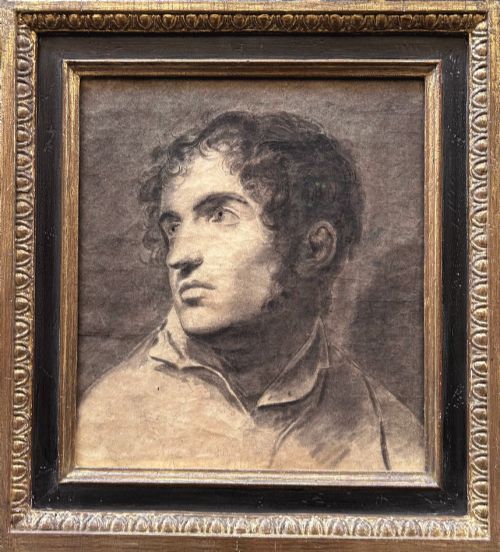
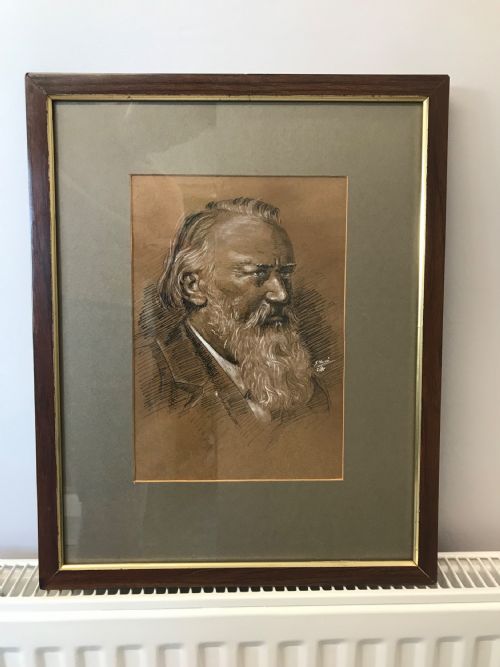

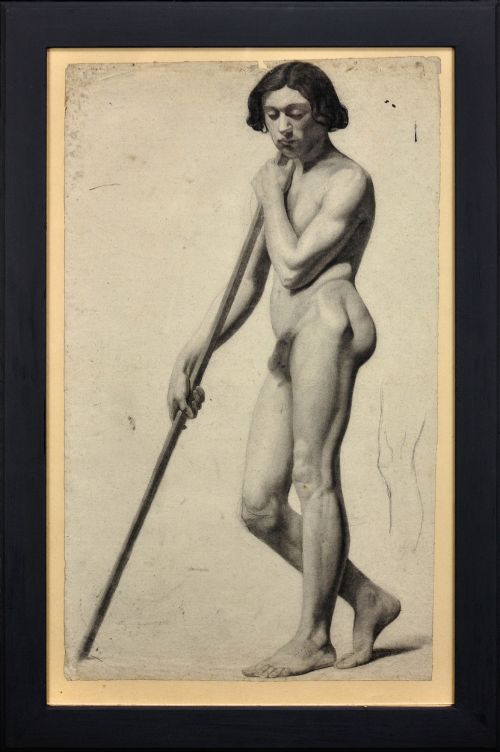


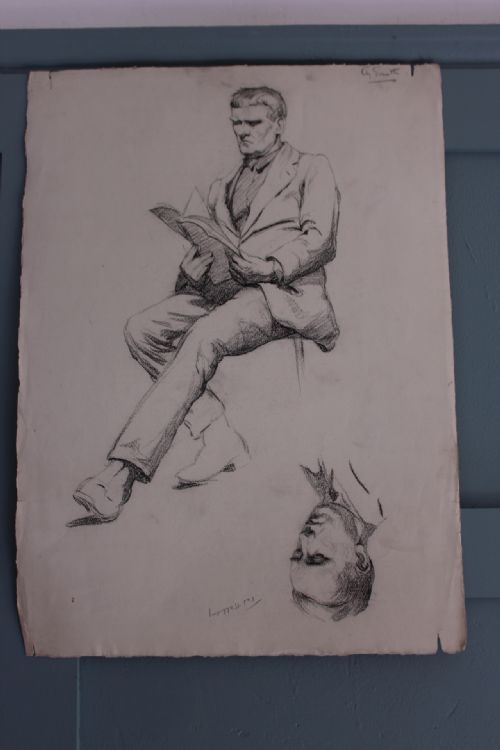


Framed Academic Portrait Drawing
A framed academic portrait drawing brings intense character and rigorous draftsmanship into a room, offering an intimate window into past lives.
Framed Academic Portrait Drawing
A framed academic portrait drawing is a detailed study of the human face or figure, executed with formal precision and preserved behind glass. When searching this phrase, a buyer encounters works ranging from eighteenth-century sheets to mid-twentieth-century examples.
The selections span distinct periods, including Victorian, Edwardian, and French School creations. Portrait subjects vary from young boys and notable figures to anonymous life studies.
Most pieces arrive ready to hang in traditional wood or giltwood surrounds. These works capture likenesses through careful observation rather than hurried sketches.
How they were made
Draftsmen relied primarily on paper supports, applying charcoal, graphite, chalk, or pencil to build form and shadow. Wash and gouache occasionally supplement the dry mediums for added depth.
Traditional framing utilised wood and giltwood to protect the delicate works on paper beneath glass. The materials reflect the academic training of artists working within established European traditions.
Listings feature paper, charcoal, graphite, chalk, pencil, and wood across periods spanning the eighteenth century to the twentieth century.
What varies in quality
Quality rests upon the sureness of the hand and the depth of psychological insight captured by the artist. Masterful command of tone and anatomy distinguishes a routine student exercise from a compelling portrait.
The preservation of the paper and the suitability of the period frame contribute to the overall integrity of the piece. Works bearing clear attribution to known practitioners or academic institutions often demonstrate superior draughtsmanship.
Augustus John·Winifred Eugene Ballard·Reginald G. Eves·Theobald Chartran·Ernest Borough Johnson·George Richmond
The Framed Academic Portrait Drawing Glossary
- Academic realism
- Art produced under the influence of European academies of art, emphasising rigorous adherence to classical standards, anatomy, and observation.
- Charcoal
- A form of dry carbonised organic material used for drawing, capable of producing deep blacks and subtle tonal gradations.
- Giltwood
- Wood that has been treated with gold leaf or gold paint, commonly utilised on traditional picture frames.
- Graphite
- A crystalline form of carbon used in pencils, allowing for precise lines and fine tonal shading.
- Life study
- A drawing or painting executed directly from a live model, serving as a cornerstone of traditional art education.
Framed Academic Portrait Drawing: Frequently Asked Questions
How do I care for a framed drawing?
Keep works on paper away from direct sunlight to prevent the fading of charcoal, graphite, and chalk mediums.
Maintain stable humidity levels in the room to protect both the historic paper and the wooden frame.
Are these drawings original works?
The listings consist of original hand-drawn portraits rather than printed reproductions. Each sheet represents a unique primary creation by the artist.
Signatures or studio attributions often accompany the pieces to verify their authenticity.
What periods do these portraits cover?
The selection spans from the eighteenth century through the nineteenth and twentieth centuries, including Edwardian and Victorian examples.
Certain pieces reflect specific European academic traditions, such as the nineteenth-century French School.
How should I hang a portrait drawing?
Select a wall with indirect light to safeguard the fragile paper and medium from environmental damage.
Pair the antique wooden or giltwood frame with complementary traditional decor to enhance the room.