
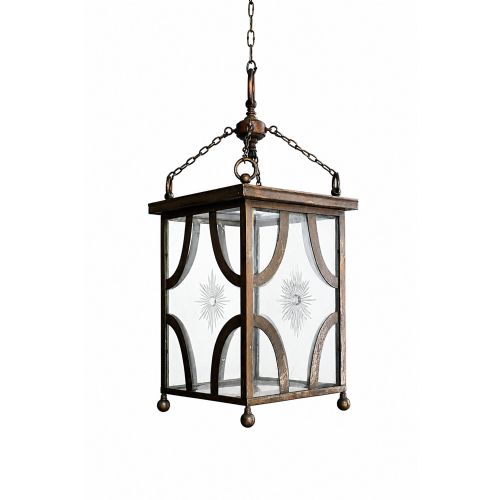
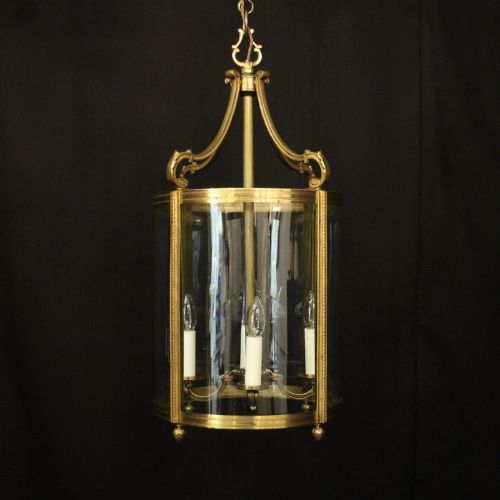
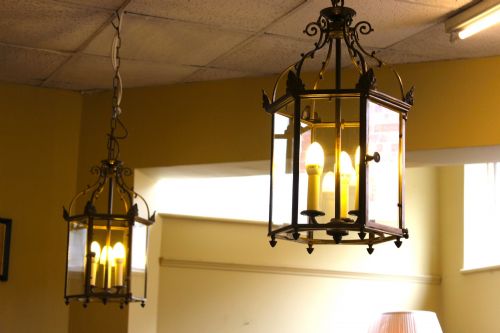
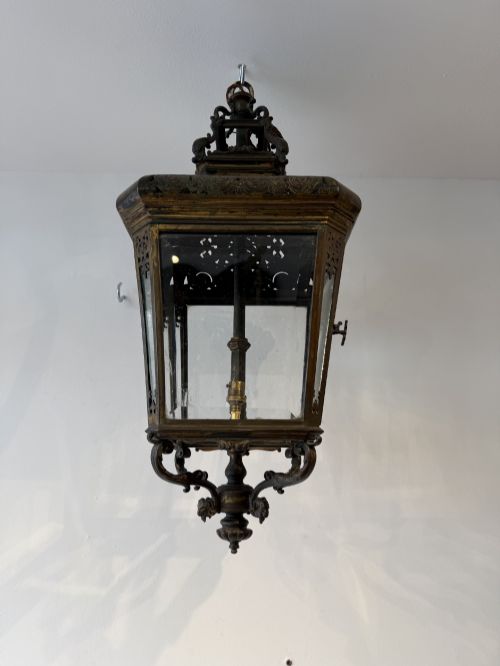
Foyer Hanging Light
A foyer hanging light sets the tone for an entrance, illuminating hallways with period character and architectural metalwork.
Foyer Hanging Light
A foyer hanging light encompasses ceiling lights, chandeliers, and hanging lanterns designed specifically for entrance halls and vestibules. These pieces provide welcoming illumination while establishing the decorative character of a property from the threshold.
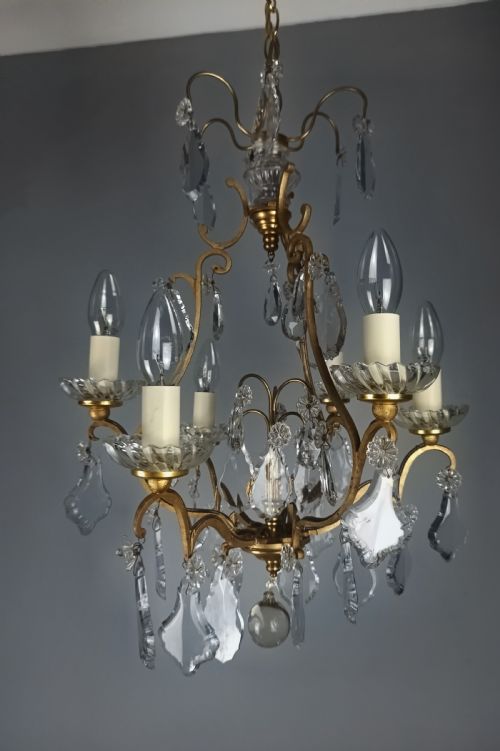
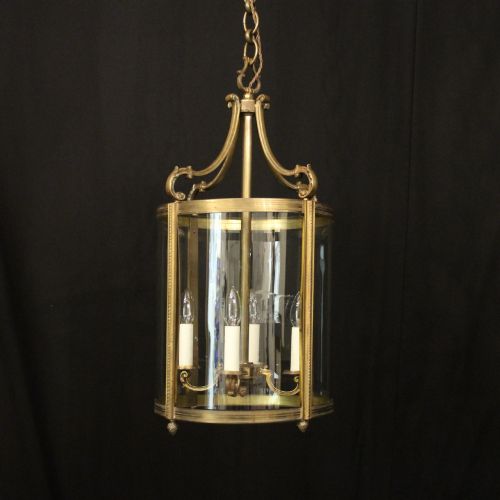
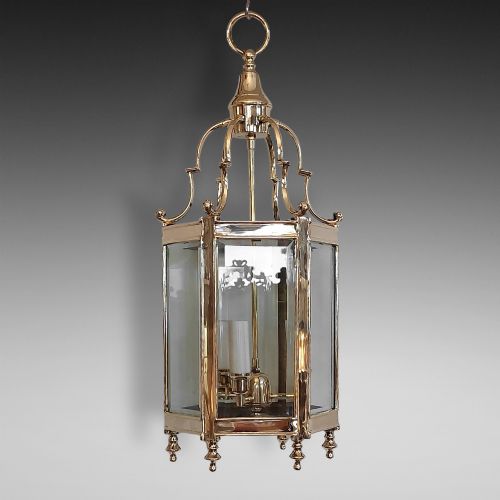
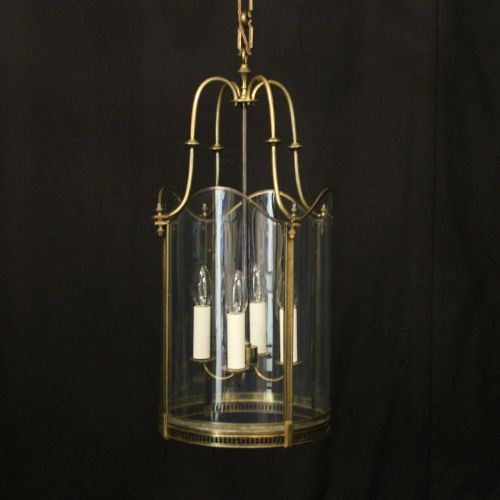
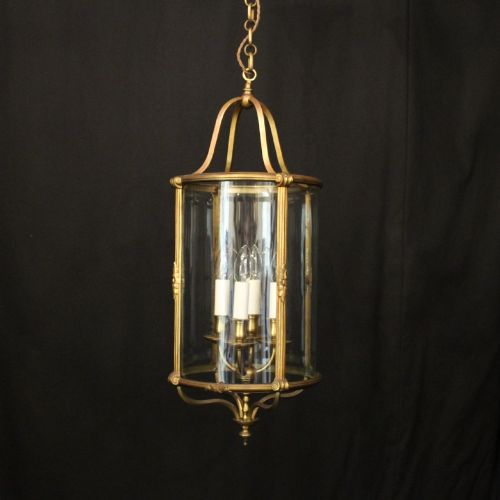
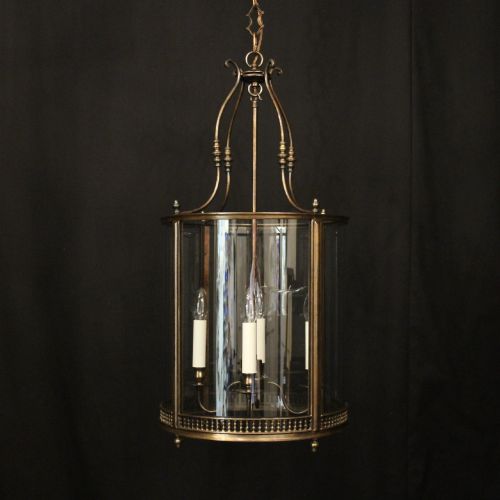
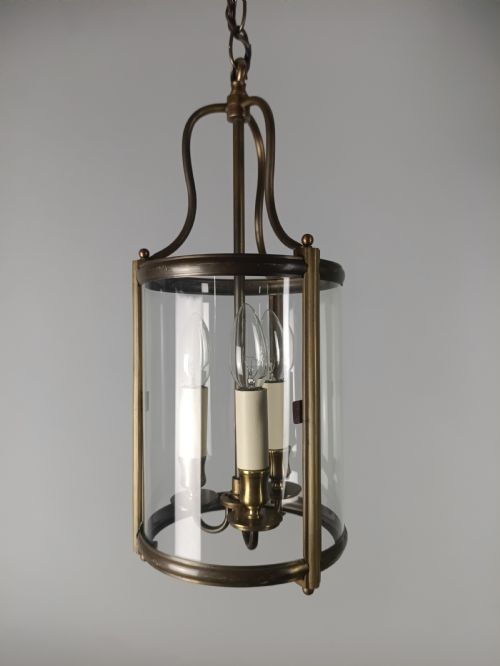
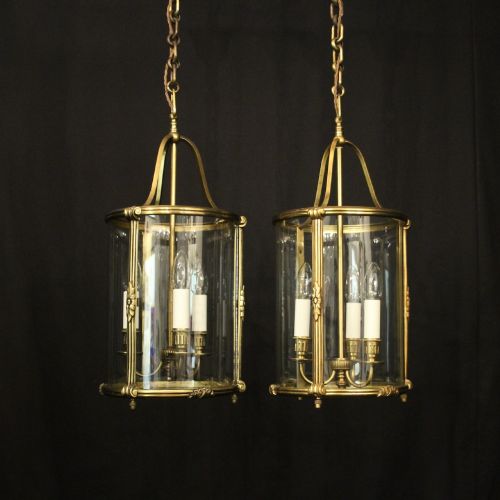
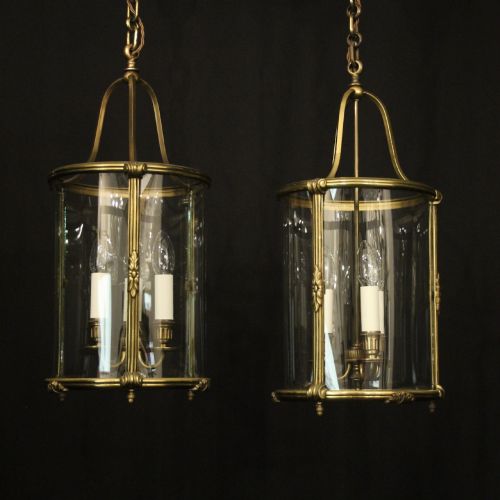
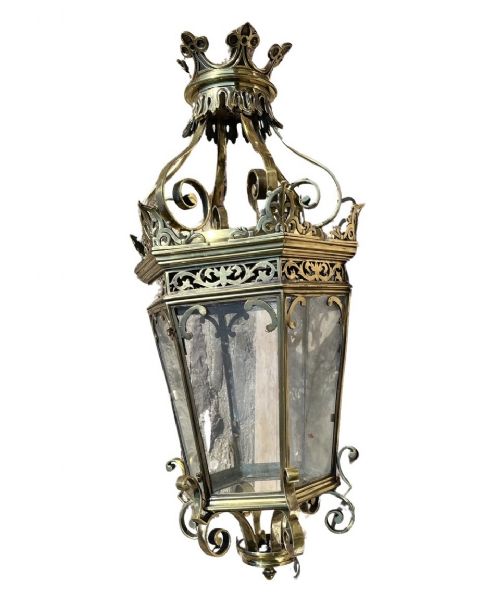
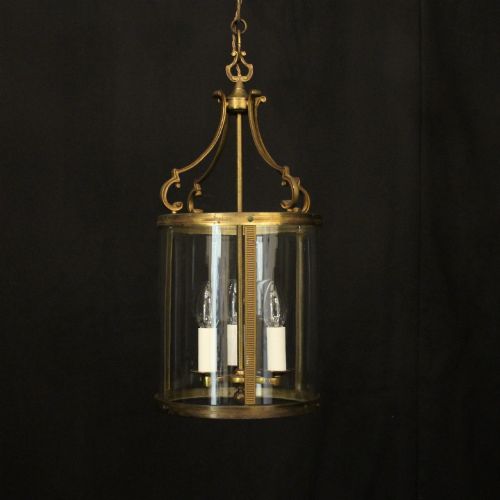
The selections on this page are dominated by French and English examples spanning the nineteenth and early twentieth centuries. Lantern forms, including convex and hexagonal designs, sit alongside multi-light chandeliers and birdcage configurations.
Makers drew upon diverse historical traditions, producing pieces in Victorian, Edwardian, Neoclassical, and Gothic Revival styles. French chateau and rococo revival influences also appear frequently among the gilded bronze and brass fixtures.
How they were made
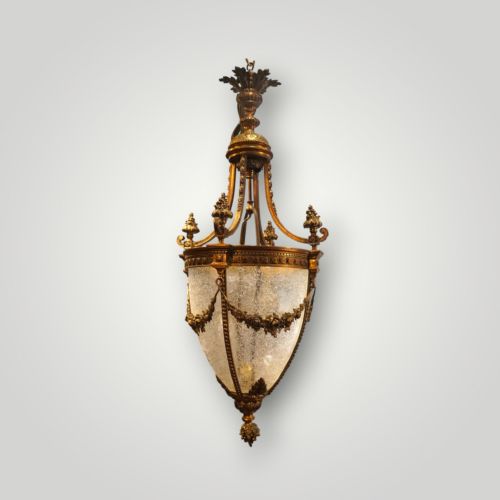
Workshops utilised metals such as brass, bronze, and gilt bronze to construct the sturdy skeletal frames necessary to support heavy glass panels. Gilding techniques applied gold leaf or metallic finishes to bronze and brass surfaces for reflective brilliance.
Glazing involved fitted glass panes, including bevelled and convex panels that diffused light and added textural depth. Metal casting and soldering formed the intricate structural ribs, hinges, and decorative mounts characteristic of hall lanterns.
Periods represented span from the mid-nineteenth century through the Edwardian era and the 1930s.
What varies in quality
The refinement of the metal casting and the crispness of applied chasing distinguish finer examples from standard production. Superior frames display deeply articulated ornamentation and well-engineered door closures within the metalwork.
The inclusion of heavy bevelled or convex glass panels rather than flat, plain glass elevates the sophistication of a piece. Original gilding and integrated multi-light internal clusters also denote higher craftsmanship.
The Foyer Hanging Light Glossary
- Convex glass
- Curved glass panels that bulge outward, designed to refract light more widely across an entrance hall. This glazing style appears frequently on French lanterns.
- Gilt bronze
- Bronze mounted with a thin layer of gold leaf or finished with mercury gilding. It provides a durable, lustrous surface popular in French neoclassical design.
- Hexagonal lantern
- A hanging light fixture featuring six sides, offering a symmetrical geometric profile. These pieces often incorporate brass frames and glass panes.
- Birdcage chandelier
- A multi-light ceiling fixture constructed with a curved metal framework resembling a birdcage. They frequently incorporate crystal drops and glass elements.
- Hall lantern
- An enclosed hanging light created for corridors and vestibules. They combine protective metal frames with glass panels to shield interior candles or bulbs.
Foyer Hanging Light: Frequently Asked Questions
How do I hang a heavy brass lantern?
Hanging a heavy brass or bronze lantern requires securing the fixture directly into ceiling joists or structural nogging using an appropriate steel hook and chain. Due to the substantial weight of cast metal and glass panels, electrical boxes alone cannot support these pieces safely.
Professional installation ensures the canopy sits flush against the ceiling while bearing the full load of the lantern. Adjusting the suspension height allows the light to hang centrally within the architectural volume of the hallway.
Where should I place a foyer hanging light?
Positioning a foyer hanging light in the centre of an entrance hall creates a balanced focal point upon entry. The bottom of the fixture typically hangs at least seven feet above the floor to maintain adequate clearance for walking underneath.
In double-height spaces or stairwells, hanging the light slightly lower draws the eye upward and illuminates architectural transitions. Pairing the piece with wall sconces from a similar period helps distribute light evenly across larger entryways.
How do I identify a French chateau style lantern?
French chateau style lanterns display ornate gilt bronze or brass frames incorporating neoclassical or rococo motifs such as acanthus leaves and scrolling ribbons. These fixtures often feature convex glass and multiple internal light branches designed for grand spaces.
Examining the construction reveals characteristic European casting methods and patination found in nineteenth and early twentieth-century workshops. The scale of these pieces tends to be substantial, reflecting their original placement in high-ceilinged residences.
Can these antique lanterns be wired for modern electricity?
Most antique lanterns are adapted for modern electrical standards by running discreet internal wiring through the original central channels. This preserves the exterior appearance of the brass or bronze frame while allowing safe domestic illumination.
Rewiring usually involves updating internal lamp holders to accommodate standard bulb bases. A qualified restorer can perform this update without altering the historic metalwork or decorative glass.