


Fox Hunt Painting
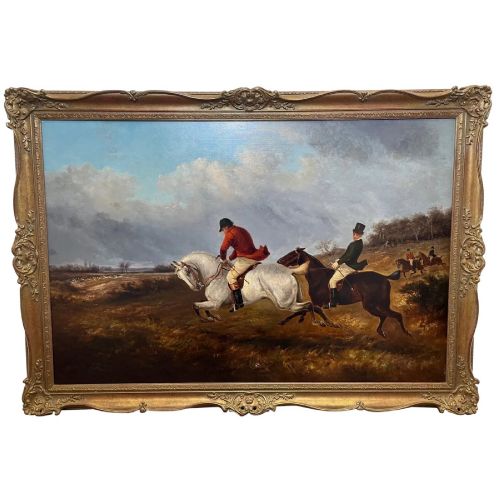
A fox hunt painting captures the motion of horses, hounds, and riders across traditional British landscapes.
Fox Hunt Painting
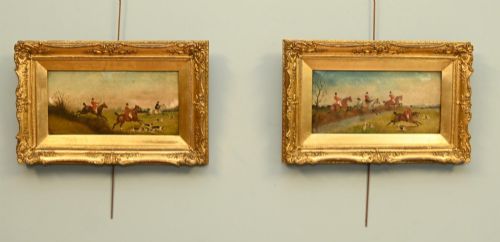
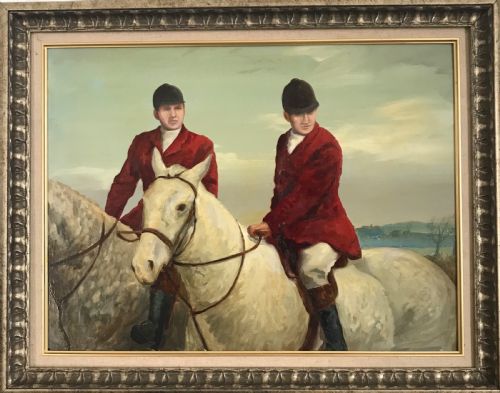
A fox hunt painting records equestrian pursuits through countryside landscapes, depicting subjects from the meet and the full cry to the death. The examples found here span from the early nineteenth century through the Edwardian era, showing both mounted huntsmen and dedicated packs of hounds.
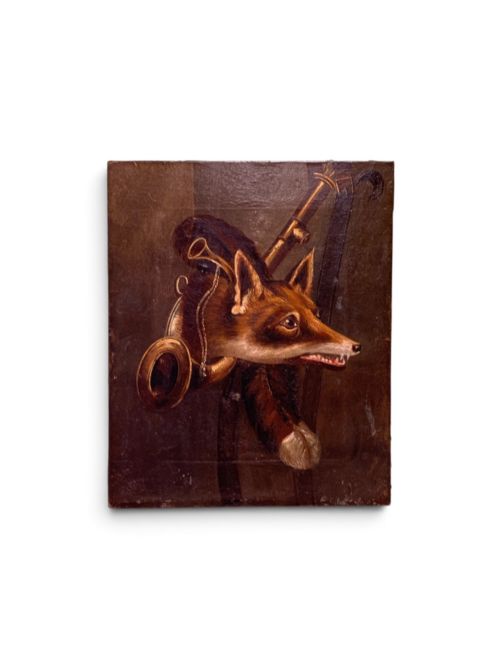
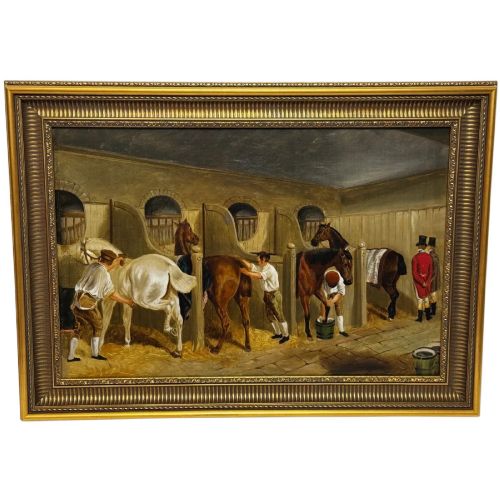
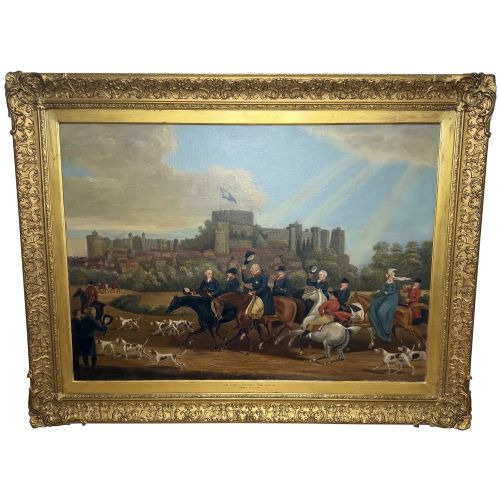
Most selections utilise oil paint on canvas or panel, alongside detailed watercolours on paper. Buyers frequently encounter framed works signed by notable sporting artists from Victorian and Edwardian periods, recording horses and hounds in winter terrain or open fields.
How they were made
Artists applied oil paint to stretched canvas, wood panels, or occasionally card, building up rich layers of colour for the horses, coats, and rolling countryside. Watercolour pigments were handled with precise brushwork on paper, often capturing monochrome or tinted tonal shifts in field conditions.
Traditional framing typically involved gilt wood mouldings that complemented the depth of the pigments. Many surviving works retain their original frames, which frequently carry artist inscriptions or period studio plaques.
Several hounds clearly possess more enthusiasm for the surrounding winter snow than the actual direction of the fox.
What varies in quality
The standard of a sporting work rests upon the anatomical accuracy of the horses and hounds in motion, alongside the atmospheric perspective of the landscape. Master hands command precise control over muscle tension, coat textures, and the psychological energy of the chase.
Condition plays a central role, distinguishing works with stable paint layers and minimal past restoration from those showing heavy craquelure or pigment flaking. Original framing and clear artist attribution elevate the standing of a piece within the field of sporting art.
Thomas Smythe·John Arthur Lomax·Basil Nightingale·Philip Henry Rideout·George Armfield·Charles Faulkner·Fannie Moody·John Frederick Herring Jnr·John Sanderson-Wells·Charles Clifford Turner·Thomas Ivester Lloyd·Charles Johnson Payne Snaffles·Heywood Hardy·Guillaume Urban Regamey·George Goodwin Kilburne·William J Hodgson·Frank Dadd·Edward B Herberte·Henry Bernard Chalon·Henry Alken·Reginald Mills·Alfred Steinacker·John Dean·Henry Frederick Lucas-Lucas·Francis Kenneth Elwell
The Fox Hunt Painting Glossary
- Full cry
- The intense phase of the chase when the entire pack of hounds is actively vocalising on the scent.
- The meet
- The initial gathering of riders, horses, and hounds before setting off into the countryside.
- Stirrup cup
- A traditional parting drink offered to mounted participants at the beginning of the hunt.
- Hogarth frame
- A distinctive wooden picture frame featuring an ogee profile with dark, lined finishing popular for traditional watercolours and oils.
- Provenance
- The documented history of ownership that traces a piece from its creation to the present collection.
Fox Hunt Painting: Frequently Asked Questions
What periods do these paintings represent?
The available works heavily feature nineteenth-century and Victorian pieces, alongside Edwardian examples and early twentieth-century interpretations.
Artists from these periods recorded the shifting styles of British sporting art across oils and watercolours.
Who are the prominent artists featured?
The collection includes signed works by recognised nineteenth and twentieth-century painters such as Philip Henry Rideout, Charles Johnson Payne Snaffles, and George Goodwin Kilburne.
Many pieces bear signatures or attributions to established practitioners of British sporting scenes.
What materials were used by the artists?
Painters primarily utilised oil paint on canvas, wood panels, or board, while others worked in watercolour on paper.
Gilt wood frames frequently house these artworks, preserving their nineteenth and early twentieth-century presentation.
How should I care for an antique oil painting?
Keep the artwork away from direct sunlight and steady fluctuations in room temperature to protect the canvas and paint layers.
Dust the surface gently with a soft, dry brush and avoid using chemical cleaning solutions.