




Four Drawer Sideboard
These four drawer sideboard examples combine deep storage with surface utility, spanning centuries of British and continental cabinetmaking.
Four Drawer Sideboard
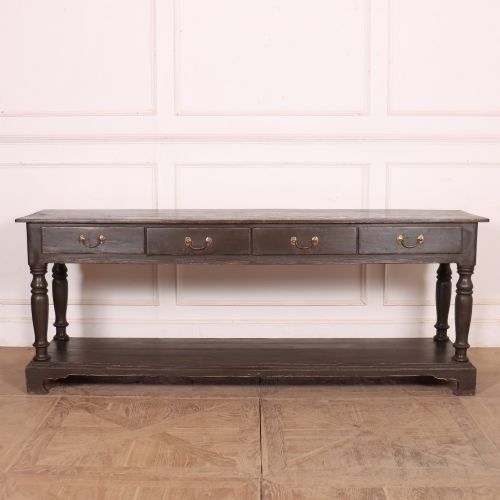
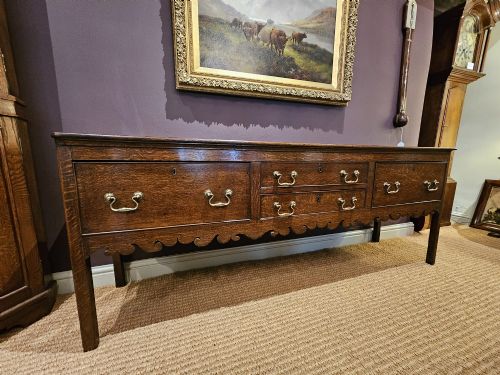
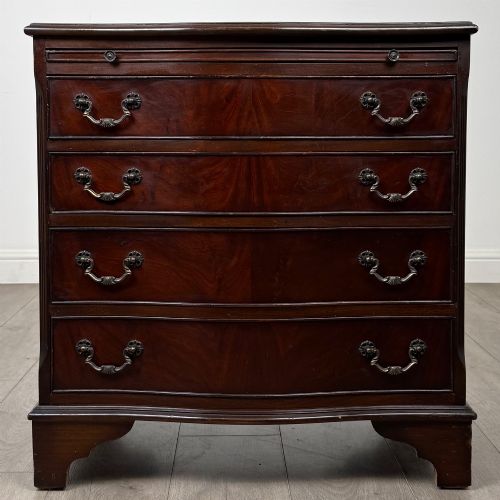
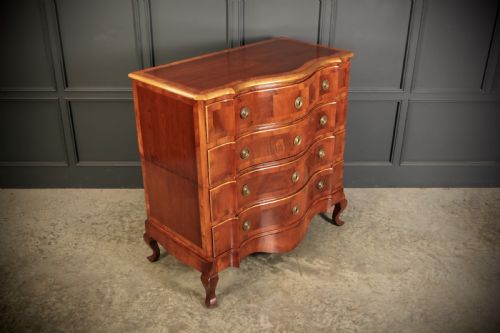
A four drawer sideboard represents a practical form spanning utilitarian pine kitchen pieces to refined walnut and mahogany commodes. When searching for a four drawer sideboard, buyers encounter items designated across various historic periods from the eighteenth century through the Edwardian era.
The inventory demonstrates that these forms overlap with dresser bases, serpentine commodes, and tall chests of drawers. Eighteenth-century Georgian examples lean heavily on robust oak, while later nineteenth-century pieces embrace mahogany, walnut, and pine.
Continental influences appear through French Louis Philippe commodes, Italian commodes, and Danish serpentine chests. Buyers typically select these designs to anchor a dining room or hallway with substantial timber presence.
Distinctions in quality and finish
Quality reveals itself in the selection of primary timbers, such as figured mahogany or burr walnut veneers versus simpler painted pine. Cabinetmaking skill shows in the precision of the drawer dovetails and the fluidity of serpentine or bowfront curves.
Surface preservation dictates overall desirability, separating items retaining original patination from heavily restored examples. The integrity of internal framing and the original brass hardware further elevate superior specimens.
Object descriptions across the archive record diverse forms including commodes, buffet units, console tables, and traditional dresser bases.
The Four Drawer Sideboard Glossary
- Serpentine
- A front shape curving outward in the centre and inward at the sides. This profile requires immense skill from the cabinetmaker to execute successfully.
- Commode
- A low chest of drawers or cabinet originating in France. These pieces often feature fine burr walnut or marble tops.
- Dresser base
- A lower storage unit featuring drawers and sometimes cupboards, historically used in kitchens and dining rooms. They provide robust surfaces alongside ample drawer capacity.
- Dovetail
- A joint formed by interlocking wedge-shaped fingers used to join drawer corners. Hand-cut variations indicate older, traditional construction methods.
- Bowfront
- A convex curving front profile popular on Georgian and Edwardian chests. This design softens the geometric lines of a room.
Four Drawer Sideboard: Frequently Asked Questions
How do I date a wooden chest?
Examine the timber species, construction joints like dovetails, and overall hardware styles. Earlier pieces often display hand-sawn oak timbers and simpler structural framing.
Secondary woods and backboards also provide clues regarding the workshop origin and manufacturing decade. Comparing these elements against known period styles helps narrow the date of creation.
What is a dresser base?
A dresser base is a long, low storage unit featuring multiple drawers positioned above cupboards or open space. These utilitarian items served kitchens and halls for food preparation and storage.
Over time, these pieces transitioned into dining rooms as serving surfaces. Their sturdy construction makes them practical for modern storage needs.
Where should I place a sideboard?
Sideboards suit dining rooms, hallways, and living spaces where surface area and enclosed storage are required. Their depth dictates placement against substantial walls.
Ensure clearance for drawers and doors to open fully without obstruction from other furniture. Positioning them away from direct heat sources protects the historic timber.
How do I maintain polished timber?
Dust surfaces regularly with a soft, dry cloth to prevent abrasive particle buildup. Avoid silicone sprays which can degrade historic wax finishes over time.
Apply a traditional beeswax polish sparingly to nourish dry wood and maintain the natural lustre. Keep pieces out of direct sunlight to prevent fading and timber shrinkage.