

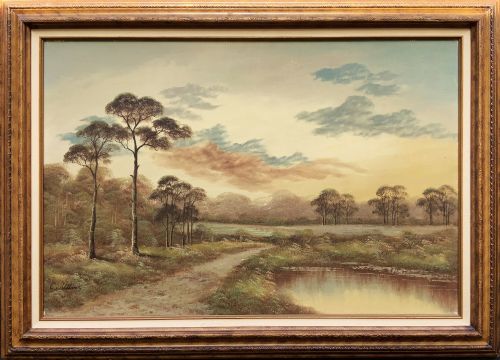

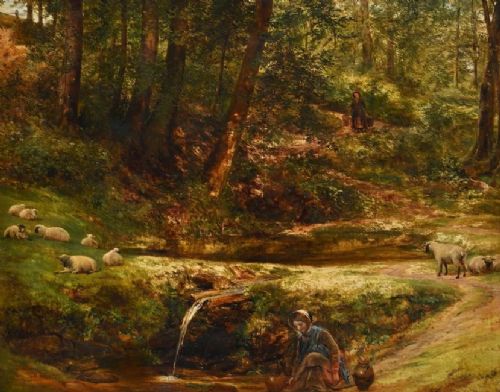


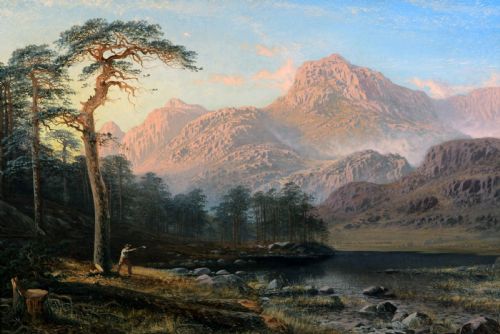


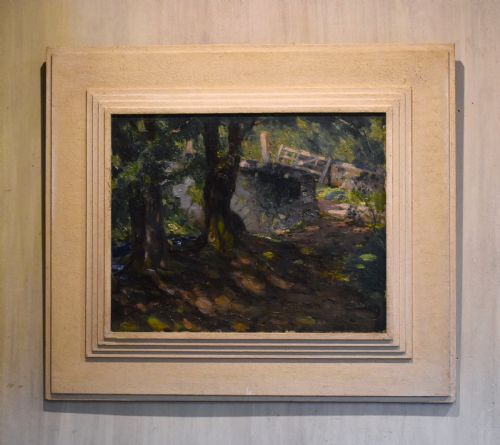
Forest Oil Painting Canvas
A forest oil painting canvas captures trees and light, offering a window into quiet woodlands from Victorian times to the mid-century.
Forest Oil Painting Canvas
When you search for a forest oil painting canvas, you encounter works portraying woodland scenes, trees, and country landscapes. These artworks range from Victorian landscapes to mid-century impressionism.
The pieces on this page span several periods, including the nineteenth century, Edwardian era, and the nineteen-sixties. Painters render these woodland settings using traditional realism and British impressionism.
Subjects vary from quiet glens and fairy woods to cattle in woodland settings and sunset river views. Works originate from British, French, and Danish artists working on canvas.
How they were made
Artists apply oil paint directly onto stretched canvas surfaces using brushes and palette knives. Many works also incorporate wood for stretchers and frames.
Gilt and gesso frequently finish the wooden frames surrounding these canvases. These materials provide structural support and decorative ornamentation for the paintings.
Forest Oil Painting Canvas Retail Price Guide 2026
Typical asking prices for forest oil painting canvas among the pieces listed under this phrase on Sellingantiques today, from the lower quarter to the upper quarter. They describe what is for sale here now, not the wider market.
Materials appearing in the collection include oil paint, canvas, wood, gesso, and gilt.
What varies in quality
Brushwork precision and light handling distinguish the handling of foliage, shadows, and open skies. Skilled painters capture luminous atmospheric effects rather than rigid botanical detail.
The depth of the composition and the condition of both the canvas and the accompanying gilt frame influence the overall character of the piece.
C Williams·William H Myers·Richard Redgrave·Thomas Bromley Blacklock·David Watts·James Proudfoot·Ernest Higgins Rigg·Frederick Golden Short·J McIntyre·Augustus William Enness·A Wood·Hans Kappel Øvre·Walter Emsley·William Mellor·Charles Pettitt·Henri Harpignies
The Forest Oil Painting Canvas Glossary
- Canvas
- A heavy woven fabric used as a surface for oil painting. It is typically stretched over a wooden frame before work begins.
- Gesso
- A primer mixture consisting of a binder mixed with chalk, gypsum, or pigment. Painters apply it to prepare wooden panels and frames before gilding or painting.
- Gilt
- A thin layer of gold leaf or gold paint applied to frame surfaces. It enhances the visual presentation of the artwork.
- Impressionism
- A style of painting that focuses on light and its changing qualities rather than precise detail. Practitioners capture the immediate visual impression of a scene.
- Barbizon School
- A group of French painters associated with a movement towards real-life landscape painting. Their work prioritises atmospheric woodland and forest scenes.
Forest Oil Painting Canvas: Frequently Asked Questions
How do I care for an oil painting canvas?
Keep the canvas away from direct sunlight and damp conditions to protect the oil paint and fabric.
Dust the surface gently with a dry, soft brush without applying pressure to the paint layer.
What periods do these forest paintings cover?
The works span from the Victorian era through the Edwardian period to mid-century impressionism.
Dates range from the nineteenth century up to nineteen-sixty.
Are these paintings signed by the artists?
Many pieces feature signatures from period painters, while others remain attributed to specific schools or circles.
Signatures help verify the origins of works created during the nineteenth and twentieth centuries.
Where were these woodland scenes painted?
Artists painted landscapes set in British regions such as Yorkshire, Hampshire, and the Lake District.
Other works originate from European settings in France and Denmark.