



Footed Plant Pot
These footed plant pot pieces are substantial vessels designed to elevate greenery, offering character and period charm for both interior and exterior spaces.
Footed Plant Pot
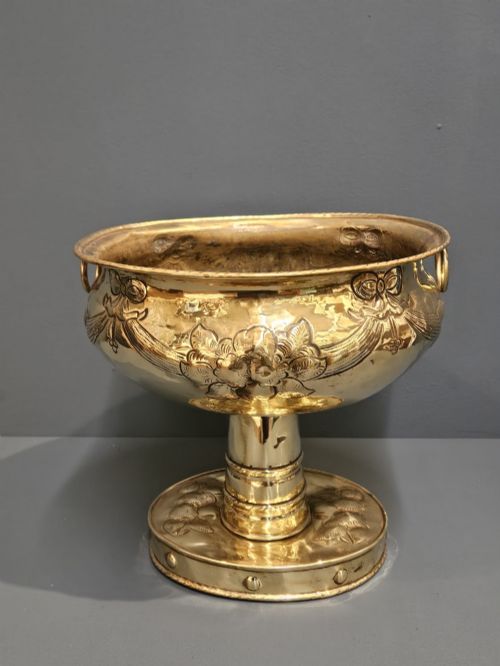
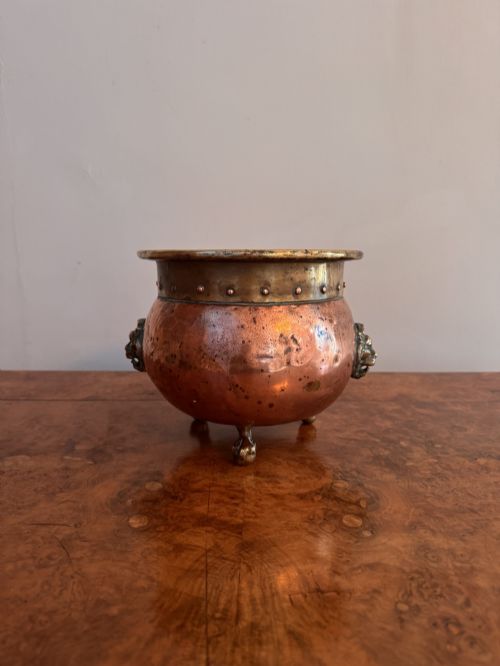
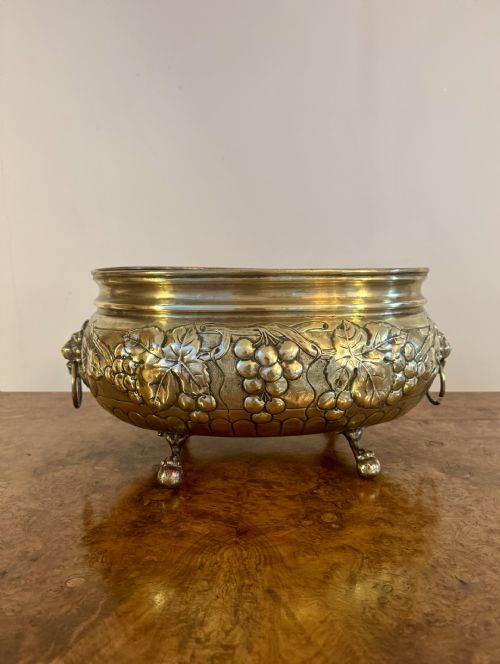
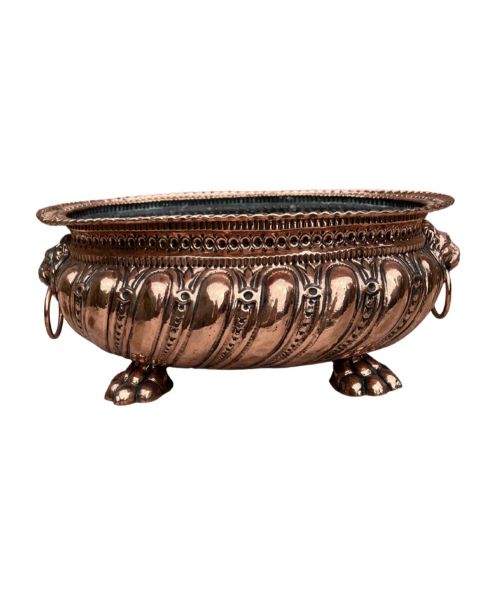
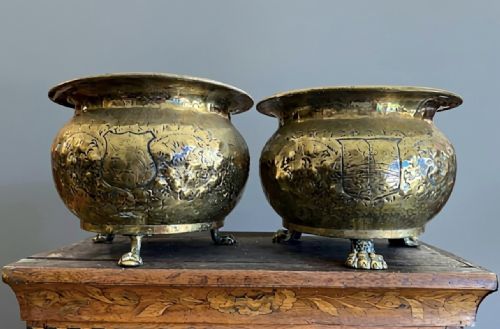
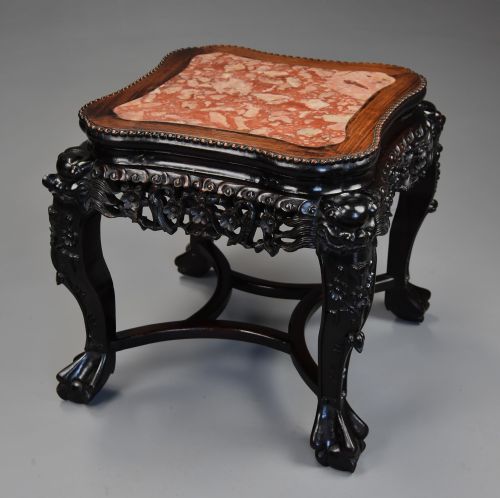
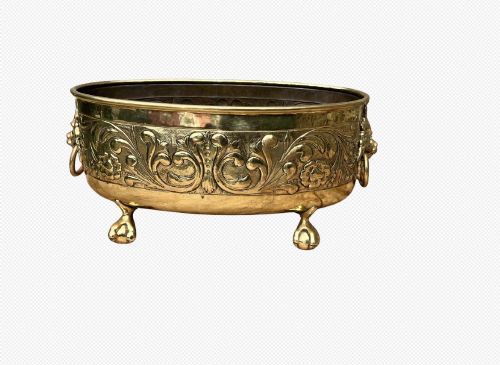
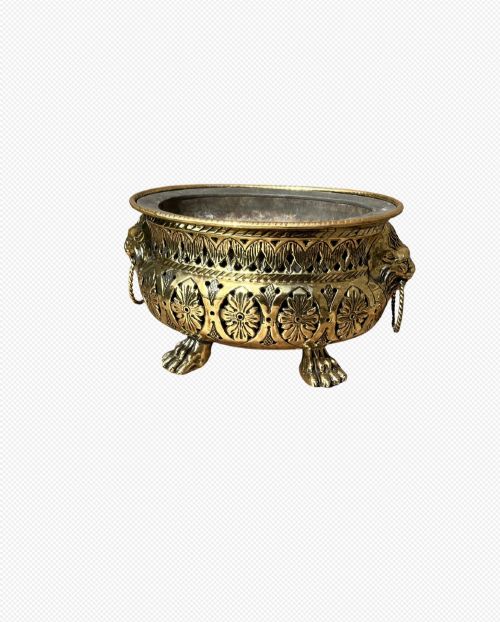
The most common versions met on this page are metal vessels rendered in brass or copper, frequently featuring repoussé work, piercing, or applied lion mask handles. Alongside these metal examples, one encounters ceramic pieces such as stoneware and jasperware, alongside hardwood stands set with marble insoles.
Origins stretch across Britain, Europe, and Asia, showing how diverse cultures shaped the domestic display of plants during the nineteenth century. Buyers select these items to integrate period craftsmanship directly into modern interior planting schemes.
What varies in quality
Quality rests upon the crispness of surface decoration, whether one examines the hand-hammered relief of a repoussé copper body or the delicate sharpness of jasperware applied details. Heavy gauge metals and substantial lead or brass feet indicate superior structural integrity compared to thinner, pressed alternatives.
The integration of decorative elements like animal head handles, pierced rims, or fitted marble insets dictates the refinement of the piece. Superior examples maintain structural stability and original surface patination without obscuring the maker's handwork.
Footed Plant Pot Retail Price Guide 2026
Typical asking prices for footed plant pot among the pieces listed under this phrase on Sellingantiques today, from the lower quarter to the upper quarter. They describe what is for sale here now, not the wider market.
Several nineteenth-century brass planters feature fierce lion masks and animal heads, watching stoically over your ferns.
Royal Doulton·Wedgwood
The Footed Plant Pot Glossary
- Jardinieres
- Ornamental pots or stands designed to hold growing plants indoors. These vessels usually sit on feet or bases to protect furniture surfaces.
- Repoussé
- A metalworking technique where the artisan hammers the design from the reverse side to create a raised relief on the front. This process demands considerable skill to maintain uniform wall thickness.
- Dinanderie
- Medieval and later European brass or copper hollowware produced in towns like Dinant. The term describes decorative domestic metal objects shaped by hand.
- Jasperware
- A fine stoneware developed by Josiah Wedgwood featuring contrasting white relief figures against a coloured matte background. It remains distinct for its durable, unglazed surface.
- Slaterware
- A ceramic technique developed by Doulton featuring textured lace or fabric pressed into damp clay before firing. This method created unique patterned surfaces popular in the late nineteenth century.
Footed Plant Pot: Frequently Asked Questions
How do I clean a brass planter?
Maintenance requires only a soft cloth to remove dust and preserve the natural patination built up over decades. Aggressive polishes should be avoided because they strip away the historic surface character that collectors value.
Keeping the interior dry prevents moisture from degrading the metal or ceramic body over time. Placing a separate plastic liner inside protects the antique material from direct soil and water contact.
Can I use these outdoors?
Lead and heavy brass vessels tolerate sheltered outdoor locations well, provided they are brought inside during freezing winter weather. Frost can crack ceramic bodies like stoneware or jasperware and damage metal seams.
Interior placement remains the safest choice for preserving delicate repoussé work and wooden stands. Verandas and covered porches offer suitable outdoor spots if protected from direct rain.
How do I date a brass jardiniere?
Dating relies on manufacturing techniques, weight, and stylistic clues such as Arts and Crafts motifs or Victorian Gothic Revival elements. Machine-stamped joints often point to later production dates, whereas hand-finished seams suggest earlier nineteenth-century origins.
Maker marks on the base of ceramic pieces provide precise chronological markers. Metal items rarely carry maker signatures, requiring stylistic comparison with dated examples.
What is a jardiniere stand?
A jardiniere stand functions as an elevated platform or low table designed to display potted plants at a comfortable viewing height. These pieces often feature inset marble tops to resist water damage from overflow.
Originating in various global traditions, such as Chinese hardwood stands, they keep heavy pots off delicate flooring. They serve equally well today as display surfaces for sculptures or lamps.