





Folk Art Storage Box
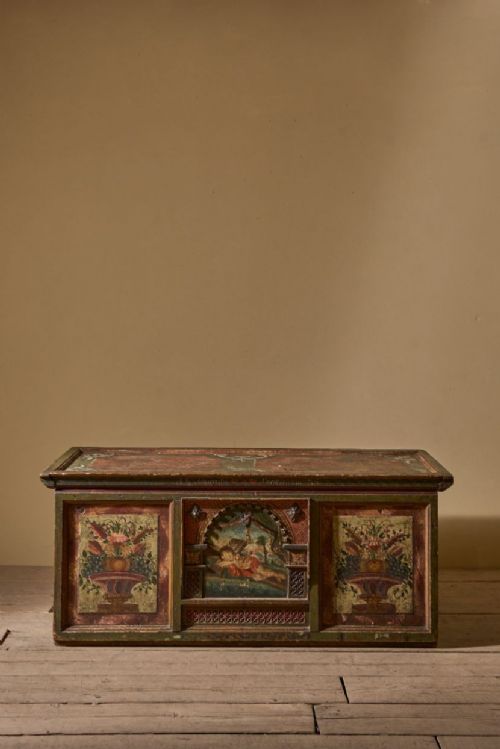
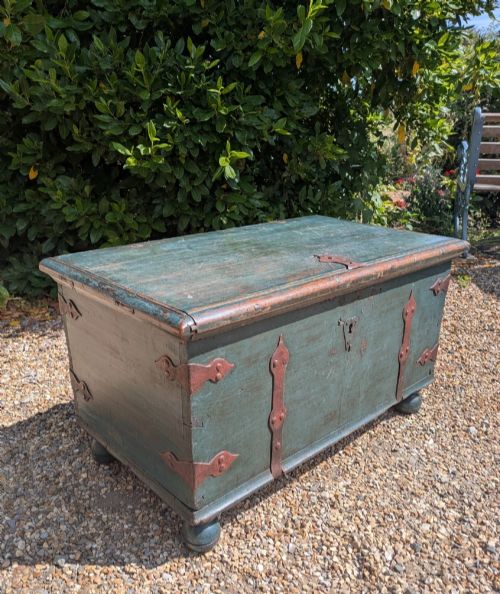
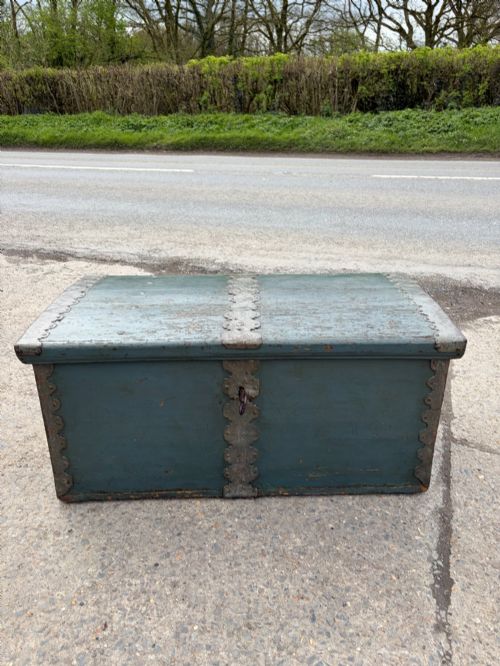
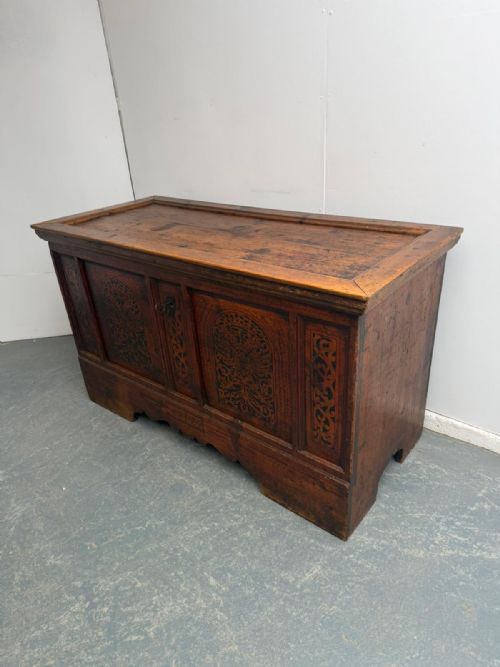
These folk art storage box examples are regional painted pine chests and trunks made to hold household textiles or dowries.
Folk Art Storage Box
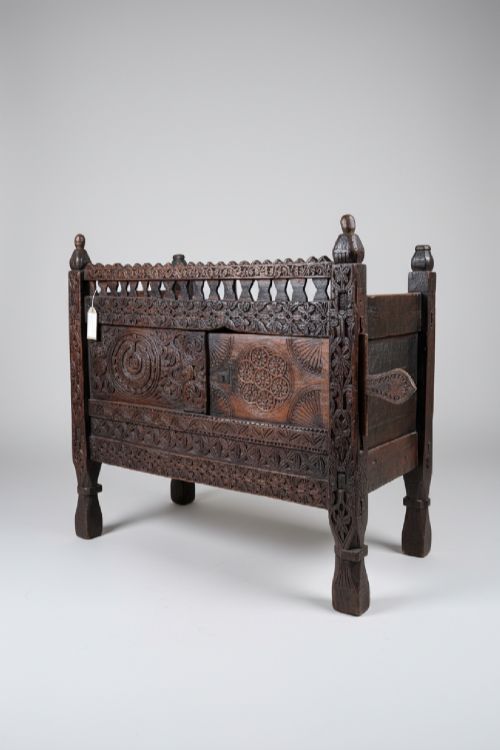
A folk art storage box sits at the intersection of utilitarian domestic furniture and traditional village craft. When you search for this phrase, you find marriage chests, blanket boxes, and small coffer boxes originating from Scandinavian, Hungarian, and Alpine regions.
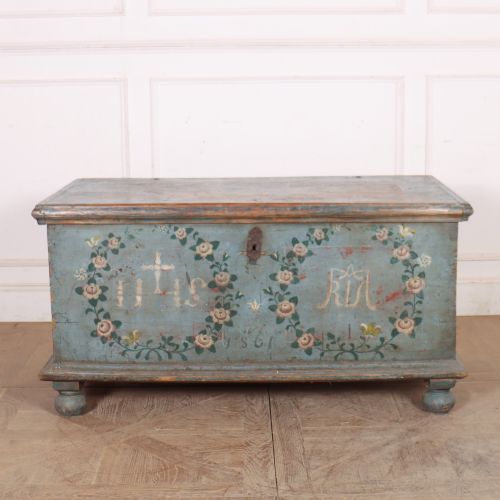
The most common form on this page is the 19th century painted pine chest, often constructed as a dowry or marriage trunk. These pieces served practical storage duties in rural farmhouses before finding a place in modern homes as decorative furniture.
Materials and construction
Local timber such as pine and oak provided the structural body for these boxes and chests. Joinery was kept straightforward, relying on sturdy boards assembled to withstand heavy household use.
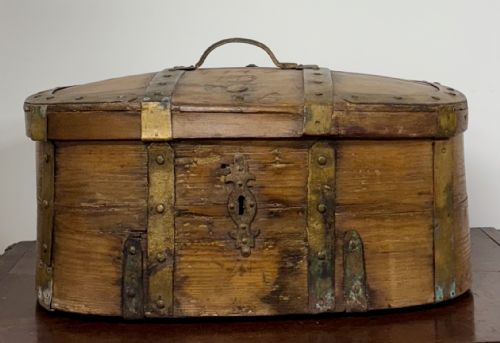
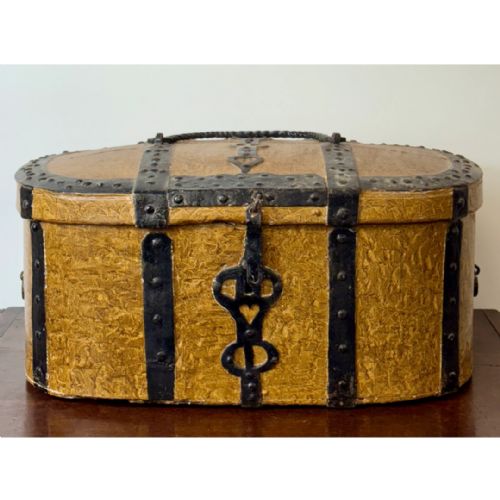
Makers applied pigment directly to the wood surface, often creating floral or geometric folk art motifs. Iron hardware, including hand-forged strapwork, hinges, and latches, reinforced the corners and lids.
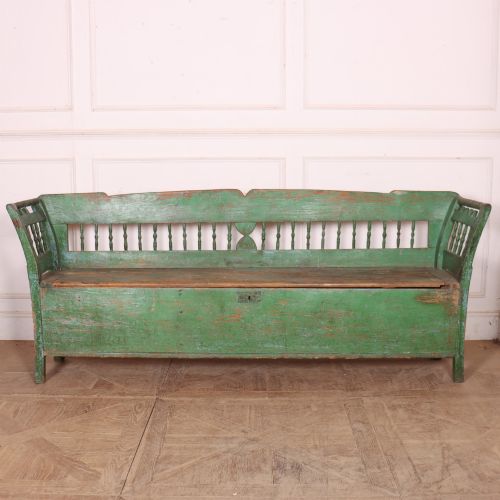
Georgian, Victorian, and Regency periods appear alongside regional styles like Scandinavian folk art and Austrian farmhouse benches.
What separates the grades
The survival of original surface pigment dictates much of the appeal in these regional pieces. Examples retaining untouched historical paint schemes carry greater authenticity than those stripped or aggressively restored.
The complexity and detail of the hand-painted decoration distinguish standard utility boxes from celebratory marriage chests. Finer pieces demonstrate deliberate brushwork and structural integrity in the ironwork and hinges.
The Folk Art Storage Box Glossary
- Marriage chest
- A large storage box commissioned or decorated to mark a wedding, frequently inscribed with dates or initials. These pieces often display the most elaborate folk art painting in a household.
- Coffer
- A heavy wooden box with a hinged lid used historically for safekeeping valuables. They sit low to the floor and typically feature robust iron strapwork.
- Strapwork
- Ornamental bands of iron fixed across the exterior of a chest to reinforce the corners and joints. This metalwork provides both structural strength and a visual contrast to the painted pine.
- Pigment
- Coloured powder mixed with a binder to create the paints applied to regional furniture. Surviving layers show the original palette chosen by the maker.
- Dowry chest
- A container compiled by a bride's family to store household linen and personal goods prior to marriage. These chests travelled with the bride to her new home.
Folk Art Storage Box: Frequently Asked Questions
Where were these painted boxes made?
The listings span various European regions, with particular concentrations in Scandinavian countries, Hungary, and the Alpine area. Local village workshops produced them for everyday domestic use.
Each region developed distinct painting styles and colour palettes, allowing collectors to identify the geographic origins of individual pieces.
What did families store inside them?
These trunks primarily held household textiles, woollen blankets, and linen garments. Marriage and dowry chests specifically protected a bride's personal belongings and accumulated linens.
Today, buyers use them in living spaces and bedrooms for storing blankets, board games, or everyday clutter.
How do I identify original paint?
Original paint surfaces show natural wear, mellowed patination, and multiple underlying layers visible through minor losses. Under close inspection, the pigment integrates into the grain of the pine rather than sitting in a flat modern film.
Avoid pieces with uniform, modern synthetic coatings that obscure the historical texture of the wood.
Are these chests structurally sturdy?
Pine construction combined with iron strapwork makes these storage boxes durable for modern domestic use. The joints were pegged or nailed to endure heavy handling in farmhouses.
Lids and hinges remain functional on most surviving examples, though older ironwork should be handled with care.