





Folk Art Settle
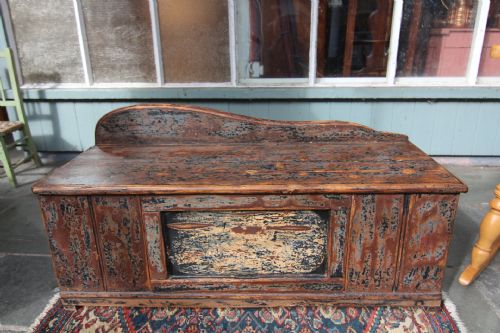
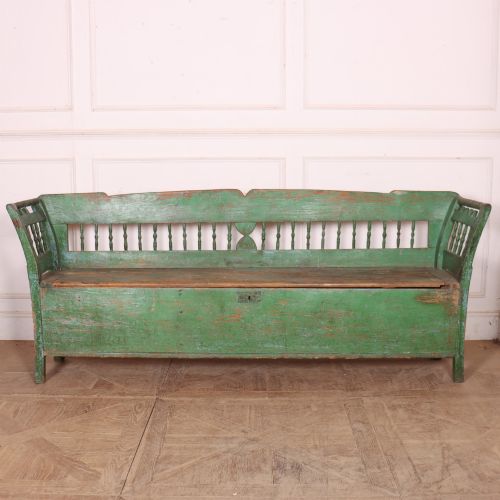
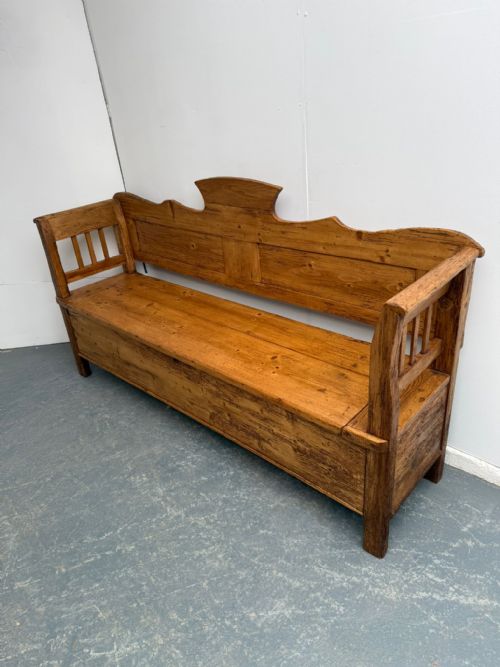
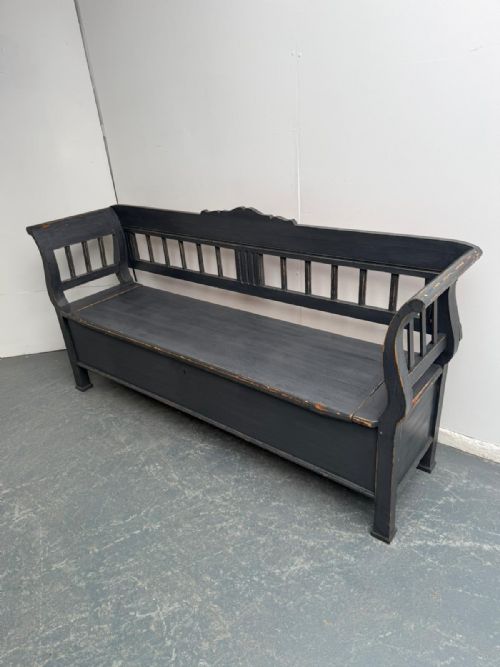
These folk art settle pieces are country seats built for warmth and storage, offering rustic charm that anchors a room.
Folk Art Settle
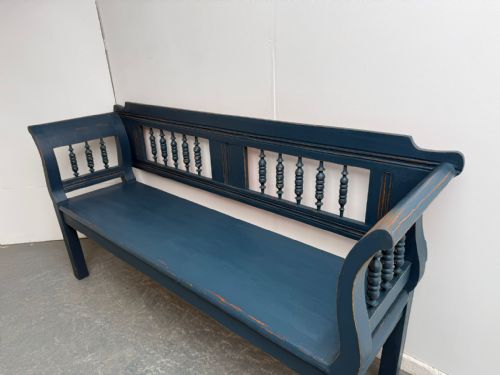
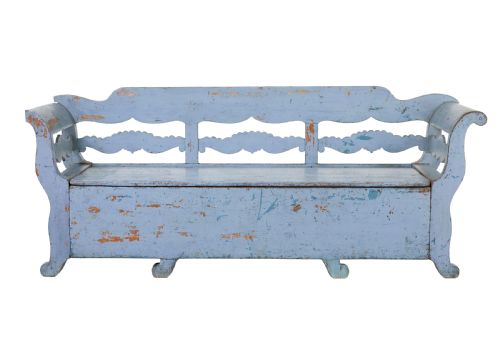
A folk art settle functions as a high-backed wooden bench, frequently incorporating a box seat or a canopy to block draughts in farmhouse kitchens and hallways. These forms appear across various regional traditions, notably through Austrian, Hungarian, Spanish, and Swedish examples.
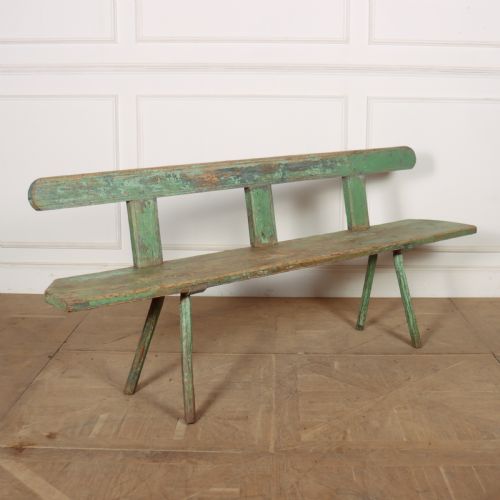
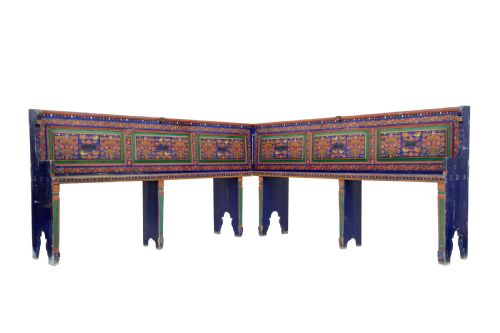
The pieces on this page span the eighteenth and nineteenth centuries, taking the shape of three-seater boxes, high-backed benches, and corner seats. Pine and painted timber dominate the selection, alongside beechwood children's benches and walnut elements.
Rural cabinet makers constructed these items for everyday domestic utility rather than formal display. Surviving examples display distinct regional styles, ranging from Scandinavian country simplicity to Hungarian and Spanish folk art finishes.
How they were made
Carpenters utilised available regional timbers such as pine, chestnut, beechwood, and occasionally oak, assembling heavy boards with traditional joinery suited to daily farmhouse use. Iron fittings often reinforced lids and hinges on box seats.
Many surfaces carry original or early painted finishes, including polychrome decoration, scumble glazes, and layered cream, green, blue, or grey pigments. These decorative layers protect the underlying softwoods while expressing local aesthetic preferences.
Regional styles span Austrian, Hungarian, Spanish, and Swedish country traditions.
What varies in quality
The survival of original surface paint determines much of the character in these pieces, distinguishing untouched pigments from later overpainting or stripped timber. The depth of the patina on unpainted woods like walnut and pine also influences visual appeal.
Proportions and structural integrity separate standard utility items from more desirable forms, such as canopied settles or neat corner seats. Intact storage boxes, original ironwork, and early regional decorative motifs elevate the standing of a piece.
The Folk Art Settle Glossary
- Settle
- A wooden bench with a high back, solid arms, and frequently a box compartment beneath the seat for storage. This form provided protection from cold draughts in pre-central heating homes.
- Scumble
- A decorative painting technique where a translucent glaze is manipulated over a lighter base coat to imitate graining or texture. It appears on pine country furniture to enrich plain surfaces.
- Polychrome
- Painted or decorated in multiple colours. In folk art, this describes furniture adorned with hand-painted floral or geometric motifs.
- Box settle
- A variation of the bench featuring a hinged seat that lifts to reveal a large storage chest underneath. It combined seating with domestic storage for blankets or provisions.
Folk Art Settle: Frequently Asked Questions
What is a folk art settle?
A folk art settle is a high-backed wooden bench, often featuring a box seat or canopy, designed in rural workshops across Europe during the eighteenth and nineteenth centuries.
These pieces served as practical seating and draught protection in farmhouse interiors, decorated with regional painted finishes or left as waxed timber.
How were these settles used?
Families placed settles near hearths to block cold air and provide comfortable seating for several people during meals or evening work.
The integrated box seat offered concealed storage for household textiles, firewood, or dry goods, keeping the main living space tidy.
How do I identify the period?
Dating relies on construction methods, timber choice, and the wear patterns found on painted or waxed surfaces. Eighteenth-century examples often display simpler, heavier forms with canopy structures, while Victorian pieces frequently incorporate regional Hungarian or Scandinavian paintwork.
Nail types, hinge construction, and the composition of the wood help distinguish earlier handmade joints from later alterations.
How do I live with a settle?
A settle works well placed against a hallway wall or anchoring a dining table, providing substantial seating and useful hidden storage.
Keep painted and waxed wooden surfaces away from direct heat sources and strong sunlight to preserve the historic finishes and prevent timber shrinkage.