



Folk Art Brass Box
These folk art brass box examples bring together utility and hand-worked metal from the eighteenth and nineteenth centuries.
Folk Art Brass Box
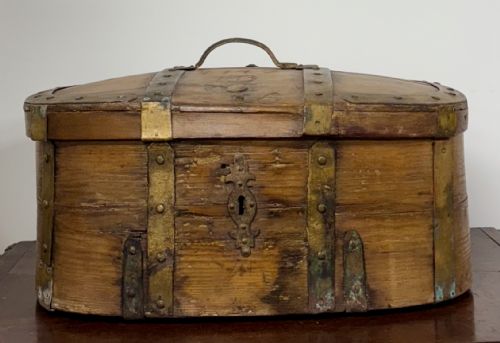
When you search for a folk art brass box, you are looking at small personal containers, snuff boxes, storage pieces, and foot warmers made with brass, wood, and iron. The pieces on this page span the eighteenth and nineteenth centuries, including Scandinavian country and English traditional styles.
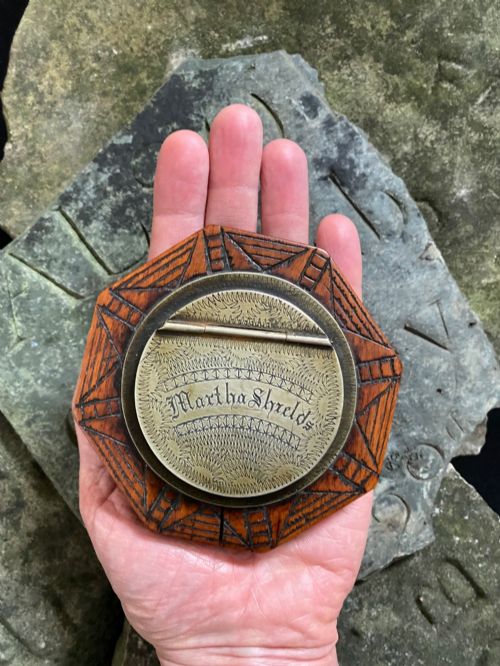
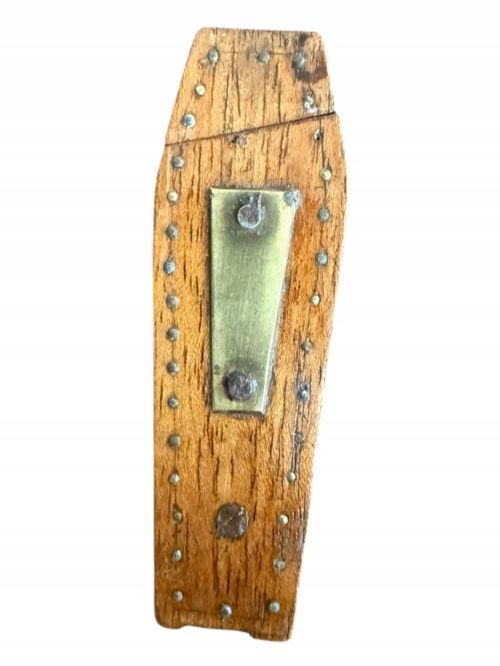
You will most frequently meet nineteenth-century brass snuff boxes, small painted boxes, and chip-carved items alongside metal-bound storage boxes and coin banks. These objects combine practical utility with vernacular decorative work such as pique wire inlay and inscriptions.
How they were made
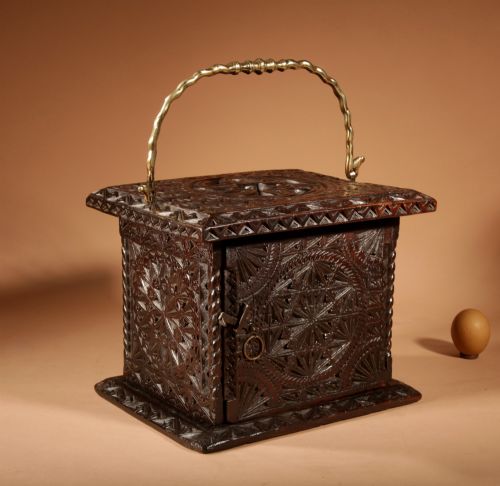
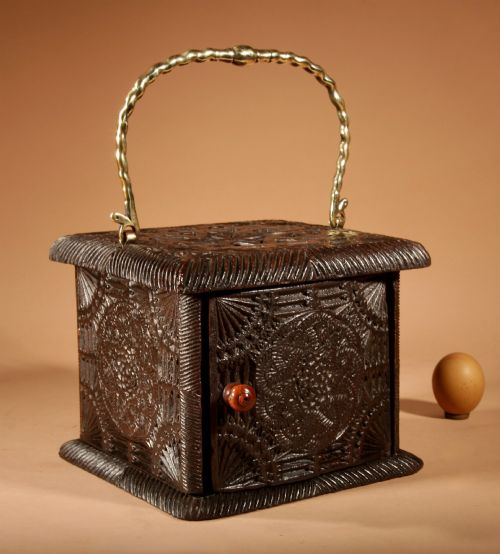
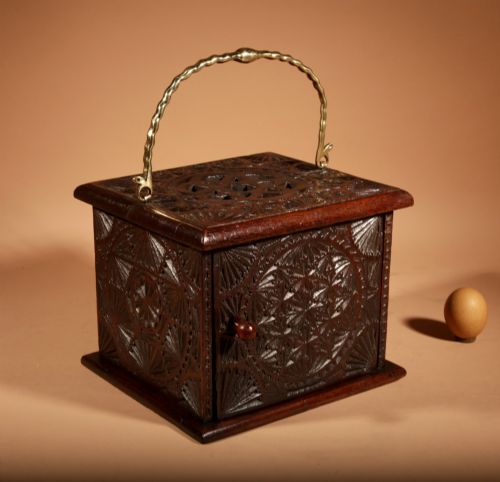
Makers built these pieces using primary structural woods like oak, pine, and general timber, then bound or decorated them with brass sheet, brass wire, and iron fixings. Many items incorporate surface embellishment such as chip carving, paint, and bone details.
Techniques relied on hand-working metals and timber rather than factory production. Artisans applied brass pique work for foliage and flowers, and engraved inscriptions directly onto the metal lids.
Folk Art Brass Box Retail Price Guide 2026
Typical asking prices for folk art brass box among the pieces listed under this phrase on Sellingantiques today, from the lower quarter to the upper quarter. They describe what is for sale here now, not the wider market.
The selection includes functional objects ranging from snuff shoes and puzzle boxes to miniature cottage coin banks and log stores.
What varies in quality
Quality rests in the crispness of the hand-carved details on the wood and the precision of the brass pique work or metal binding. Pieces with clear inscriptions, original paint, and intact pictorial motifs sit at the upper end of the range.
The integration between the metal elements and the wooden body dictates the standard of craftsmanship. Simpler utility boxes with basic iron or brass mounts contrast with finely decorated snuff shoes and puzzle boxes.
The Folk Art Brass Box Glossary
- Folk art
- Items created by self-taught or traditional craftspeople, focusing on utilitarian objects with decorative vernacular styles rather than high academic design. This covers everything from country trunks to snuff boxes.
- Pique work
- A method of decorating surfaces by inlaying tiny points or shapes of metal, such as brass wire and pins, into wood. It creates delicate floral and geometric patterns.
- Treen
- Small handmade wooden household objects and knick-knacks. The category includes items like snuff shoes and small containers.
- Snuff box
- A small pocket-sized container designed to hold powdered tobacco. Examples often feature hinged metal lids and personal inscriptions.
Folk Art Brass Box: Frequently Asked Questions
What were folk art brass boxes used for?
These boxes served everyday practical purposes such as holding dry goods, coins, or snuff. People carried personal snuff containers in their pockets or kept small storage pieces on household surfaces.
Larger items like foot warmers and metal-bound trunks provided domestic comfort and secure storage in eighteenth and nineteenth-century homes.
How do I date a brass folk art box?
Dating relies on observing construction methods, timber types, and stylistic indicators such as chip carving or metal binding techniques. Eighteenth-century pieces often display heavy timber construction with simple forged iron or brass elements.
Nineteenth-century examples frequently show finer brass pique work, painted finishes, or specific inscriptions that place them securely in the Victorian or Edwardian eras.
What is brass pique work?
Brass pique work involves embedding tiny brass pins, wire, or thin plates into a wooden base to form patterns. Artisans used this technique to depict flowers, foliage, and geometric borders on personal items.
This method requires patience and steady hand-crafting, making the density and neatness of the metal inlay a reliable sign of skilled maker work.
How should I care for antique metal and wood boxes?
Keep these items away from direct sunlight and dramatic changes in temperature to protect the timber and prevent the wood from splitting. Dry dusting with a soft cloth is sufficient for maintaining the surfaces.
Avoid using harsh chemical polishes on the brass or painted areas, as traditional patinas and early decorative layers easily suffer damage from abrasive cleaning.