


Foliate Gold Pendant
A foliate gold pendant brings organic leaf and floral motifs into fine jewellery, offering lasting charm for daily wear.
Foliate Gold Pendant
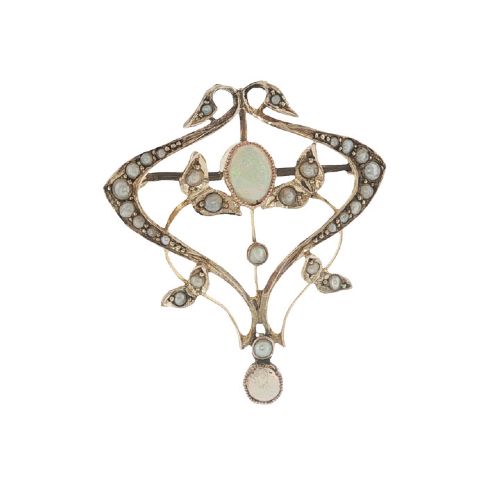
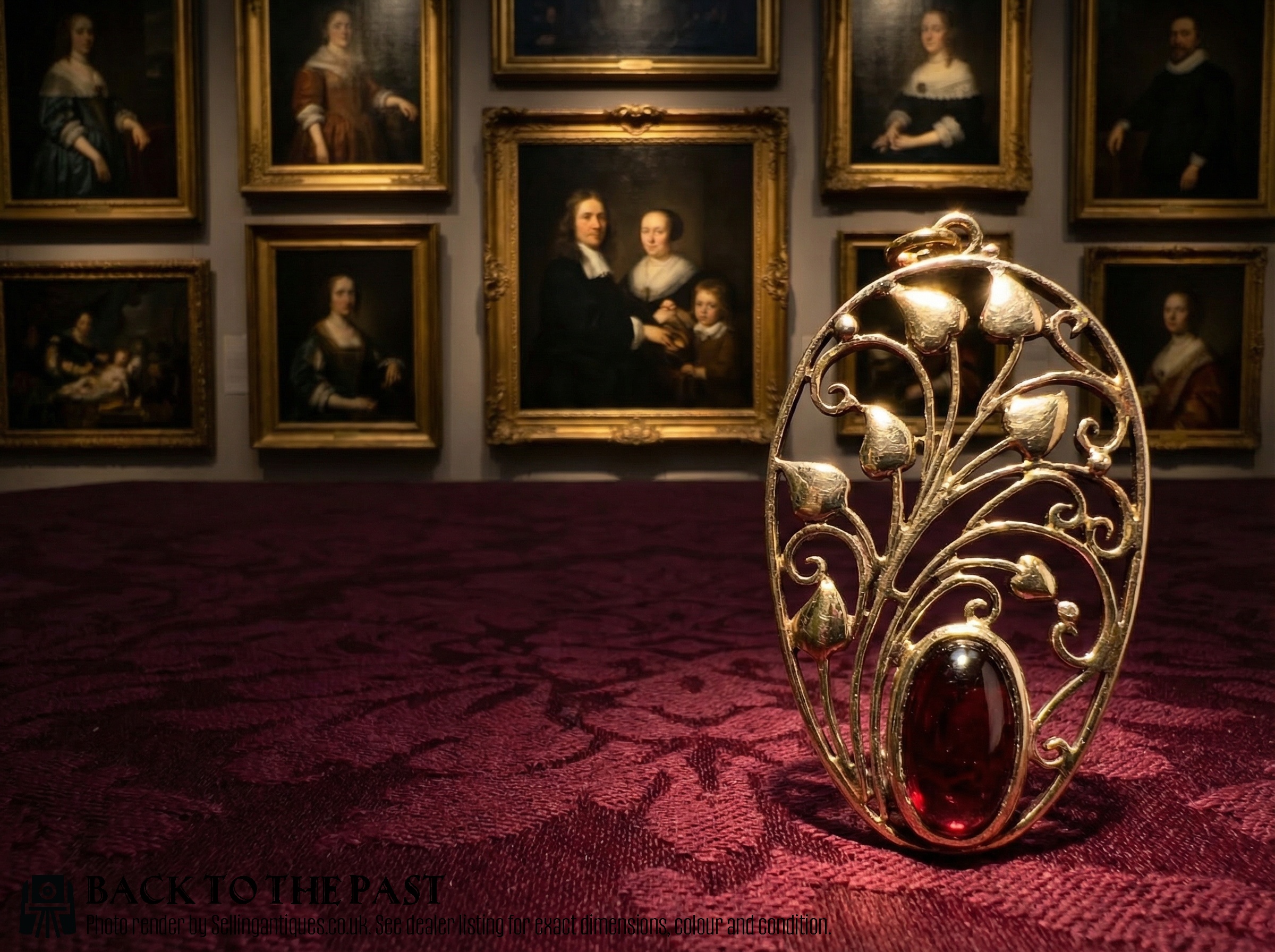
A foliate gold pendant takes its inspiration from natural leaf and plant forms, capturing the fluid lines of foliage in precious metal. When you search for a foliate gold pendant, you encounter pieces spanning from the Georgian and Victorian eras through to the Edwardian period and the early twentieth century. These items frequently incorporate engraved surfaces, delicate wirework, and clusters of stones that mimic natural botanical growth.
The most common examples on this page date from the Edwardian and Victorian eras, often rendered in nine-carat or fifteen-carat gold. They frequently appear alongside complementary gems such as seed pearls, amethysts, garnets, and aquamarines, reflecting the Victorian and Edwardian fascination with colourful gemstones and sentimental symbolism. Alongside standalone pendants, the selection includes related forms like lavalier necklaces, lockets, and convertible brooch pendants.
The craftsmanship relies heavily on period techniques that give these jewels their characteristic lightness and detail. Makers utilised chased and engraved gold to build dimension within the leaves, mounting central stones securely within claw or bezel settings. This approach ensures that the botanical motif remains the focal point while the precious metal provides a warm, enduring foundation.
Materials and construction methods
Gold forms the structural base of these pendants, appearing most frequently in nine-carat and fifteen-carat purity, alongside occasional examples in rose gold or silver gilt. This metal is shaped, pierced, and engraved to form curling leaves, scrolling tendrils, and floral frames that support the central gems.
Gemstones and pearls are integrated directly into the botanical designs, functioning as berries, flower centres, or focal accents. Seed pearls, amethysts, aquamarines, and garnets are secured using traditional claw settings or delicate collets, allowing light to pass through the stones and highlight their natural colours.
Engraving and chasing bring texture to the metallic surfaces, defining the veins of leaves and the contours of petals by hand. This meticulous handwork distinguishes period pieces, ensuring that each pendant possesses individual character within its foliate framework.
Several pieces double as wearable gardens, capturing everything from ivy wreaths to morning glories in solid gold.
Assessing quality and execution
The refinement of the hand-engraving and the crispness of the foliate casting set superior pieces apart from simpler work. Finer items display deep, purposeful lines that trace realistic leaf structures rather than flat, machine-stamped impressions.
The selection and matching of the accompanying gemstones also dictate the standing of a piece. Well-matched seed pearls of uniform lustre and cleanly cut amethysts or aquamarines indicate that the maker invested care in the composition, whereas poorly matched or dull stones lower the overall impact.
Structural integrity and the retention of original components, such as integrated bails, matching chains, or fitted boxes, influence the desirability of an antique pendant. Pieces that survive with minimal wear and unaltered mounts demonstrate a higher standard of original craftsmanship and subsequent preservation.
Hamilton and Co·The Artificers Guild
The Foliate Gold Pendant Glossary
- Foliate
- Decorated with leaf or plant motifs. This style draws directly on natural forms to create curved, organic ornamentation in metalwork.
- Lavalier
- A pendant necklace featuring a central drop suspended from a chain or rigid necklet. Popularised in the Edwardian era, it often incorporates swinging elements.
- Seed pearl
- A very small, naturally occurring pearl, typically unpierced or drilled for stringing. These tiny pearls are frequently used in clusters to depict floral blossoms.
- Chasing
- A method of metalworking where a hammer and punches push the metal from the front to sink lines and create raised surface patterns without removing material.
- Bezel setting
- A collar of metal that encircles the edge of a gemstone to hold it securely in place. This technique offers a clean, finished outline around the stone.
Foliate Gold Pendant: Frequently Asked Questions
How do I date an antique gold pendant?
Dating relies on examining the hallmarks, the style of the metalwork, and the types of gemstones used. Victorian pieces often feature deeper gold tones and sentimental motifs, while Edwardian examples tend towards lighter lacy mounts and pastel stones.
Assaying marks and maker's stamps provide specific clues when present. Comparing the construction techniques to known period examples further clarifies the timeline.
What stones are typically found in these pendants?
Seed pearls and amethysts appear most frequently, often paired together within Edwardian and Victorian designs. Garnets, aquamarines, and turquoise also feature as central stones or accent gems.
These materials were chosen for their colour and symbolic resonance. They complement the warm tones of the surrounding gold mounts.
How should I care for antique gold jewellery?
Antique jewellery requires gentle handling due to the delicate nature of historic settings and natural pearls. Clean pieces with a soft, dry cloth and avoid harsh chemical dips or ultrasonic cleaners that can damage soft stones like pearls.
Store items individually in padded boxes to prevent scratching. Taking off your pendant before swimming or sleeping preserves the integrity of the gold and the security of the stones.