

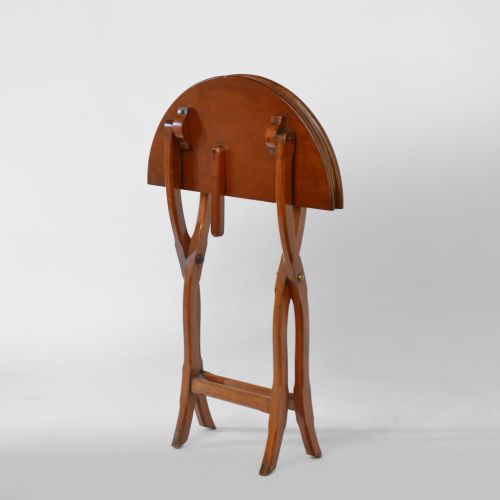


Folding Top Occasional Table
A folding top occasional table adapts easily to changing room layouts while offering a clever surface for cards, tea or display.
Folding Top Occasional Table
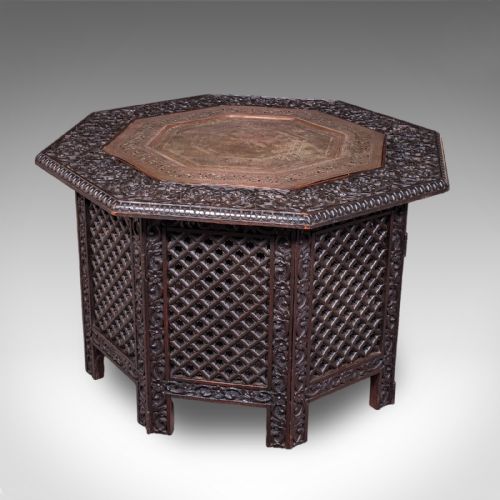
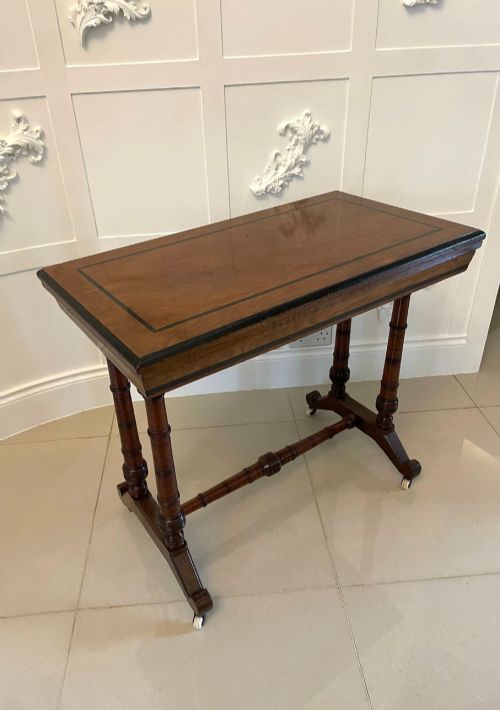
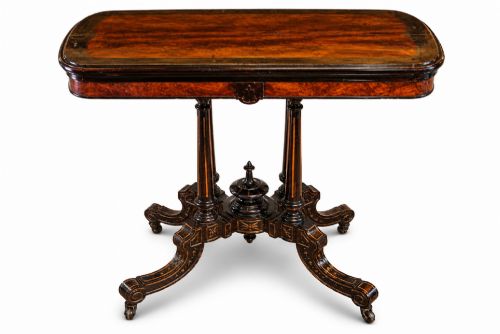
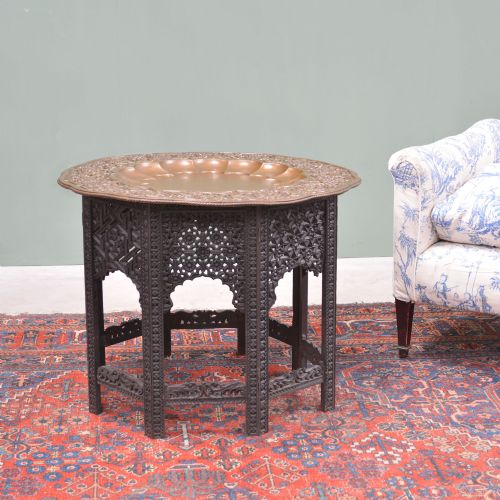
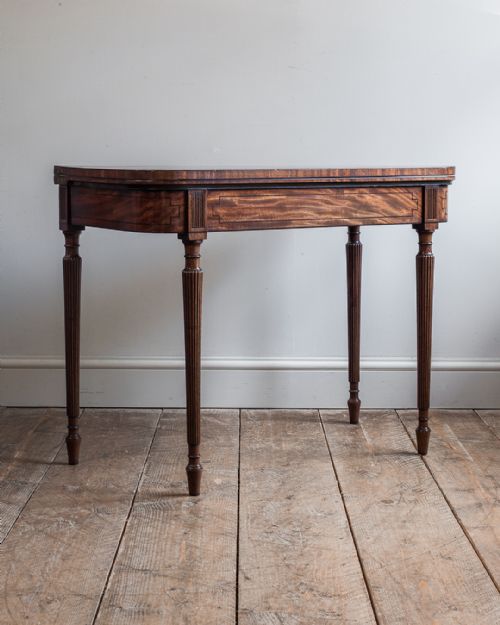
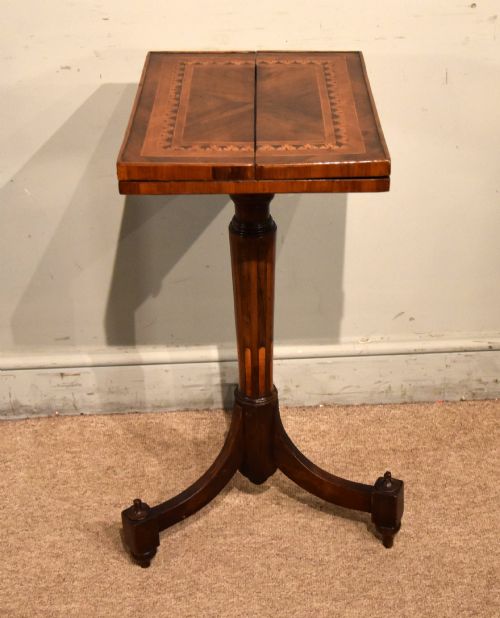
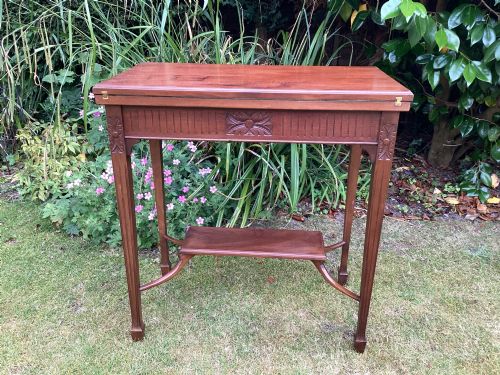
A folding top occasional table serves multiple functions within domestic spaces, shifting from a compact console or side piece into a larger surface when needed. When searching for a folding top occasional table, buyers encounter forms ranging from card and tea tables to campaign stands, butler trays and metamorphic fire screens.
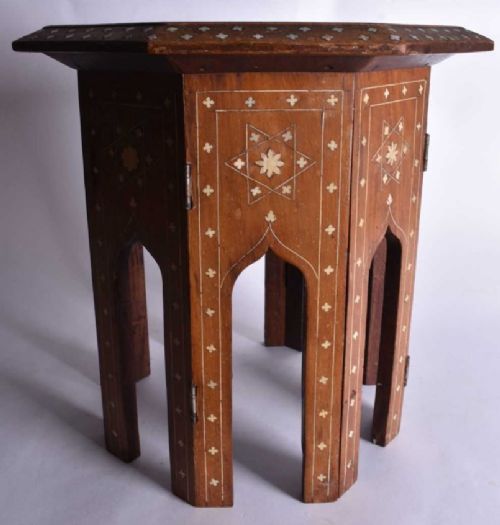
The selection spans several centuries and regional traditions, covering Georgian, Victorian and Edwardian British eras alongside Anglo-Indian, Chinese Qing Dynasty and Middle Eastern craft. Mahogany, rosewood and walnut appear frequently alongside oak, satinwood and hardwood structures fitted with brass, copper or mother of pearl.
Examples often feature hinged, swivel or drop leaves, resting on folding bases, X-frames or standard legs. The most common varieties combine mahogany or rosewood timbers with clever folding mechanisms designed for simple storage and movement.
How they were made
Cabinetmakers utilised dense timbers such as mahogany, walnut and rosewood, often applying veneers of satinwood, olive or bird's-eye maple to the primary surfaces. These woods were joined using traditional methods and finished to highlight natural grain patterns.
Metal components, including brass hinges, swivels and copper inlays, provided the structural support necessary for folding tops and drop leaves. Regional workshops also incorporated hand-beaten brass or copper trays paired with folding wooden stands.
Decorative elements relied on inlay, marquetry and surface carving, seen in Edwardian satinwood stringing and intricate Anglo-Indian or Damascene carving. Lacquerwork and textile inserts, such as leather or embroidery, added further surface variety.
Folding Top Occasional Table Retail Price Guide 2026
Typical asking prices for folding top occasional table among the pieces listed under this phrase on Sellingantiques today, from the lower quarter to the upper quarter. They describe what is for sale here now, not the wider market.
Listings feature 19th Century, Edwardian, Victorian, Georgian, and 1920 periods alongside materials such as mahogany, brass, oak, and rosewood.
What varies in quality
The choice of timber and veneer determines the baseline standard, with figured walnut, rosewood and Cuban mahogany representing finer materials compared to standard utility hardwoods. Finer pieces demonstrate careful matching of wood grains across folding leaves and tabletops.
The precision and smoothness of the folding or swivelling mechanism distinguish better examples from simpler ones. Hinges, pivots and drop-leaf supports must operate without binding or looseness to ensure stability when the table is open.
The crispness of hand-carving, inlay work and metal-to-wood fitting marks the difference between standard production and master craftsmanship. Integrated interiors, fitted compartments and well-executed joinery add further distinction.
Whytock and Reid of Edinburgh
The Folding Top Occasional Table Glossary
- Card table
- A folding top table specifically designed for playing cards, often featuring a baize-lined interior and a foldover flap supported by a swing leg.
- Tea table
- A small table designed for serving tea, commonly featuring a folding or tilt top that stands against a wall when not in use.
- Butler tray
- A removable tray with panelled sides that rests upon a folding X-frame stand for portable service.
- Campaign table
- Portable furniture designed for easy dismantling and transport, frequently utilised by military officers during the nineteenth century.
- Metamorphic
- Furniture designed to transform from one distinct object into another, such as a fire screen that converts into an occasional table.
- Palisander
- A dense, dark tropical timber related to rosewood, prized for its rich colour and heavy grain.
Folding Top Occasional Table: Frequently Asked Questions
What is a folding top table used for?
These tables provide a flexible surface that expands when entertaining or playing games and folds away to save space in smaller rooms. They served as tea tables, card tables or general side tables in historic parlours and drawing rooms.
Today, they suit modern living spaces where versatility is valuable. You can place one against a wall as a console and open it out when guests arrive.
How do you operate a fold over table?
Most fold over tables feature a hinged top that lifts and rotates on a pivot, or simply flips open like a book to reveal a larger surface. A swing leg or concertina action beneath the top then moves outward to support the extended leaf.
Take care to lift the top cleanly rather than forcing the hinge if it sticks. Ensure the supporting leg is fully locked into position before placing items on the surface.
Are these tables sturdy when opened?
A well-constructed folding table remains stable when open, provided the hinges and support legs are properly aligned. The weight of dense timbers like mahogany or rosewood also helps keep the structure grounded.
If a table wobbles, check the pivot pins and hinge screws for wear. Placing the table on an even floor surface prevents strain on the folding mechanism.
How do I identify the period of a table?
Dating relies on timber choices, leg styles, and construction methods characteristic of different eras. Georgian and Regency pieces often feature clean mahogany lines or rosewood veneers, while Edwardian examples frequently display intricate stringing and lighter mahogany frames.
Examine the underside and joints for hand-cut elements or metal fixings consistent with nineteenth or early twentieth-century manufacturing. Comparing the secondary woods inside drawers or framing offers further clues to age.
How should I care for the wood surface?
Keep wooden folding tables away from direct sunlight and sudden temperature changes to prevent the timber and veneers from drying out. Dust regularly with a soft cloth and apply quality wax periodically to nourish the polished finish.
Avoid placing damp items directly onto antique wood surfaces by using coasters or mats. Take care when folding and unfolding leaves to prevent scratching adjacent sections of veneer.