

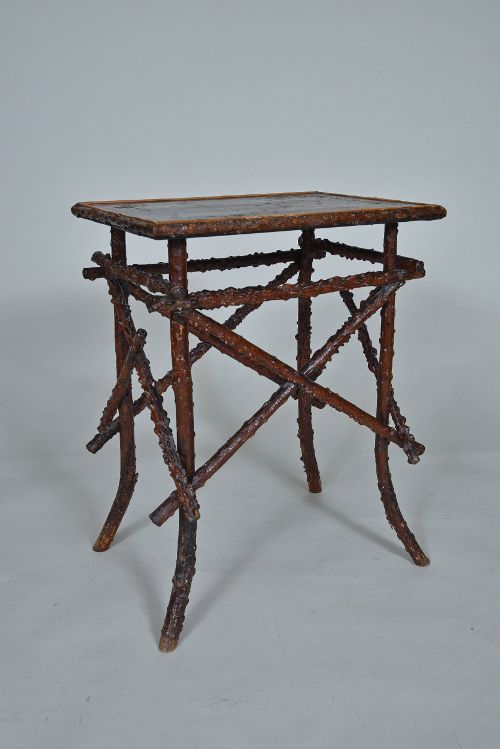
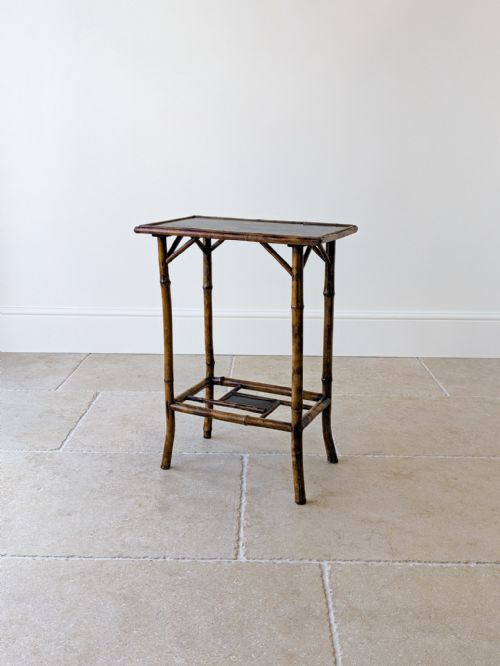
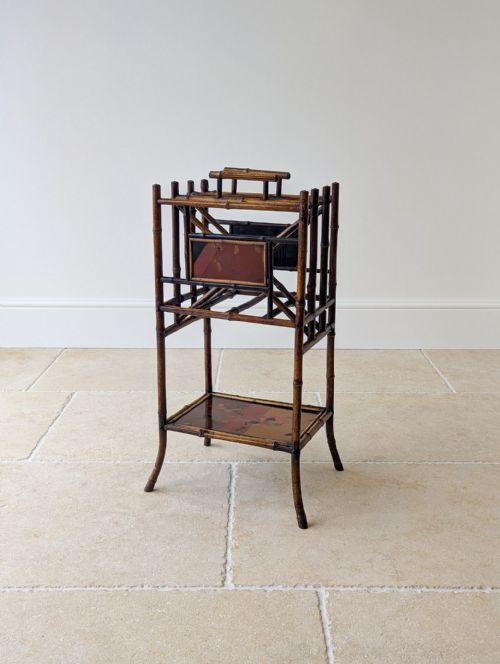


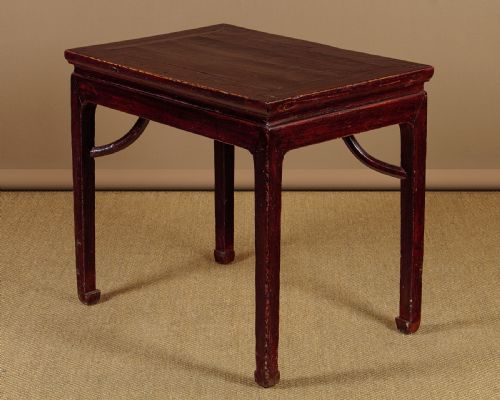


Dark Lacquered Side Table
A dark lacquered side table brings rich black finishes and eastern motifs into a room, offering both a useful surface and a striking focal point.
Dark Lacquered Side Table
When you search for a dark lacquered side table, you encounter a selection of occasional surfaces, nests of tables, and work tables spanning the nineteenth and early twentieth centuries. These pieces draw heavily on Asian design traditions, including Chinese provincial forms, Qing Dynasty aesthetics, and Japanese export work.
You are most likely to meet Victorian and Edwardian interpretations on this page, particularly bamboo frames and nests of four tables finished with dark lacquer. Occasional tables and plant stands also appear frequently, alongside elm tables and demi-lune console tables from the nineteenth century.
How they were made
The construction of these pieces relies on traditional hardwoods and bamboo, with Chinese elm forming the structural base for provincial and nineteenth-century examples. Artisans applied layers of dark lacquer to create deep, reflective surfaces that frequently served as the canvas for further decoration.
Gold leaf and gilt paint highlight the intricate motifs found in Chinoiserie and Aesthetic Movement designs, contrasting sharply against the dark background. Brass fittings and carved wood details add further texture to plant stands, card tables, and work tables.
Dark Lacquered Side Table Retail Price Guide 2026
Typical asking prices for dark lacquered side table among the pieces listed under this phrase on Sellingantiques today, from the lower quarter to the upper quarter. They describe what is for sale here now, not the wider market.
The furniture forms span side tables, nests of tables, occasional tables, console tables, canterburys, plant stands, card tables, and side cabinets.
What varies in quality
The distinction between ordinary and superior examples rests in the depth of the lacquer finish and the crispness of the hand-painted decoration. Finer pieces display meticulous attention to detail in their gold leaf and gilt paintwork, whereas simpler items show more modest surface execution.
Structural integrity also separates the range, visible in the joinery of elm tables and the stability of bamboo frames. Tables retaining their original brass hardware and well-preserved decorative schemes occupy the upper end of the selection.
The Dark Lacquered Side Table Glossary
- Chinoiserie
- European theatrical interpretations of Chinese and East Asian artistic styles, popular in furniture decoration. This style frequently employs dark lacquer and gilt painting to depict imaginary landscapes and figures.
- Aesthetic Movement
- A late nineteenth-century design current that rejected heavy Victorian manufacturing in favour of art for art's sake. It promoted Japanese-inspired forms, including bamboo construction and black lacquer surfaces.
- Demi-lune
- A half-moon shape used for console tables designed to sit flush against a wall. These tables often feature painted or lacquered tops supported by slim legs.
- Canterbury
- A low, freestanding rack originally designed for holding sheet music or periodicals. Victorian examples in this selection utilise bamboo frames and dark finishes.
- Occasional table
- A small, movable table intended for specific, intermittent use rather than central placement in a room. They appear frequently in nests or as single stands.
Dark Lacquered Side Table: Frequently Asked Questions
What periods do these tables come from?
The pieces span the nineteenth century, including Victorian and Edwardian eras, alongside items dated around eighteen-sixty, nineteen hundred, and nineteen-twenty. Styles range from British Aesthetic Movement bamboo to traditional Chinese elm forms.
Most items reflect nineteenth-century craftsmanship, with specific influences drawn from Qing Dynasty designs and Japanese export work.
How do I care for dark lacquer surfaces?
Dark lacquer requires gentle dusting with a soft, dry cloth to prevent scratching the polished finish. Avoid placing these tables in direct sunlight or near heat sources to protect the wood and decorative paint.
Keep moisture away from the surface and use coasters beneath any objects placed on the tables to preserve the historical finish.
What is the difference between Chinoiserie and Japanese export styles?
Chinoiserie represents European interpretations of Chinese motifs, typically featuring whimsical landscapes rendered in gold leaf and gilt paint on dark lacquer. These often appear on Victorian nests of tables and decorative screens.
Japanese export work generally reflects authentic Meiji-era manufacturing techniques intended for Western markets, focusing on distinct floral and natural subjects executed on wood or bamboo.
Where should I place a nest of tables?
A nest of tables works well beside a sofa or armchair, allowing the smaller tables to be pulled out when extra surface area is needed. Their compact nature suits smaller rooms and corners where permanent large tables would crowd the space.
They also function effectively as plant stands or bedside surfaces when separated throughout a room.