


Folding Step Chair
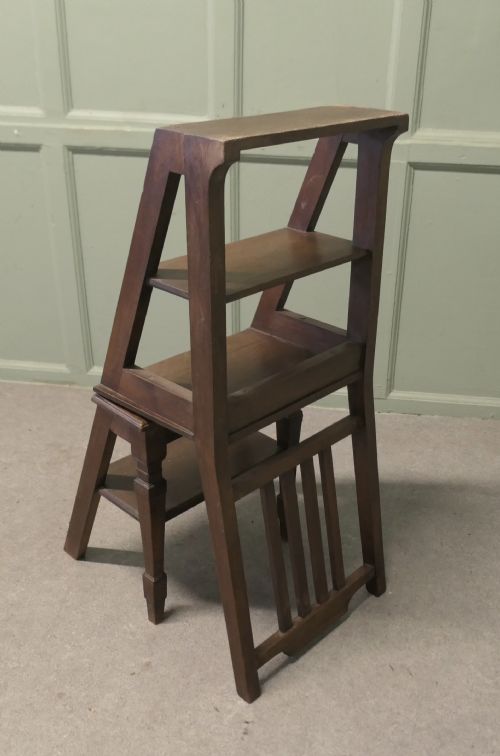
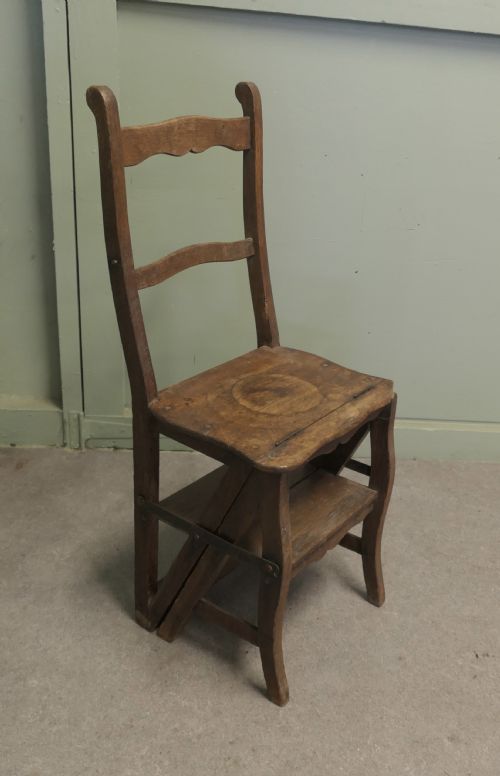
A folding step chair is a clever piece of dual-purpose library furniture that transforms from a comfortable seat into sturdy steps, giving you both a place to read and a way to reach high shelves.
Folding Step Chair
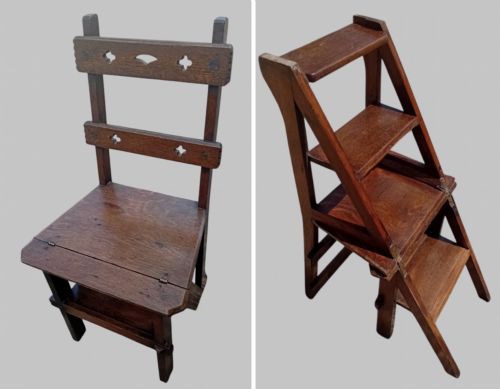
A folding step chair combines a traditional seating form with a set of library steps, allowing the frame to pivot or unfold into a staircase. These metamorphic pieces serve dual functions in domestic libraries and studies.
The versions you encounter on this page span several distinct periods, including Georgian, Regency, Victorian, and Edwardian eras. Library chairs and metamorphic library steps appear frequently in oak, mahogany, and hardwood.
Makers designed these items to solve the practical problem of reaching tall bookcases without cluttering a room with separate ladders. Surviving examples demonstrate how period joinery achieved this mechanical transformation.
How they were made
Cabinetmakers constructed these frames using timber such as mahogany and oak, frequently incorporating brass hinges, pivots, and locking brackets to facilitate the folding mechanism. Hardwood components provided the structural integrity required to bear the weight of a person climbing.
Upholstery elements like leather or cane were integrated into the seats of library chairs, combining the comfort of an armchair with functional folding engineering. Joinery techniques varied from Regency refinement to Arts and Crafts simplicity.
What varies in quality
The ingenuity and smoothness of the metamorphic mechanism separate superior examples from standard ones, as finer pieces operate with minimal friction and secure firmly in both configurations. Precision in the brass fittings and the tightness of the joints dictate the long-term mechanical reliability.
Material selection and decorative detailing also differentiate the range, with select mahogany or figured oak carrying more refined carving, Gothic Revival motifs, or aesthetic movement styling compared to plain utilitarian variants.
Morgan and Sanders·Richard Hicks Bridgens
The Folding Step Chair Glossary
- Metamorphic
- Furniture designed to transform from one object into another, such as an armchair into a set of steps. This ingenious engineering was particularly popular in library furnishings.
- Library steps
- Portable staircases designed for reaching high bookshelves in period rooms. They often take compact forms when not in use.
- Regency
- A British design period spanning the early nineteenth century, characterised by classical restraint and refined proportions. Pieces from this era often utilise rich mahogany.
- Gothic Revival
- A nineteenth-century style drawing inspiration from medieval architecture, featuring pointed arches, tracery, and robust proportions. This aesthetic appears on several oak library chairs.
- Arts and Crafts
- A design movement prioritising traditional craftsmanship and visible construction over applied ornamentation. Pieces from this tradition emphasise honest use of materials like oak.
Folding Step Chair: Frequently Asked Questions
How do folding step chairs work?
These items use concealed hinges, pivots, and sliding tracks built into the wooden frame. The backrest or seat sections flip or rotate to form a stable staircase.
Once deployed, locking brackets secure the structure so it functions safely as a set of steps.
Were these chairs used in homes?
They were primarily commissioned for grand private libraries, studies, and domestic offices belonging to collectors and scholars. Owners needed practical access to floor-to-ceiling bookcases.
Their dual purpose saved valuable floor space in rooms where a permanent ladder would be intrusive.
How do I identify a Regency example?
Regency pieces typically feature rich mahogany timbers, clean classical lines, and precise brass hardware. Design influences from this period often reflect Sheraton or classical proportions.
They tend to have a lighter, more architectural appearance than earlier Georgian or later Victorian iterations.
Can I sit in a folding step chair?
Most surviving examples were built as functional seating and remain structurally sound for regular use. However, the internal hinges require careful handling during the transformation process.
It is advisable to check the stability of the locking mechanisms before using them as steps.