

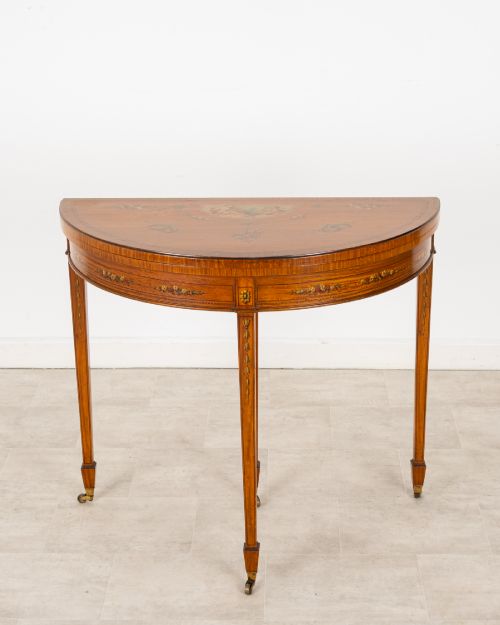


Folding Satinwood Table
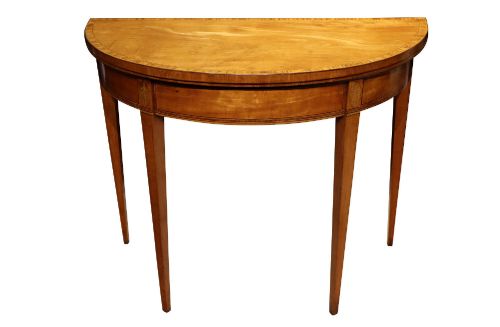
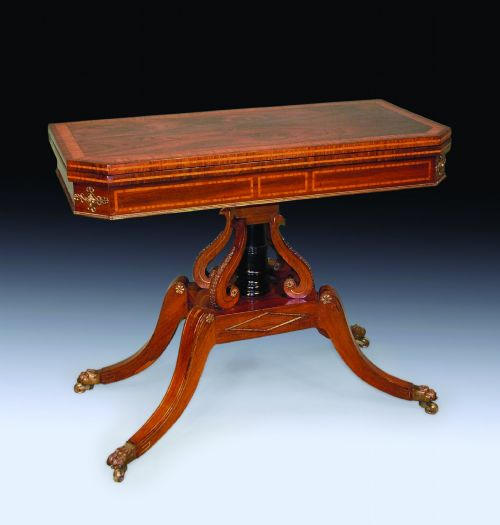
A folding satinwood table offers ingenious surfaces that conceal their mechanisms until cards or tea require them.
Folding Satinwood Table
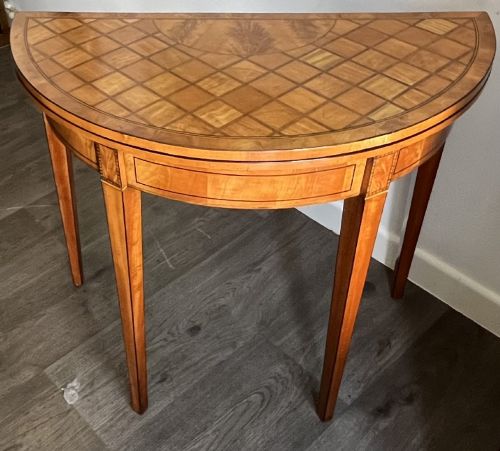
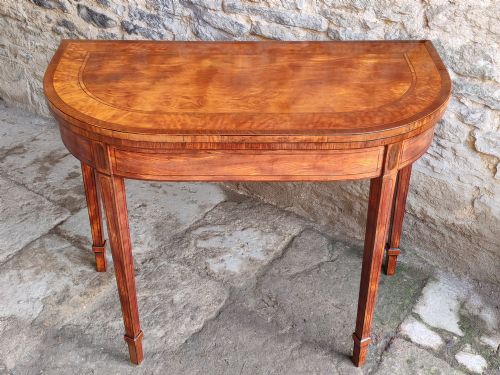
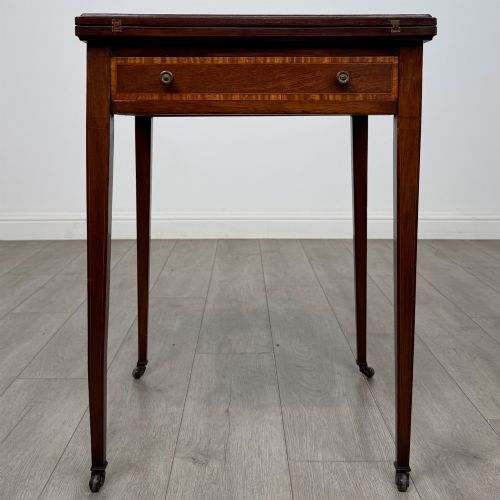
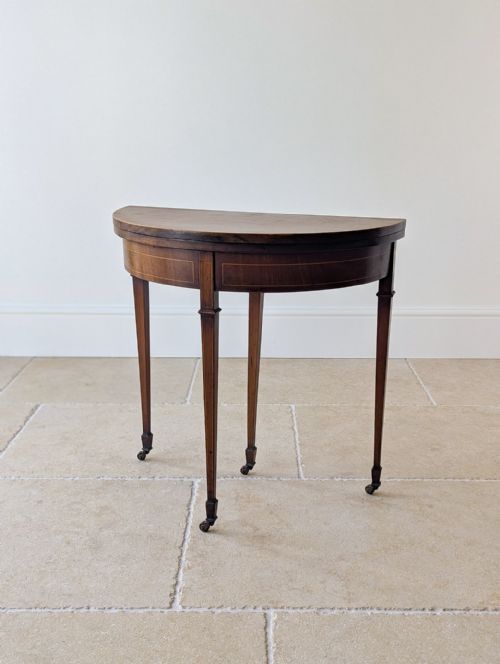
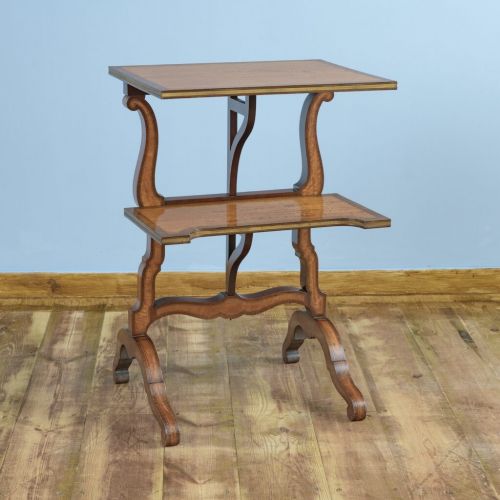
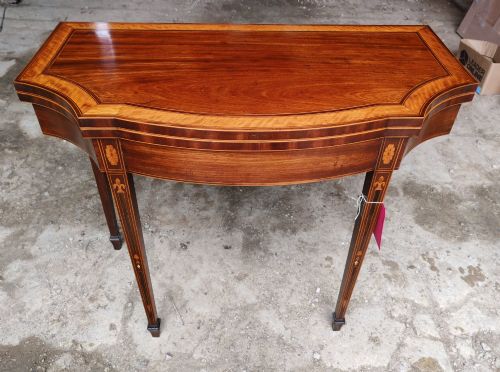
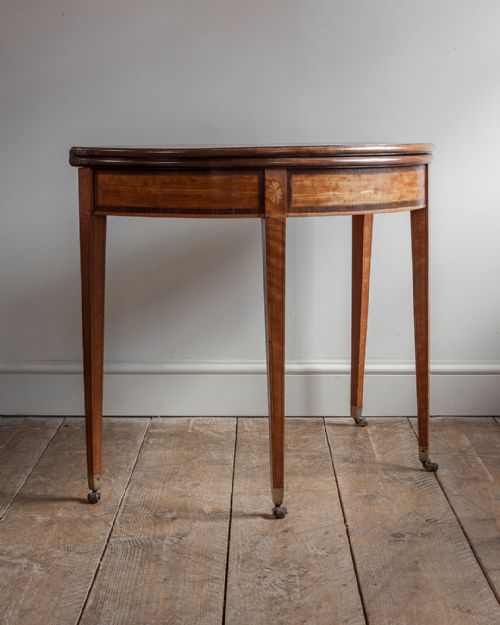
A folding satinwood table appears in forms such as card tables, games tables, tea tables, and occasional tables, spanning the Georgian, Regency, and Edwardian periods. The evidence shows demilune shapes, envelope folds, and Pembroke designs among these adaptable pieces.
Makers utilised satinwood alongside mahogany, rosewood, and walnut, often applying marquetry inlay, boxwood, and ebony details. These pieces originate from workshops working in Georgian, Sheraton, and Edwardian styles, reflecting changing domestic entertainments across the eighteenth, nineteenth, and twentieth centuries.
Materials and Construction
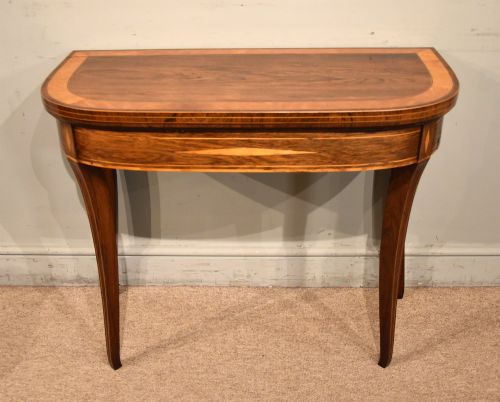
Cabinet makers built these tables using satinwood veneers over sturdy secondary woods, complemented by contrasting timbers like kingwood, mahogany, and rosewood for crossbanding and borders. Delicate boxwood and ebony stringing define the edges of tabletops and legs.
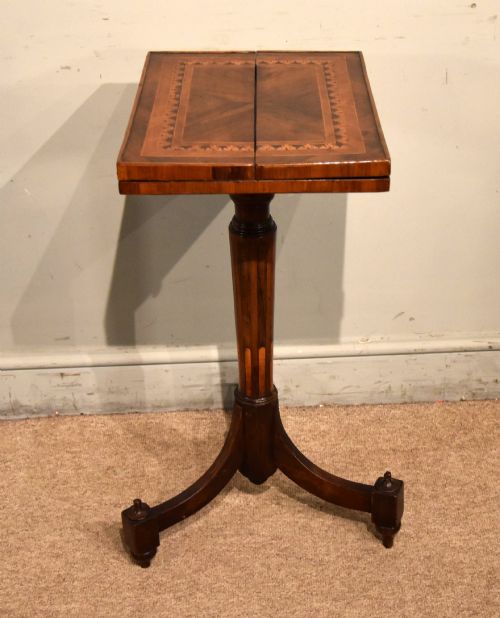
The folding mechanisms rely on clever hinges and pivoting frames that support turn-over leaves or rotating tops designed for card playing and tea service. Artisans also applied hand-painted decoration to the satinwood surfaces on specific examples from the Georgian and Edwardian eras.
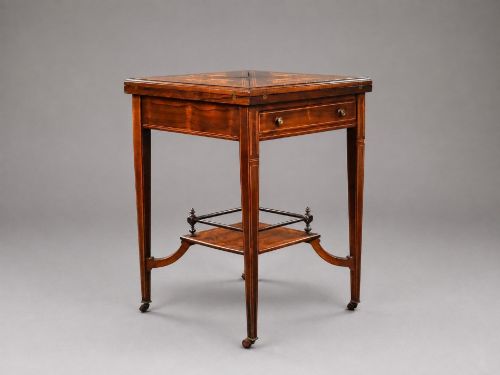
A solitary envelope table patiently waits to unfold its satinwood corners for an unexpected evening of cards.
Standards of Execution
The fineness of the marquetry inlay and the crispness of the crossbanding distinguish standard production from exceptional examples. Cabinet makers who selected highly figured satinwood logs achieved striking grain patterns that catch the light.
The integrity of the folding mechanism dictates daily usability, where tight joints and smooth pivoting actions separate superior joinery from loose construction. Hand-painted details show differing levels of artistic skill, from simple floral borders to detailed pictorial panels.
Maison Giroux·Maple & Co·Howard & Son's
The Folding Satinwood Table Glossary
- Crossbanding
- A border band of veneer laid with the grain running perpendicular to the main surface. This technique frames the satinwood top of a card table.
- Demilune
- A half-moon shape characteristic of many game and console tables. Such tables sit flush against a wall when closed.
- Envelope table
- A square card table with four triangular flaps that fold diagonally over each other to reveal the baize-lined interior. This clever design emerged strongly during the Edwardian period.
- Marquetry
- Decorative patterns formed by fitting together small pieces of tinted woods and veneers. Craftsmen used this method to create floral and geometric designs on tabletops.
- Pembroke table
- A small drop-leaf table with hinged flaps on opposite sides. These versatile tables appear with satinwood veneers and inlaid details in the evidence.
Folding Satinwood Table: Frequently Asked Questions
What is a folding satinwood table used for?
These tables served primarily for card games, tea service, and writing, adapting to the social demands of the home. Their folding leaves allowed households to save space when entertainment concluded.
Many examples feature baize-lined interiors specifically for playing cards, while others provide flat surfaces for tea or correspondence.
How do I identify a Georgian satinwood table?
Georgian examples often display crisp geometric stringing, neoclassical painted motifs, and classical demilune proportions. Makers in this era favoured satinwood combined with mahogany and kingwood.
Examine the construction methods and timber selection to distinguish eighteenth-century pieces from later revival items.
Where should I place an envelope card table?
An envelope table works well as an occasional centre table or console when closed, showing off its decorative satinwood top. Placing it against a wall preserves floor space while keeping the piece visible.
When guests arrive, the flaps unfold to create a functional gaming surface without requiring a dedicated card table in the room.
How do Edwardian tables differ from Georgian ones?
Edwardian versions often incorporate envelope folding mechanisms and lighter satinwood painted decorations. They reflect a revival of earlier Sheraton styles adapted for twentieth-century homes.
Georgian pieces tend to rely on fine crossbanding and simpler turn-over leaves rather than complex pivoting flaps.