
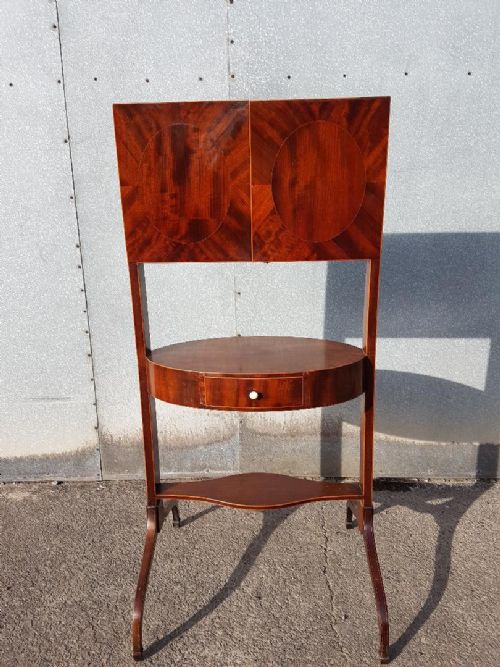


Folding Dressing Table Mirror
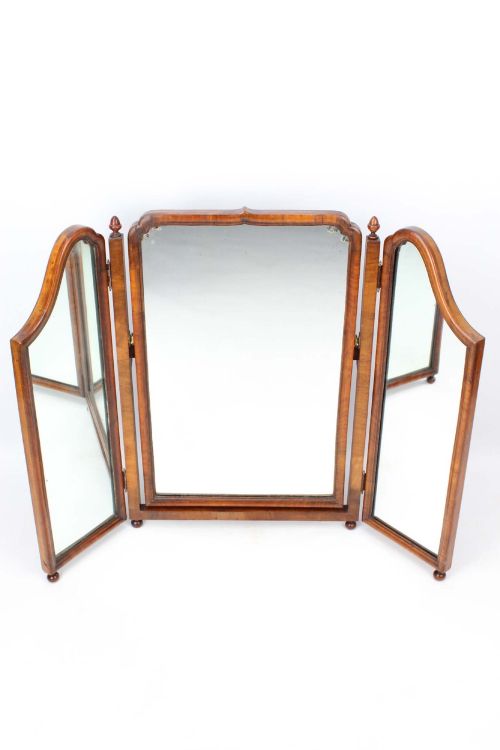
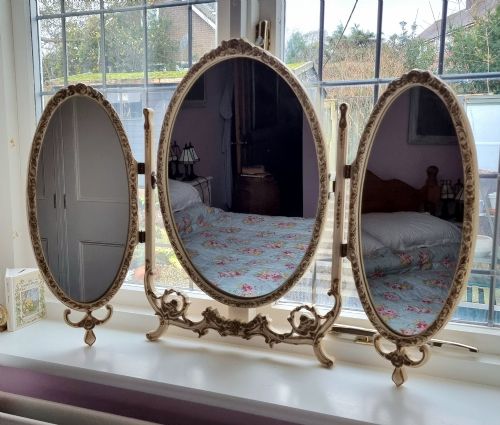
A folding dressing table mirror is a clever pivoting glass that sits on a chest or desk, offering side panels to catch the light from every angle.
Folding Dressing Table Mirror
A folding dressing table mirror brings practical adjustability to the bedroom, allowing a person to see their reflection from multiple perspectives. When you search for a folding dressing table mirror, you encounter everything from compact travel pieces to large triptychs with pivoting side wings.
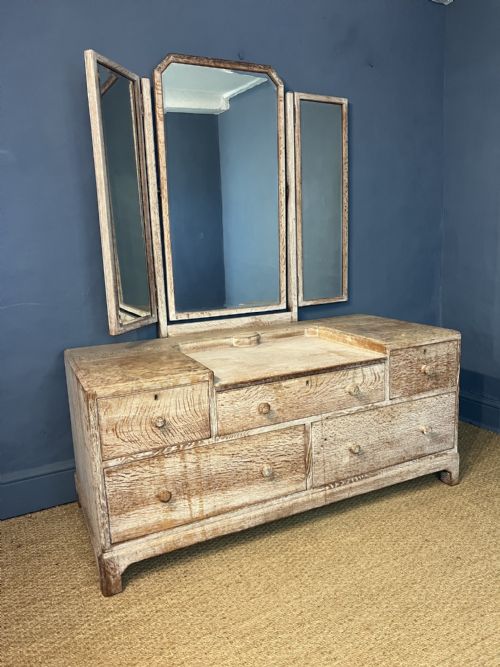
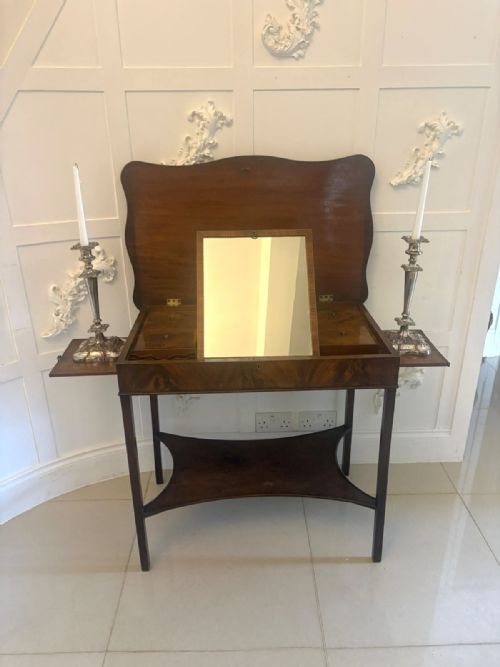
The pieces on this page span the eighteenth century to the mid-twentieth century, with a strong showing of Edwardian and 1930s examples. Alongside tabletop mirrors, the evidence includes larger dressing tables and gentleman's wash stands incorporating similar pivoting glass elements.
Origins vary widely across the inventory, taking in British cabinet work alongside French neoclassical, provincial, and rococo revival pieces, plus specialised items from Vienna and Sorrento.
Materials and construction
Cabinet makers built these pieces in solid and veneered timbers including mahogany, oak, walnut, satinwood, kingwood, and rosewood, often enriching surfaces with contrasting crossbanding or stringing. Metal components play a crucial structural and decorative role, with brass hinges, finials, swan neck handles, and swing arms enabling the side plates to fold inward.
Glass is set into moulded wooden frames or cast brass mounts, occasionally featuring bevelled edges. Gesso and gilt plaster appear on decorative revival frames, while marble tops and brass embellishments characterise certain larger French dressing tables in the selection.
Origin points recorded in the inventory range from British workshops to French provincial makers and Italian craftspeople in Sorrento.
Distinguishing quality in construction and detail
The distinction between standard items and superior examples lies in the crispness of the carving, the selection of figured timber veneers, and the substance of the brass fittings. Fine pieces utilise substantial cast brass hinges and lion or urn finials that hold their position securely when adjusted.
Execution of secondary details, such as dovetailed drawers in the base stands, delicate stringing, and uniform bevelling on the glass panels, separates everyday workshop production from the work of finer makers.
Heals
The Folding Dressing Table Mirror Glossary
- Triptych
- A three-panel mirror with a central glass and two hinged side wings that fold inward. This configuration allows the user to check profiles and hair from multiple angles.
- Cheval mirror
- A full-length mirror suspended on a vertical frame with side pivots, allowing the entire glass to tilt. Some larger pieces in the record share this pivoting function.
- Stringing
- Thin inlaid lines of contrasting wood used to outline drawers and panels on mahogany and satinwood furniture. It adds subtle definition to the timber surface.
- Gesso
- A plaster-like mixture applied to wood frames before gilding, carved or moulded to create ornate relief ornament. It is common on revival dressing mirrors.
- Crossbanding
- A border of veneer laid across the grain of the primary timber, framing the top or drawer front. It demonstrates careful attention to surface pattern.
Folding Dressing Table Mirror: Frequently Asked Questions
How do I date a folding dressing table mirror?
Dating relies on the secondary timbers, the style of the brass hinges, and the mounting techniques. Eighteenth-century and Georgian pieces often use hand-cut dovetails and simpler brass arms, whereas Edwardian and 1930s examples show different veneer choices and machine-made fittings.
Looking at the construction of the backboards and the thickness of the glass provides further clues to the period of manufacture.
Were these mirrors made to travel?
Some compact examples, such as the inlaid olive wood folding travel mirrors from Italy, were designed for packing into luggage. Gentleman's shaving mirrors often included small compartments for razors and toiletries suited to journeys.
Larger triptychs with heavy brass finials and bracket feet were intended to remain stationary on top of a dressing table or wash stand.
What is the difference between a vanity table and a dressing table?
A dressing table typically refers to a larger piece of furniture with drawers, often fitted with an attached or matching mirror for daily grooming. A vanity table or wash stand serves a similar function but may incorporate marble tops, wash basins, or specific compartments for shaving gear.
Both forms frequently include pivoting glass panels to assist with personal care.
How do I clean and care for antique mirror glass?
Antique mirror glass requires gentle treatment to preserve the silvering behind the plate. Using a soft cloth and a mild, ammonia-free cleaner prevents damage to the surrounding wooden frame and the edges of the glass.
Avoid spraying liquid directly onto the mirror, as moisture can seep behind the glass and cause dark spots over time.