
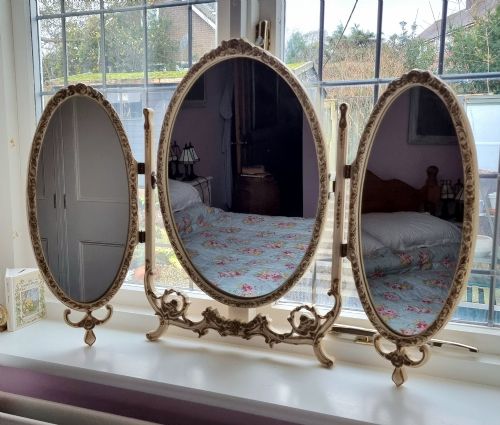


Vintage Three Panel Mirror
A vintage three panel mirror offers hinged reflection and folding symmetry, bringing depth and period character to dressing rooms and walls alike.
Vintage Three Panel Mirror
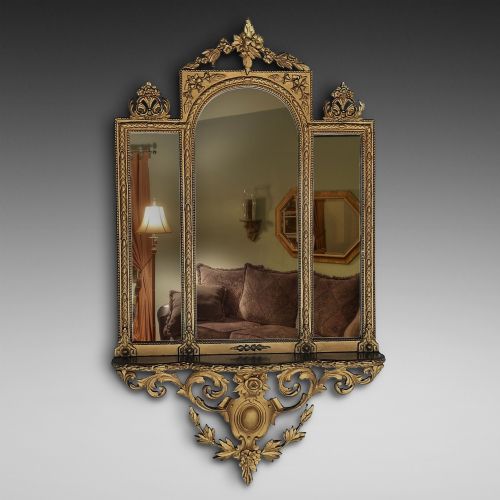
When searching for a vintage three panel mirror, you encounter hinged dressing table glasses, triptych overmantels, and multi-panel wardrobe doors spanning the Victorian era, the Edwardian period, and the nineteen thirties. These pieces split reflections across three sections, usually with adjustable side wings that pivot on brass hinges to alter the angle of sight.
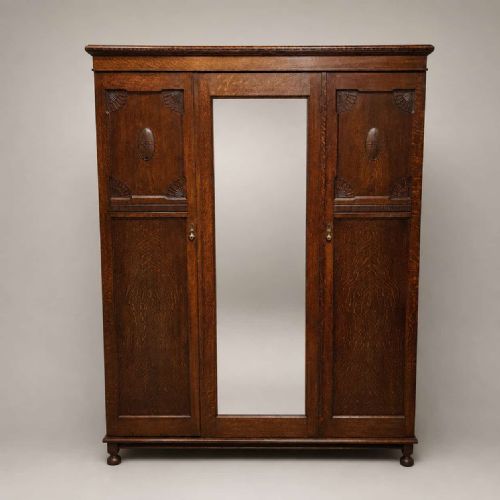
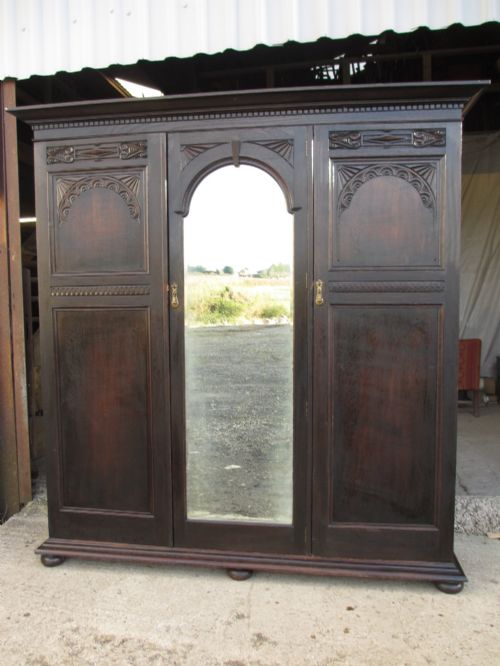
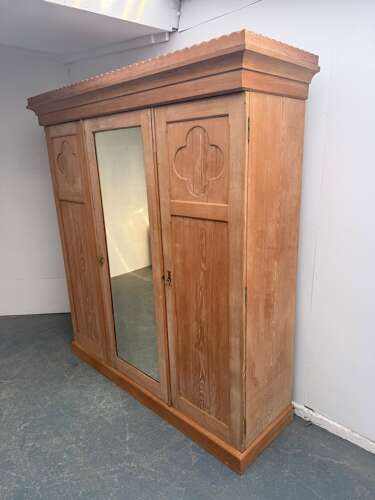
The versions most commonly met on this page include tabletop dressing mirrors and wall-mounted folding glasses framed in oak, mahogany, walnut, or giltwood. Some examples integrate directly into larger furniture forms such as triple wardrobes and compactum closets, whilst others exist as standalone pieces designed for walls or dressing surfaces.
How they were made
Cabinetmakers constructed the frames of a vintage three panel mirror using dense timbers like oak, mahogany, and walnut, frequently applying carved details or gesso and giltwood ornament in styles ranging from Chippendale revival to Art Deco. Joints were typically joined with traditional joinery methods to support the weight of heavy glass plates.
The three glass panels are held together by brass hinges, allowing the outer wings to swing inwards or outwards. Silvered glass plates provide the reflection, whilst wooden backboards secure the glass within the frame.
Listings feature oak, mahogany, walnut, and giltwood frames spanning the Victorian, Edwardian, and Art Deco periods.
What varies in quality
The distinction between standard examples and the finest pieces lies in the crispness of the timber carving and the quality of the surrounding frame, whether executed in figured walnut, carved oak, or detailed giltwood and gesso. Superior pieces display harmonious proportions across all three panels and retain their original brass hardware.
Condition of the silvered glass and the stability of the hinges determine everyday usability. Finer items exhibit heavy, clear glass plates securely housed within robust frames without excessive foxing or distortion in the side reflections.
The Vintage Three Panel Mirror Glossary
- Triptych
- A three-part hinged mirror or picture where two outer wings fold over a central panel. This format allows adjustable angles for viewing.
- Overmantel mirror
- A large glass designed to sit directly above a fireplace mantelpiece. These often incorporate architectural framing or multiple panels.
- Gesso
- A plaster-like material applied to wooden frames before gilding or painting. It provides a smooth surface for intricate moulded ornament.
- Compactum
- A large fitted wardrobe with multiple internal compartments and doors. Some incorporate central dressing mirrors or folding panel sections.
Vintage Three Panel Mirror: Frequently Asked Questions
Where should I place a three panel mirror?
These mirrors suit dressing tables, chest tops, or walls where the adjustable side panels can catch light from different angles. They add depth to smaller rooms by reflecting surrounding space.
Ensure the wall fixings or supporting furniture can bear the weight of the timber frame and glass plates before installation.
How do I adjust the side panels safely?
Hold the outer frames gently near the brass hinges rather than pressing directly on the glass edges. Move the wings slowly to test the tension of the original pivot mechanism.
If the hinges feel stiff, avoid forcing them; check whether the screws need gentle adjustment by a professional.
What periods do these mirrors come from?
The pieces span from the late nineteenth century through the Edwardian era up to the nineteen thirties. Styles range from Victorian revival and Arts and Crafts to clean Art Deco lines.
Construction details and timber choice usually indicate the specific decade of manufacture.
Are the mirrors removable from wardrobes?
Some pieces are integrated directly into triple wardrobe doors, whilst others are independent wall-mounted or dressing table items. Wardrobe mirrors are secured with wooden moulding strips from the back.
Removing them requires careful unscrewing of the backing battens to avoid cracking the antique glass.