

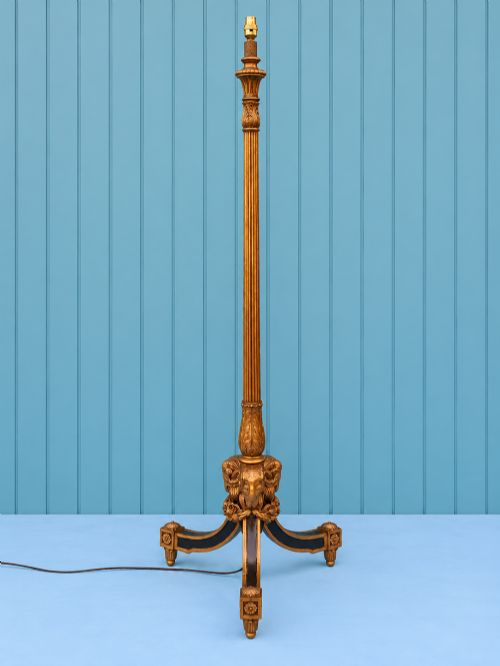
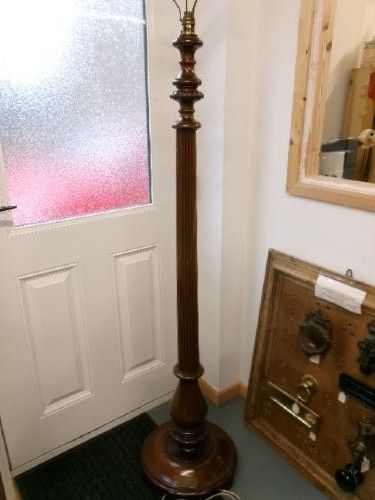
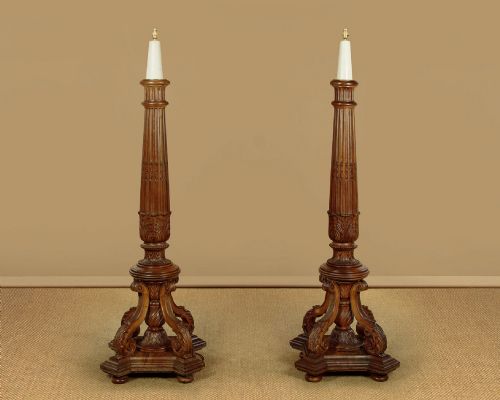
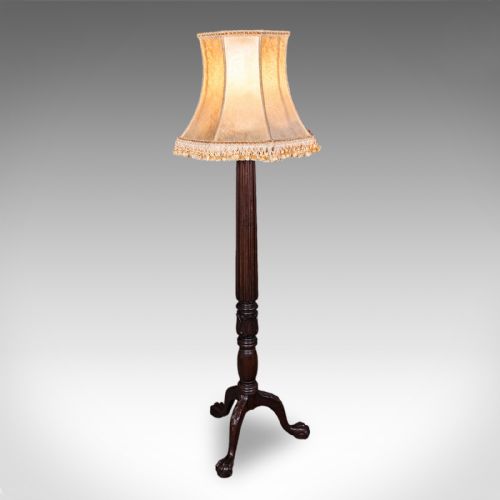
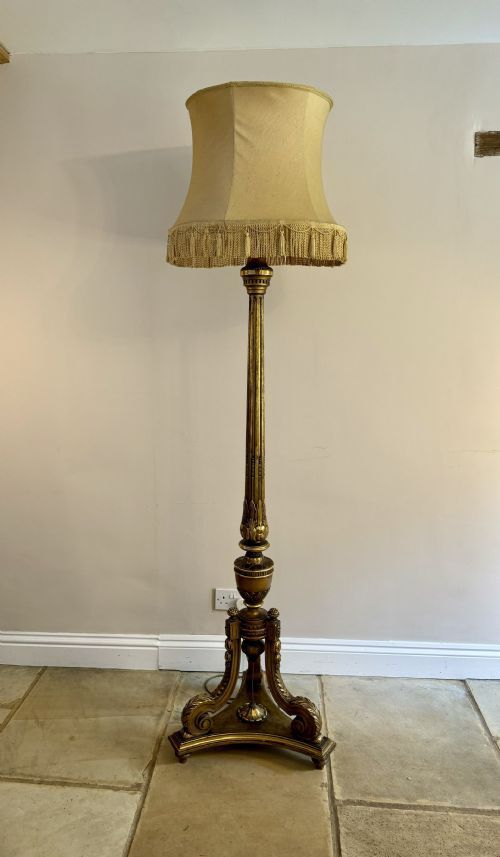
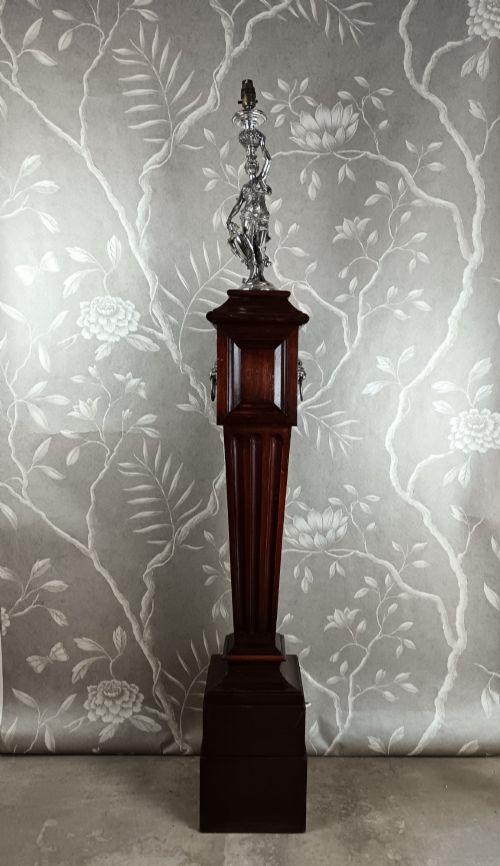


Fluted Wooden Floor Lamp
These fluted wooden floor lamps bring height and warmth to a room, turning practical lighting into a sculptural statement.
Fluted Wooden Floor Lamp
A fluted wooden floor lamp provides vertical presence and ambient illumination, standing as a substantial piece of furniture in any interior. When exploring fluted wooden floor lamp options, buyers encounter tall pedestal columns shaped with vertical grooves, often topped with fabric shades.
The selections span from the nineteenth century into the twentieth century, taking forms such as standard lamps and torcheres. Pieces emerge in periods like the Victorian era, the Edwardian years, and the Art Deco decades.
Revival styles appear frequently, notably Neoclassical and William IV designs alongside French Chateau aesthetics. Mahogany and walnut provide the primary timber bodies for these tall lights.
How They Were Made
Craftsmen shaped dense hardwoods such as mahogany and walnut on lathes to produce the characteristic vertical flutes running down the shafts. Carved details and giltwood finishes appear on more ornate examples, incorporating gold leaf and gilded wood.
Metal components integrate into the construction, utilising brass fittings and silver-plated figural elements. Fabric shades complete the structures, pairing with weighted bases that ensure stability for the tall wooden stems.
Fluted Wooden Floor Lamp Retail Price Guide 2026
Typical asking prices for fluted wooden floor lamp among the pieces listed under this phrase on Sellingantiques today, from the lower quarter to the upper quarter. They describe what is for sale here now, not the wider market.
Listings feature mahogany and walnut timbers alongside giltwood finishes across Victorian, Edwardian, and Art Deco periods.
What Varies in Quality
The definition of the carved fluting dictates the crispness of the column, where sharper lines reflect superior workshop execution. Timber selection also separates standard production from finer creations, with well-figured walnut and rich mahogany showing deeper grain patterns.
Surface treatment reveals the standard of craftsmanship, distinguishing straightforward polished wood from meticulous gilding and hand-applied gold leaf. Integrated metalwork, such as marked metal figures or heavy brass mounts, adds another layer of distinction to the construction.
WMF
The Fluted Wooden Floor Lamp Glossary
- Fluting
- Vertical parallel grooves carved into the shaft of a column or standard lamp. This decorative technique creates shadow and depth along the wooden stem.
- Torchere
- A tall stand originally designed to carry a candle or torch, adapted in later periods to hold electric lighting. These pieces often feature slender wooden pedestals.
- Standard lamp
- A British term for a floor lamp, consisting of a heavy base and a tall vertical post supporting a shade. They provide ambient room illumination.
- Giltwood
- Wood that has been coated with a thin layer of gold leaf or gold paint. This finish catches the light and reflects the surroundings.
- Neoclassical revival
- A style drawing inspiration from classical antiquity, featuring symmetrical forms and restrained ornamentation. It appears across nineteenth and twentieth-century lighting designs.
Fluted Wooden Floor Lamp: Frequently Asked Questions
How do I choose the right height?
Consider the ceiling height and existing furniture scale in your room before selecting a tall standard lamp. Most designs reach well over a metre, ensuring the light source clears surrounding tables and seating.
Measure the clearance needed if placing the lamp beside a sofa or reading chair. Taller torcheres suit larger reception rooms with high architectural proportions.
Where should I place a standard lamp?
These tall wooden lights fit naturally into dark corners, beside reading chairs, or flanking a fireplace. Their vertical lines draw the eye upward and fill empty vertical space in a room.
Ensure an adequate path to a wall socket since floor lamps rely on trailing cords. Positioning them near natural seating groups creates a layered lighting scheme.
How do I care for wooden lamp stems?
Dust the fluted wooden columns regularly with a soft, dry cloth to prevent buildup in the carved grooves. Avoid chemical polishes that can damage antique finishes over time.
Keep wooden lamps away from direct heat sources and strong sunlight to prevent the timber from drying out. Handle gilded or silver-plated sections with particular care during cleaning.
How do I identify the period?
Examine the timber choice, turning style, and decorative motifs to determine the likely era of manufacture. Victorian and Edwardian examples often feature heavy mahogany or walnut turnings, while Art Deco pieces show cleaner, geometric lines.
Look for maker marks on metal mounts or bases where present. Stylistic clues, such as Neoclassical revival fluting, help narrow down the decade of production.