



Fluted Silver Jug
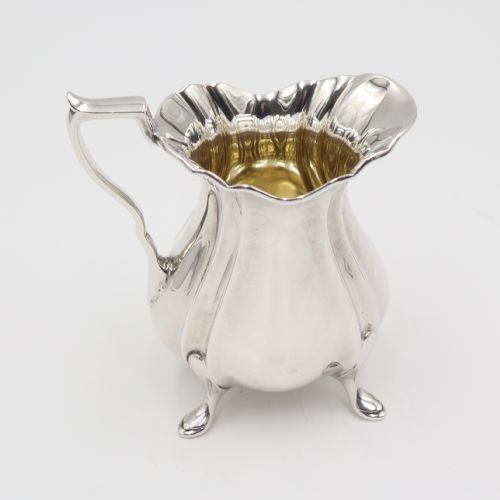
A fluted silver jug brings sharp linear shadow and weight to a table, spanning Georgian creamers to silver plated Edwardian tea services.
Fluted Silver Jug
When you search for a fluted silver jug, you encounter holloware designed for milk, cream, hot water or wine across the Georgian, Victorian and Edwardian eras. These pieces range from small pedestal creamers to large claret jugs with glass bodies and silver mounts.
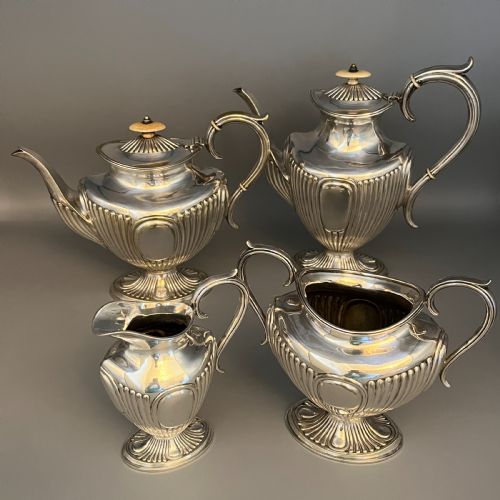
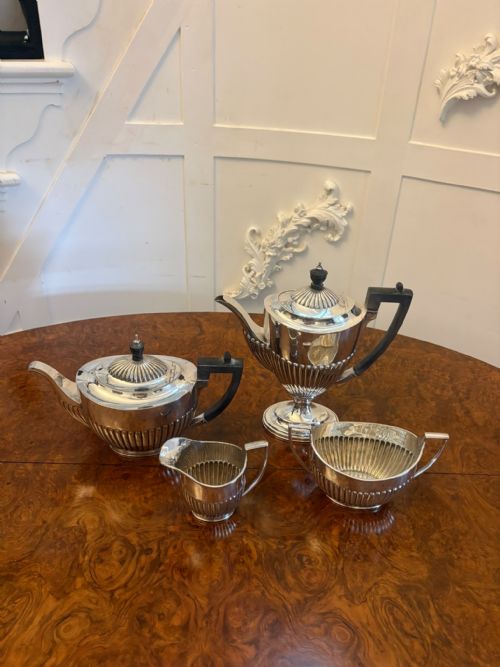
The version you are most likely to meet on this page is the silver plated tea set or individual cream jug from the 1900 Edwardian period or the Victorian era. Many pieces feature crisp vertical or spiral fluting that catches the light against polished metal surfaces.
Forms vary from squat melon shapes to tall hot water pots and complete tea and coffee services. Origins span English provincial workshops to Dublin and London hallmarked pieces.
How they were made
Metals include sterling silver and silver plate, shaped alongside materials such as glass, ebonised wood, cane and gilt accents. Handles often incorporate wood, woven elements or cast mounts for insulation and grip.
Silversmiths formed the fluted bodies by hammering metal from the reverse or pressing it into dies to create vertical or wrythen spiral channels. Engraving, hand-chasing and cast spouts completed the decorative scheme on both solid silver and plated examples.
Fluted Silver Jug Retail Price Guide 2026
Typical asking prices for fluted silver jug among the pieces listed under this phrase on Sellingantiques today, from the lower quarter to the upper quarter. They describe what is for sale here now, not the wider market.
Listings feature sterling silver and silver plate alongside auxiliary materials including ebonised wood, cane, glass and gilt across the Georgian, Victorian and Edwardian periods.
What varies in quality
The distinction between standard domestic holloware and exceptional work lies in the crispness of the fluting and the weight of the metal. Superior pieces retain deep, sharp channels that do not soften with polishing or wear.
Makers' marks and full hallmarked panels provide documentary evidence of origin, while fitted cases and complete multi-piece matching services elevate the standing of a set. The integration of secondary materials like woven handles and glass bodies also dictates the overall standard.
Peter and Ann Bateman·James Scott·Harry Atkin
The Fluted Silver Jug Glossary
- Fluting
- Parallel hollow channels pressed or hammered into the body of a vessel. This technique adds structural rigidity and decorative shadow.
- Wrythen
- A twisted or spiral fluting pattern running obliquely up the body of a jug. It creates a dynamic sense of movement in the metal.
- Sterling silver
- An alloy containing a high proportion of pure silver combined with other metals for durability. British pieces typically carry town and maker hallmarks.
- Silver plate
- A base metal foundation coated with a thin layer of silver. This method offered domestic buyers an accessible alternative to solid silver.
- Claret jug
- A serving pitcher specifically for wine, combining a glass body with a metal hinged lid, mount and handle. They frequently display cast fluted spouts.
Fluted Silver Jug: Frequently Asked Questions
How do I date a silver jug?
Look for hallmarks stamped on the metal surface, which indicate the assay office, year letter and maker. Stylistic clues such as Edwardian proportions or Georgian handle shapes also help narrow down the decade.
Unmarked pieces rely on manufacturing techniques and material composition to suggest an approximate period of origin.
What is the difference between solid silver and silver plate?
Solid silver consists of a regulated precious metal alloy throughout the entire object, bearing official assay office stamps. Silver plate applies a thin layer of silver over a base metal foundation.
Plated items generally feel lighter and may show base metal beneath the silver layer where wear occurs over generations of cleaning.
How were these jugs used?
Smaller vessels served cream or milk at tea tables, while larger pitchers held hot water for diluting tea or wine for dinner service. Claret jugs specifically held fermented drinks, utilising a hinged lid for pouring at the table.
Many formed part of larger matched tea and coffee services rather than standing alone.
How do I clean and care for silver jugs?
Use a specialised silver polish applied with a soft cloth to remove tarnish without abrading the surface details or thin plating. Avoid harsh chemical dips that strip the natural dark oxidation from recessed fluting and engravings.
Store pieces in dry conditions away from direct sunlight to minimise the rate at which tarnish returns.