
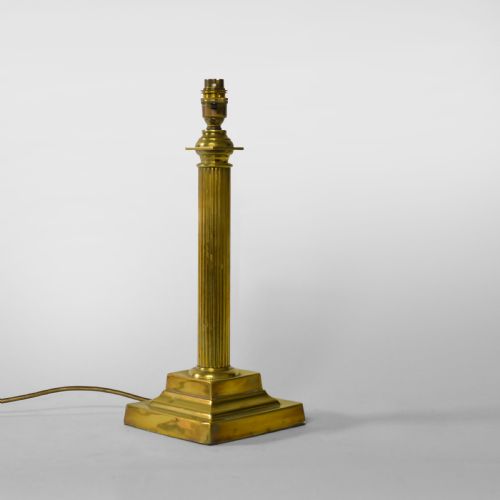
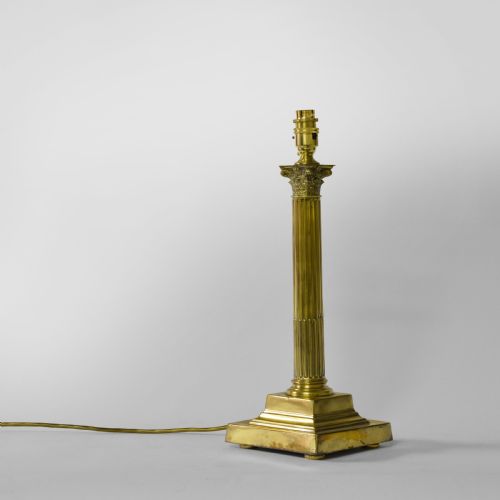


Fluted Pedestal Column Lamp
A fluted pedestal column lamp brings neoclassical dignity to a room, casting a warm light through brass, bronze, and silver-plated shafts.
Fluted Pedestal Column Lamp
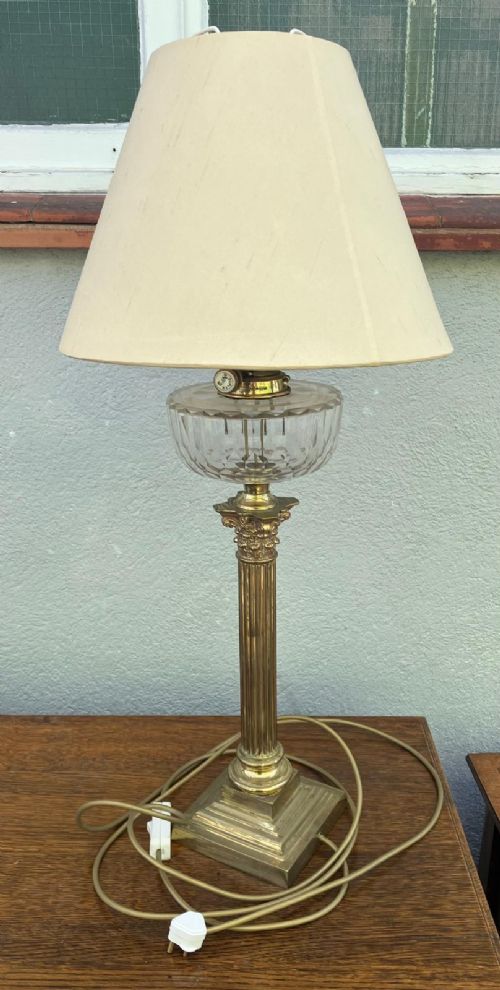
A fluted pedestal column lamp follows classical architectural forms, taking inspiration from ancient Greek and Roman orders to anchor lighting in traditional interiors. These pieces draw heavily on Corinthian and ionic column designs, often translating stone temple architecture into domestic lighting.
Most examples found on this page date from the nineteenth century through the Edwardian period and the early twentieth century. Brass, silver plate, and bronze dominate the selection, appearing alongside occasional glass and mahogany forms.
Makers adapted the column shape for table lamps, floor standards, and converted oil lamps, frequently pairing the metallic shafts with fabric shades or opaline glass.
How they were made
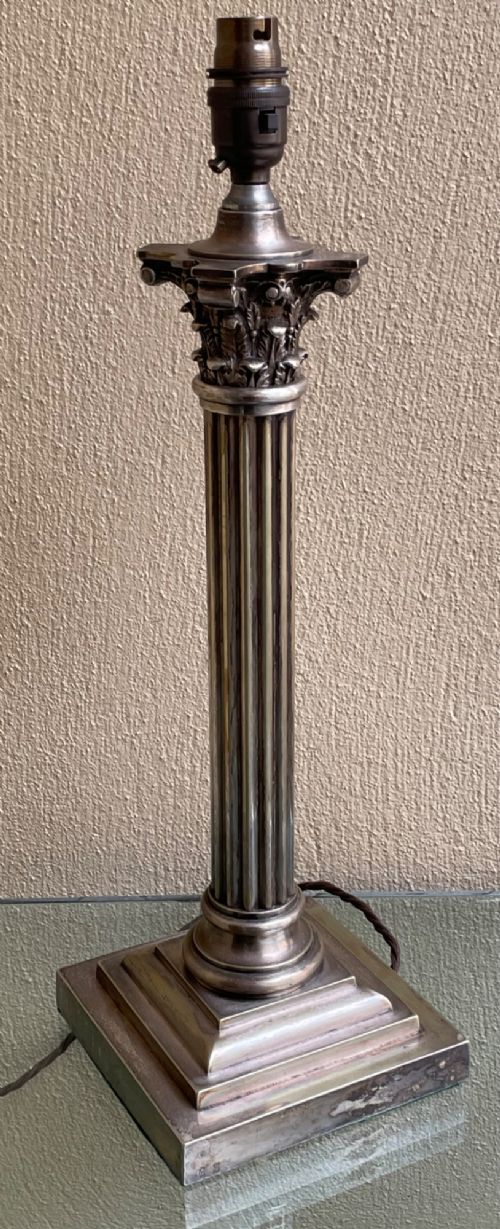
Craftsmen utilised cast brass, silver plate, and gilt bronze to build the structural shafts, turning the metal on lathes to achieve precise fluting and stepped pedestals. Detailed acanthus leaves and volutes on Corinthian capitals were cast separately and soldered or pinned to the main column.
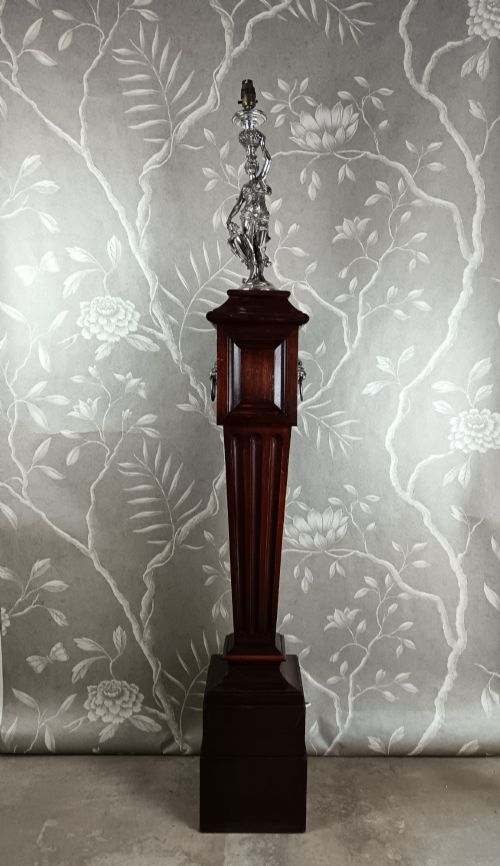
Wood versions incorporate finely turned mahogany and satinwood, occasionally joined by decorative metal mounts. Shade elements rely on hand-blown opaline glass or gathered fabric supported on wire frames.
Several heavy metal columns hide internal lead weighting in their bases to prevent ambitious cats from knocking over tall evening reading light.
What varies in quality
The crispness of the casting defines the upper tier of these columns, where acanthus leaves on capitals remain sharp and deep rather than soft or smoothed over by wear. Heavier gauge metals provide greater stability and weight at the base, distinguishing superior examples from lighter production pieces.
Proportion and scale dictate visual success, with better columns maintaining correct architectural ratios between the shaft, capital, and stepped plinth. The quality of silver plating or original mercury gilding further separates standard workshop output from exceptional commissions.
WMF
The Fluted Pedestal Column Lamp Glossary
- Corinthian column
- An architectural column order distinguished by an ornate capital decorated with rows of acanthus leaves and small volutes. This capital style appears frequently on nineteenth-century metal lamp bases.
- Ionic column
- A classical column identified by the twin scroll-like volutes on its capital. It offers a slightly simpler profile than the Corinthian order.
- Torchere
- A tall stand or floor lamp originally designed to carry a torch or candle, later adapted for electricity or oil lighting. These tall pieces often feature figural or columnar pedestals.
- Opaline glass
- A milky, translucent glass popular in the Victorian and Edwardian periods for lamp shades. It diffuses light evenly without harsh glares.
- Gilt bronze
- Bronze that has been coated with a thin layer of gold or gold amalgam, also known as ormolu. It provides a rich, durable metallic finish on high-end nineteenth-century bases.
Fluted Pedestal Column Lamp: Frequently Asked Questions
How do I date a brass column lamp?
Dating relies on manufacturing techniques, weight, and stylistic revival cues such as Victorian neoclassical details or Edwardian proportions. Screw threads, base weights, and hallmarks also help narrow down the decade of production.
Earlier nineteenth-century pieces tend to use heavier cast components with hand-finished detailing, whereas twentieth-century examples often show standardised threading and lighter mass-production methods.
Were these originally oil lamps?
Many tall metal column lamps began as Victorian or Edwardian oil lamps before being converted to electricity at a later date. Burner assemblies were removed or adapted to hold bulb sockets.
Converted pieces often retain their original fuel reservoirs or weighted bases, which were necessary to stabilize the heavy glass shades and tall chimneys used with oil.
What is the difference between brass and silver-plated lamps?
Brass lamps expose the warm golden alloy beneath their surface, sometimes polished bright or allowed to develop a natural dark patina over decades. Silver-plated examples received a thin coating of silver over a base metal foundation.
Silver-plated versions offer a brighter, reflective finish that suited formal Victorian and Edwardian drawing rooms, though the plating can wear thin over generations of cleaning.
How do I choose the right shade?
Selecting a shade depends on the height and visual weight of the column, as well as whether the lamp originally used an oil burner or a standard bulb fitting. Traditional pairings include gathered fabric shades or period opaline glass.
Proportion is key, ensuring the diameter of the shade complements the width of the stepped pedestal base without overpowering the fluted shaft.