


Figural Torchere Pedestal
A figural torchere pedestal holds a lamp or figure aloft, combining sculpture and support to anchor a room.
Figural Torchere Pedestal
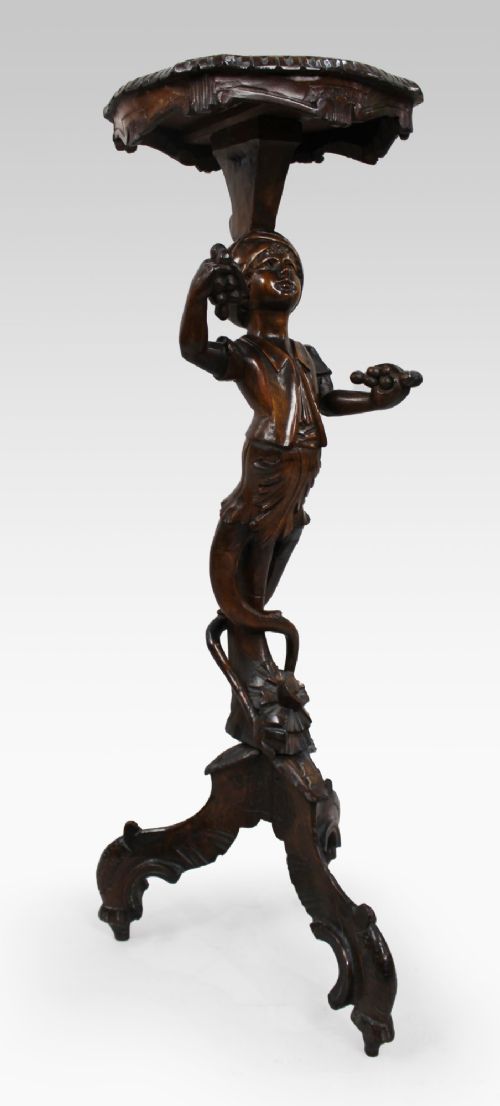
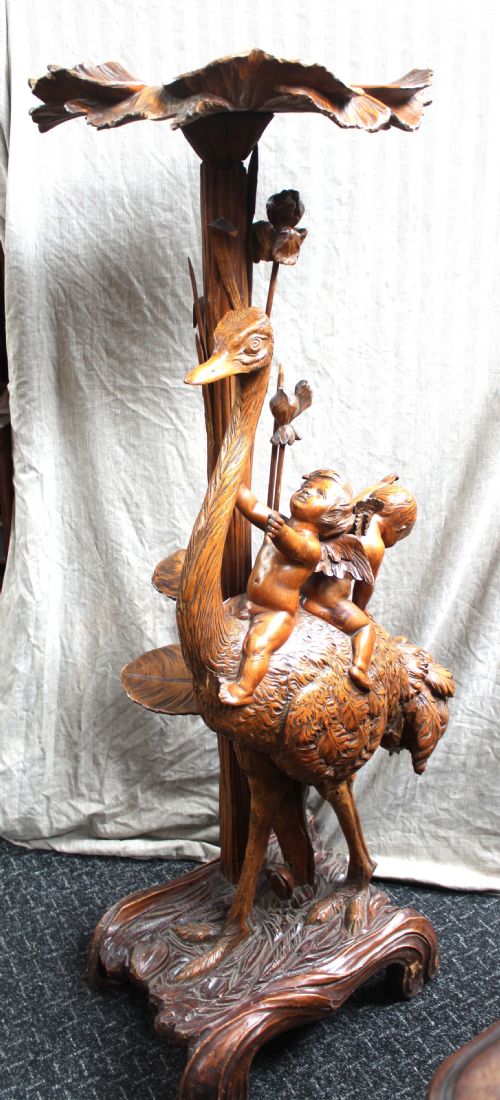
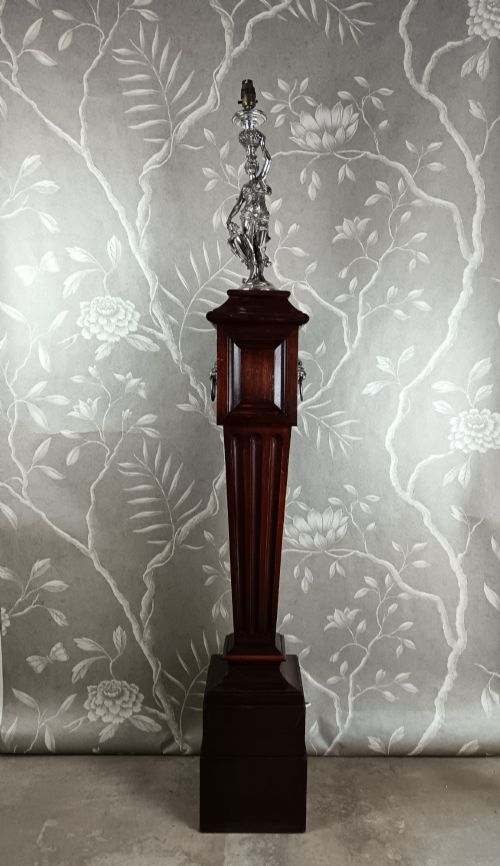
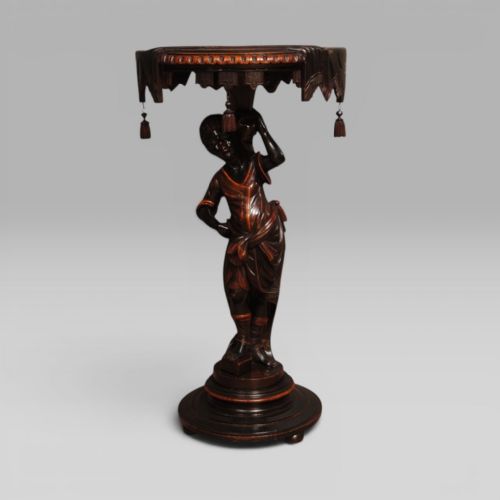
A figural torchere pedestal unites sculptural human or allegorical forms with a functional display surface or lighting mount. These pieces range from carved wooden stands and tables to wired floor lamps.
The versions met most often on this page date from the nineteenth century into the early twentieth century. Styles span Venetian Baroque, Italian Renaissance Revival, Jugendstil, Neoclassical Revival, and Victorian.
Forms include pedestals, plant stands, side tables, and floor lamps. Materials involve carved walnut, oak, mahogany, polychrome finishes, glass, brass, and silver plate alongside bronze.
How they were made
Carved wood provides the structural base for many examples, utilising walnut, oak, and mahogany worked by hand. Artisans applied polychrome paint and gilding to heighten detail on Venetian and continental pieces.
Metal elements incorporate cast bronze, brass, and silver plate. Foundries utilised lost-wax or sand casting methods to shape figures and torchere mounts.
Several figures hold torches aloft with genuine commitment, having stood in European drawing rooms since the reign of Queen Victoria.
What varies in quality
The fidelity and depth of the carving determine the visual strength of wooden pieces. Crisp undercut details separate accomplished workshop output from routine production.
Metal castings vary according to the sharpness of the chasing and the quality of the patination. Heavier gauge construction and signed metalwork elevate the standing of a piece.
WMF·F. De Luca·François-Christophe-Armand Toussaint
The Figural Torchere Pedestal Glossary
- Torchere
- A tall ornamental stand designed to hold a light or a candle. It derives from the French word for torch.
- Caryatid
- A sculpted female figure serving as an architectural support taking the place of a column or a pillar. Similar male figures are known as atlantes.
- Polychrome
- Decorated in a variety of colours. This technique appears frequently on Venetian carved wood surfaces.
- Jugendstil
- An artistic movement akin to Art Nouveau prevalent in German-speaking countries. It emphasises flowing natural lines.
Figural Torchere Pedestal: Frequently Asked Questions
What is a figural torchere pedestal?
A figural torchere pedestal is a decorative stand or floor lamp that incorporates a human or allegorical figure into its structure. It functions as a support for lighting, sculpture, or plants.
These pieces combine furniture making with sculpture. They draw upon historical revivals and regional craftsmanship.
How were these stands used historically?
Owners placed them in reception rooms, halls, and grand interiors to provide illumination or display decorative objects. They served as prominent focal points within a room scheme.
Lighting fixtures were often mounted directly to the figures. Alternatively, the tops held lamps, urns, or candelabra.
How do I live with a figural torchere pedestal?
Position the piece in a corner or alongside furniture where its vertical presence can anchor the space. Ensure that wired versions comply with current electrical standards if used for lighting.
Keep wooden surfaces dusted and protect polychrome finishes from direct sunlight. Treat bronze and metal parts with dry cloths to preserve the patination.
How do I tell periods apart?
Nineteenth-century examples often draw heavily on Renaissance or Baroque revivals with deep carving and rich patination. Pieces from the end of that century into the twentieth century introduce Jugendstil lines and marked metal components.
Examine the construction methods, tool marks, and materials to assess the age. Documentation or maker marks on the metal elements help narrow down the date of creation.