
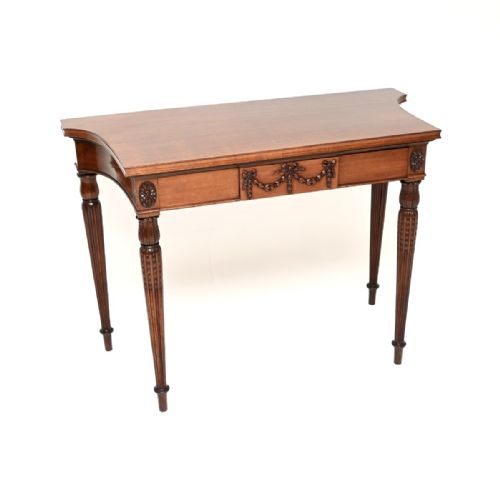
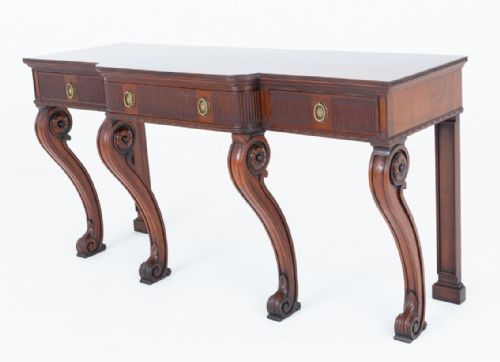


Fluted Mahogany Server
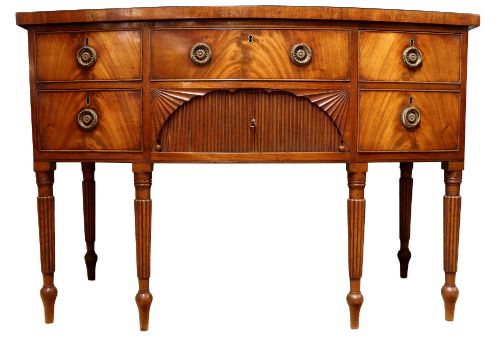
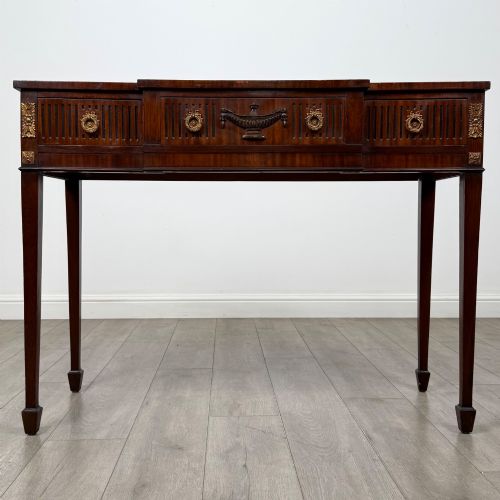
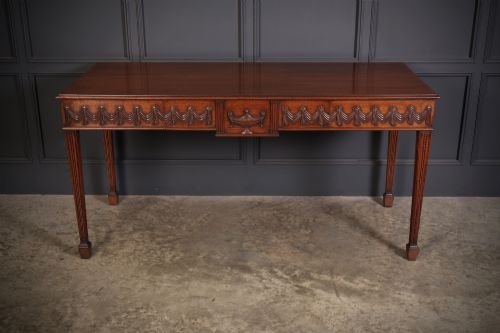
These fluted mahogany server examples combine classical restraint and timber warmth, offering both a commanding dining room presence and enduring utility.
Fluted Mahogany Server
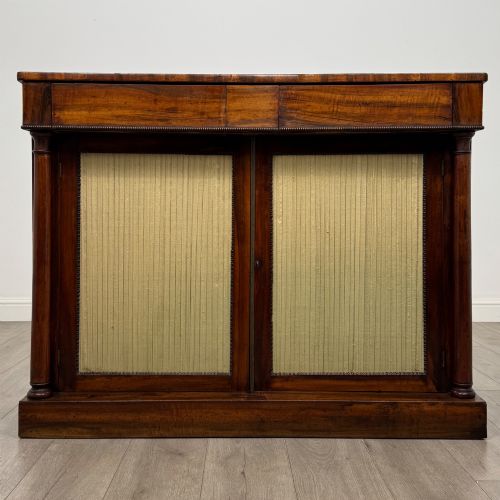
A fluted mahogany server brings together classic sideboards, serving tables, and console forms from periods spanning the Georgian era through to the Edwardian revival. Buyers searching for a fluted mahogany server will encounter dining pieces designed for food service, display, and storage in formal reception rooms.
The selections on this page draw heavily from the eighteenth and nineteenth centuries, including George III, Regency, and Victorian iterations alongside later revival pieces. Forms range from straight-fronted serving tables and bow-fronted sideboards to serpentine side tables and smaller console variations.
Makers and designers of these periods utilised proportion and linear detail to define the silhouette. The integration of fluting provides vertical rhythm across the mahogany carcass, setting apart simpler utility tables from grander architectural dining room pieces.
Materials and Construction
Construction relies upon solid mahogany and flame mahogany veneer applied to a robust timber frame, sometimes accented with contrasting satinwood or ebony stringing. Brass handles, mounts, and gallery rails frequently provide metallic highlights against the dark grain of the wood.
Joinery techniques involve traditional cabinet-making methods designed to support heavy porcelain, silver, and serving dishes. Surface decoration often includes carved fluting on legs or aprons, alongside inlaid stringing and occasional marble inserts.
Listings feature mahogany, brass, satinwood, flame mahogany veneer, fabric, wood, ebony, and marble across multiple centuries.
Assessing Quality
Quality rests upon the selection of timber figures, such as the choice of flame mahogany veneer, and the crispness of carved fluting along the legs or frieze. Superior examples display tight grain matching, careful timber selection, and well-executed joinery that remains stable over centuries.
Proportion and decorative restraint separate standard production pieces from exhibition-grade or attributed works. Finer items exhibit balanced neoclassical details, original brass hardware, and thoughtful integration of secondary woods like satinwood or ebony without appearing overcrowded.
The Fluted Mahogany Server Glossary
- Fluting
- Parallel vertical grooves channelled into the surface of a leg, column, or frieze. This classical decorative technique adds texture and draws the eye along the structural lines of the furniture.
- Serpentine
- A curved furniture front or tabletop featuring a convex centre flanked by concave ends. This flowing contour requires advanced cabinet-making skill to execute cleanly in solid mahogany.
- Bow Front
- A convex, outward-curving front elevation typical of many sideboards and serving tables. The curve softens the rectangular profile of the room and increases internal storage capacity.
- Stringing
- Thin inlay lines of a contrasting timber, such as satinwood or ebony, embedded into the primary mahogany surface. This linear banding defines drawer perimeters and panel edges.
- Pier Table
- A side table designed to stand against a wall pier between two windows, frequently paired with a matching mirror above. These tables share forms with serving tables and console tables.
Fluted Mahogany Server: Frequently Asked Questions
Where should I place a serving table?
These servers fit naturally against dining room walls to hold dishes, glassware, and silver during meals. They also function effectively in hallways or living spaces as console or side tables.
Ensure the width and depth suit the proportions of your room, allowing enough clearance for foot traffic around the piece.
How do I care for mahogany surfaces?
Maintain the timber by dusting regularly with a soft, dry cloth and applying natural beeswax occasionally to nourish the grain. Avoid placing furniture in direct sunlight or near heat sources to prevent timber splitting.
Use protective mats under hot dishes or liquids to safeguard the polished finish from water rings and heat damage.
How do I distinguish Georgian from revival pieces?
Original eighteenth-century pieces display construction methods, timber patination, and wear consistent with age, including hand-cut joinery and secondary woods native to the period. Revival pieces from the Victorian or Edwardian eras often show more uniform machine-sawn elements and distinct revival stylistic markers.
Examining the drawer linings, backboards, and fastener types helps clarify whether a piece originates from the Georgian period or a later revival.
What is the difference between a sideboard and a server?
Sideboards generally incorporate integrated cupboards, drawers, and bottle storage designed specifically for dining room utility and storage. Servers and serving tables often feature a lighter open frame with fewer enclosed compartments, focusing instead on a flat surface for presenting food.
Both forms utilise similar stylistic vocabulary, including mahogany construction and decorative fluting, but serve slightly different functional roles.