




Fluted Leg Hall Table
A fluted leg hall table combines structural discipline with refined surface detail, offering a purposeful landing place for daily essentials.
Fluted Leg Hall Table
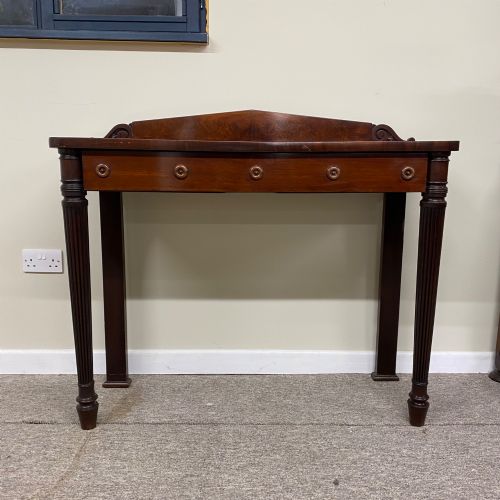
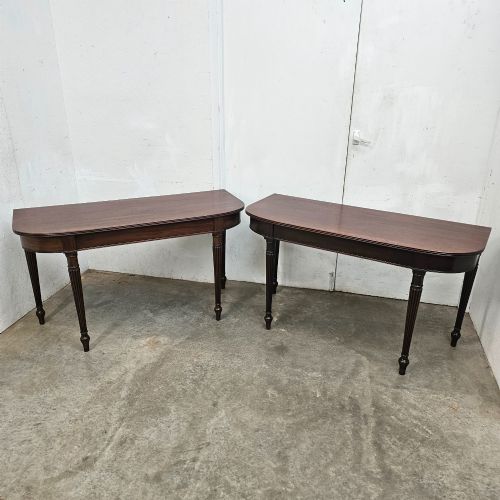
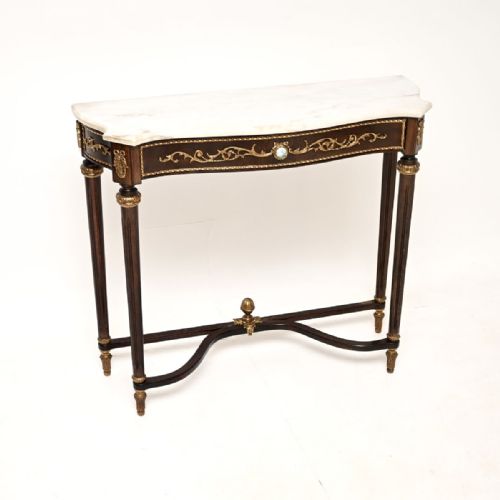
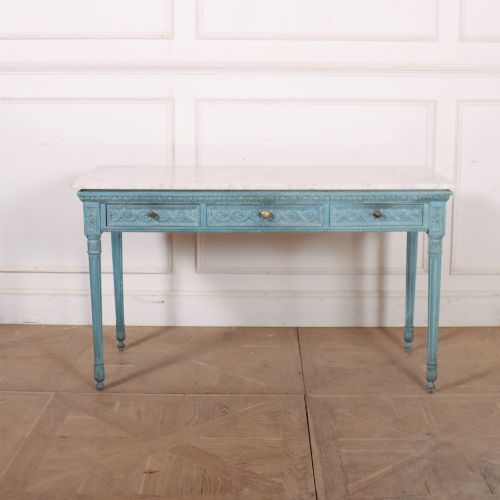
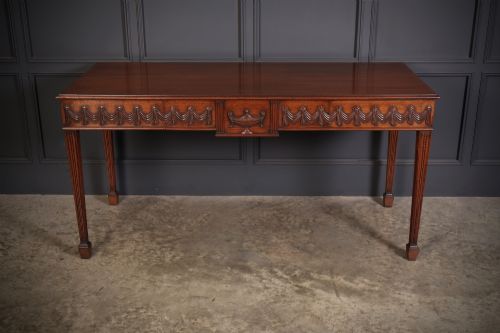
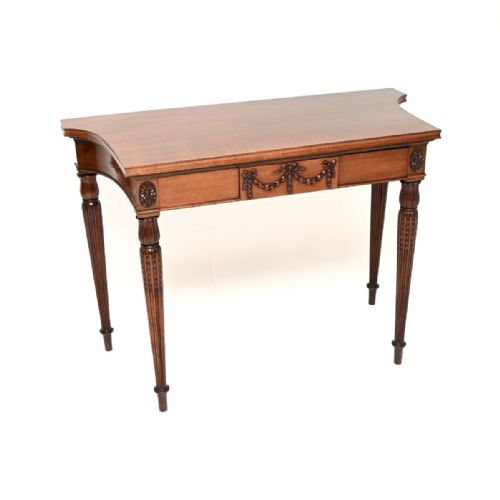
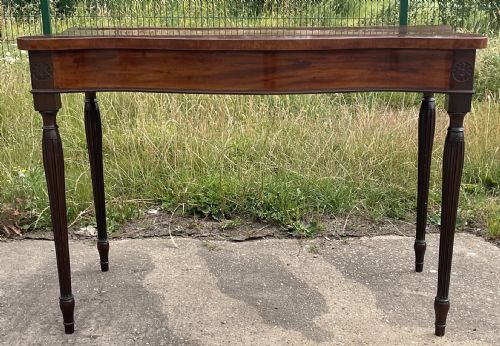
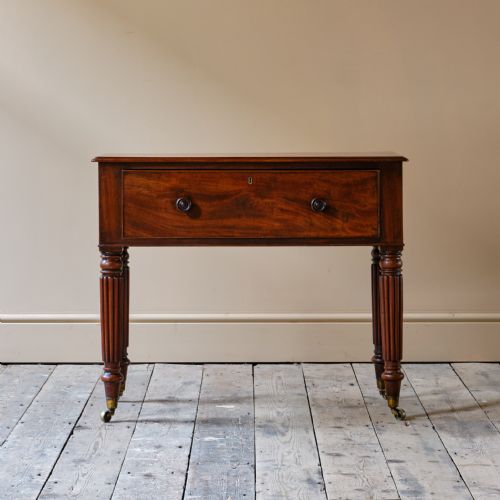
A fluted leg hall table provides a narrow footprint designed specifically for corridors, entranceways, and tight reception spaces. These pieces frequently appear in mahogany, walnut, and oak, alongside painted and gilded finishes.
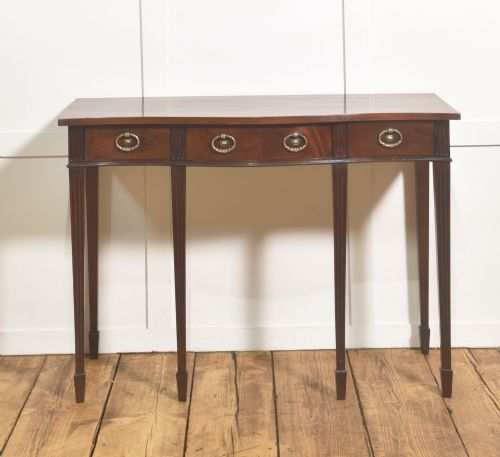
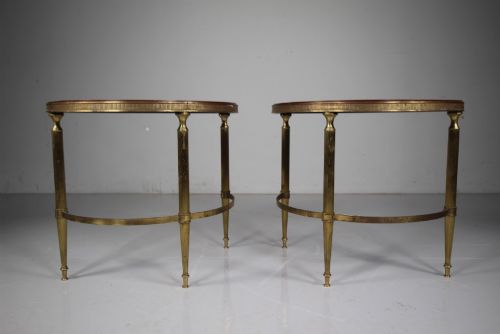
The selection spans genuine Georgian and Regency origins through to Edwardian interpretations and 20th-century revivals. Console tables, side tables, and serving tables dominate the forms, often featuring serpentine or demi-lune fronts.
Proportions range from small bedside variants to large formal serving tables intended for grander halls. Neoclassical, Adam, and Victorian aesthetic influences govern the decorative vocabulary of the legs and aprons.
Materials and Construction Methods
Cabinetmakers utilised solid timbers such as mahogany and oak for structural integrity, frequently applying figured veneers to table tops. Inlaid satinwood, brass mounts, and carved gesso enrich the primary wooden surfaces.
Flutes are carved directly into the timber of the leg columns, creating vertical channels that catch the light. Marble tops, including rouge and specimen varieties, appear alongside inset leather writing surfaces on selected examples.
Fluted Leg Hall Table Retail Price Guide 2026
Typical asking prices for fluted leg hall table among the pieces listed under this phrase on Sellingantiques today, from the lower quarter to the upper quarter. They describe what is for sale here now, not the wider market.
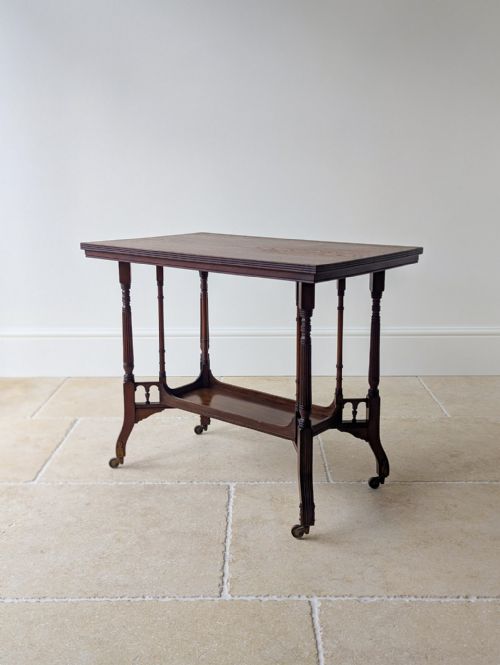
Several tables hedge their bets by doubling as card tables, proving that 19th-century guests required structured entertainment immediately upon entering the hallway.
Distinguishing Quality Across the Range
Depth of carving and sharpness of detail separate standard production pieces from masterworks. Crisp, evenly spaced fluting on the legs indicates skilled hand-tooling rather than hurried machine routing.
The choice of secondary timbers, the precision of dovetailing in any drawers, and the integration of marble or brass elements determine the overall structural integrity. Well-matched wood grain on tabletops and symmetrical inlay patterns reflect higher workshop standards.
Gregory & Co·Gillows
The Fluted Leg Hall Table Glossary
- Fluting
- Vertical parallel grooves carved into the surface of a column or leg. This classical detail draws the eye downward and adds visual lightness to heavy furniture.
- Demi-lune
- Half-moon shape, applied to tables designed to sit flush against a wall. This format is common in side tables and console variants.
- Serpentine
- A curved line that undulates inwards and outwards, typically forming the front edge of a table. It requires considerable woodworking skill to execute properly.
- Gesso
- A plaster-based mixture applied to wood surfaces as a base for painting or gilding. It provides a smooth ground for intricate decorative relief work.
- Neoclassical
- A style spanning the 18th and 19th centuries inspired by classical antiquity. It favours symmetry, straight lines, and architectural motifs such as fluted legs.
Fluted Leg Hall Table: Frequently Asked Questions
Where should I place a hall table?
These tables suit narrow entrance passages, hallways, and living room perimeters where floor space is limited. Their shallow depth allows them to sit against walls without obstructing movement.
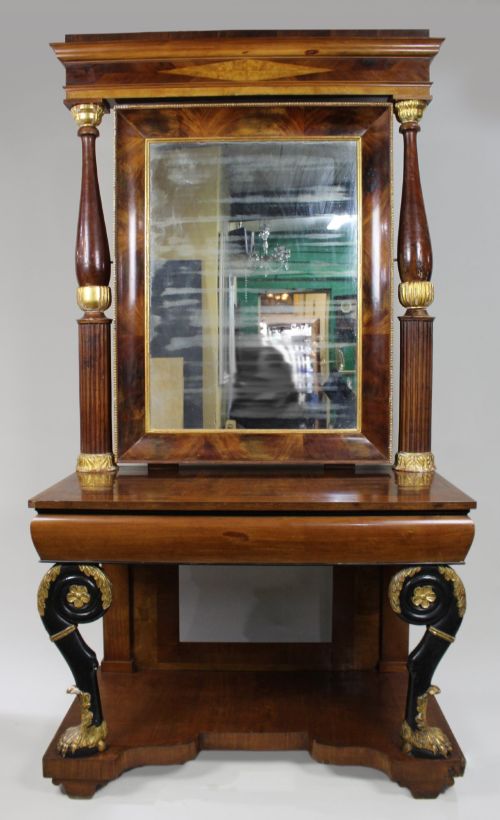
They function well beneath mirrors or paintings, providing a convenient surface for post, keys, and lighting fixtures without dominating the room.
How do I care for a wooden hall table?
Keep wooden surfaces away from direct heat sources and strong sunlight to prevent the timber and veneer from drying out or fading. Regular dusting with a soft, dry cloth maintains the finish.
Apply a microcrystalline wax periodically to nourish the wood and protect against minor moisture marks. Avoid silicone-based polishes, which can build up and damage antique finishes over time.
Are marble top tables practical for hallways?
Marble tops offer a durable and cool surface that withstands daily placement of keys and decorative objects. They introduce a distinct textural contrast to wooden frames.
Exercise caution with acidic liquids such as citrus juice or wine, which can etch polished marble surfaces if left unattended. Wipe spills promptly with a damp cloth.
How do I distinguish original Georgian pieces from later revivals?
Examine the construction methods, timber patination, and tool marks visible on the underside and interior surfaces. Period pieces show signs of hand-working, timber shrinkage, and wear consistent with age.
Revival pieces from the Edwardian era or 19th-century revivals often utilise machine-sawn timber and more uniform construction standards. Compare the specific decorative motifs against documented historical examples from the same era.