

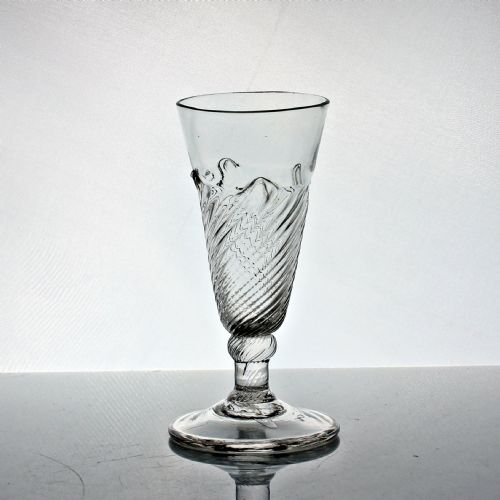


Fluted Glass Stemware
Fluted glass stemware brings tactile ribbed bowls and tall silhouettes to the table, offering a refined way to serve historic wines and sparkling drinks.
Fluted Glass Stemware
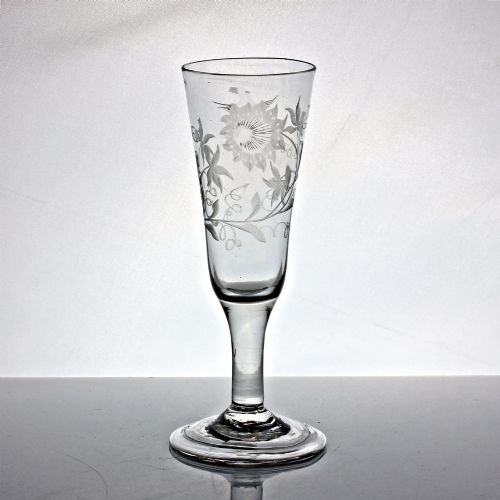
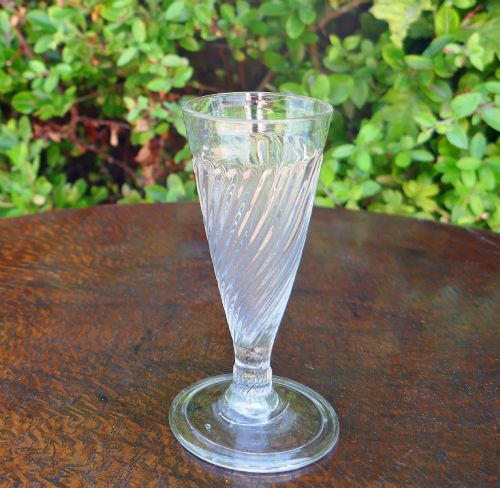
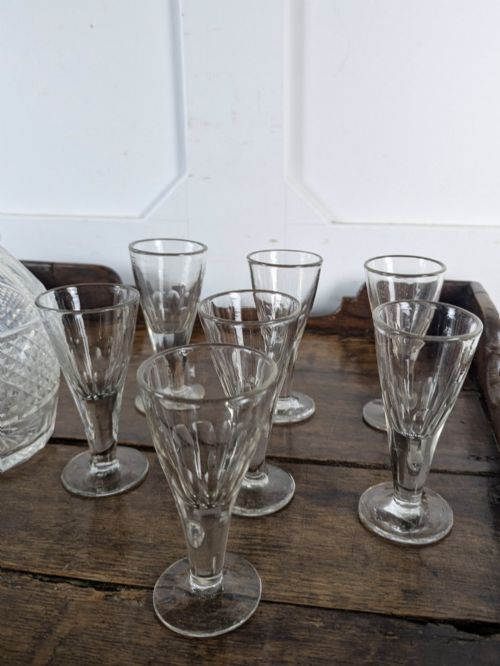
When you search for fluted glass stemware, you encounter vessels designed with vertical flutes or ribbed surfaces that catch the light along the bowl and stem. The selection spans distinct eras, from the 18th century through the Victorian period and into 1930s modernism.
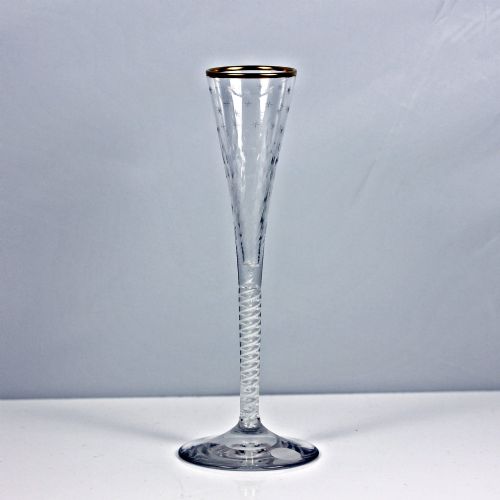
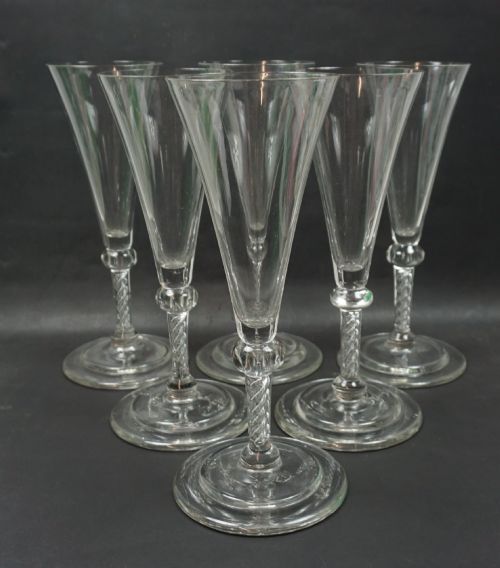
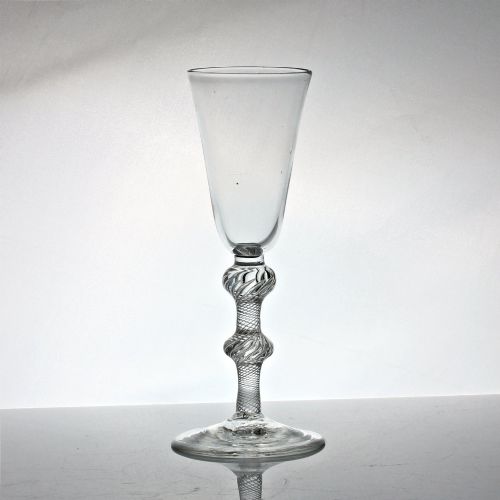
Georgian examples frequently appear as ale glasses, rummers, and champagne flutes featuring intricate air twists or opaque twists within the stem. Later Victorian and 20th-century variations introduce thumb-cut patterns, vibrant colours, and distinct regional European designs.
Materials and construction
The pieces on this page are formed from lead glass, lead crystal, and clear glass shaped through hand-blowing and subsequent cutting or moulding. Makers manipulated molten material to create delicate air bubbles trapped inside stems or moulded optical fluting directly into the bowl walls.
Surface decoration relies on techniques such as wheel engraving, facet cutting, and enamel work. Folded feet provide stability to early drinking vessels, while wheel-cut facets add texture and weight to later Victorian and Edwardian examples.
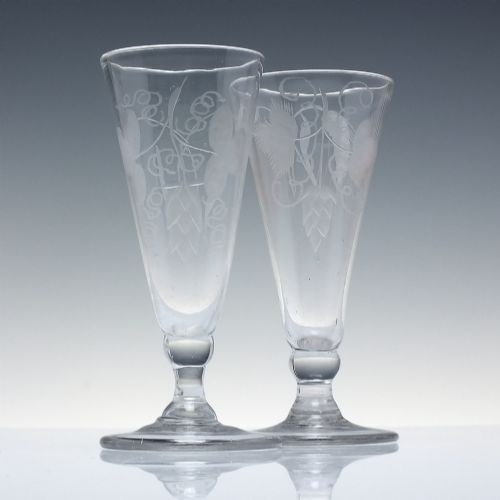
Some dwarf ale glasses were made remarkably short so they would not easily tip over on crowded tavern or parlour tables.
Judging quality in glassware
Quality rests upon the clarity of the metal, the precision of the optical or cut flutes, and the balance of the proportions between bowl, stem, and foot. Early air twists and opaque twists demonstrate exceptional glassmaker skill through the tight regularity of their internal threads.
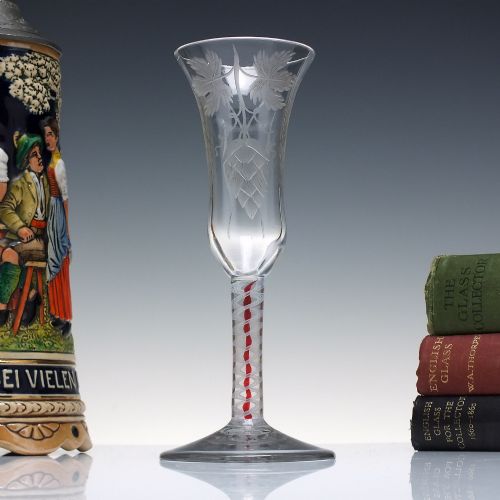
The crispness of wheel engraving, such as detailed hop and barley motifs, separates standard production from finer workshop pieces. Uniformity across matched sets and the absence of heavy surface wear or excessive manufacturing bubbles further define the finer specimens.
Moser Crystal·Riihimaki
The Fluted Glass Stemware Glossary
- Air twist
- A stem containing elongated spiral air bubbles formed during manufacture. These threads run through the glass to catch the light.
- Opaque twist
- A stem featuring white or coloured enamel glass rods drawn into fine threads and twisted. This technique gained popularity in mid-18th century English drinking vessels.
- Rummer
- A heavy, short-stemmed drinking glass popular in the Georgian and Victorian eras. They were typically used for ale, wine, or punch.
- Flute-moulded
- A bowl decorated with vertical channels or ribs pressed into the glass while hot. This creates a fluted profile that enhances the appearance of sparkling drinks.
- Pontil mark
- A rough scar on the base of hand-blown glassware where the holding rod was snapped off. Its presence indicates traditional manufacture before modern grinding techniques.
Fluted Glass Stemware: Frequently Asked Questions
Can I use these glasses for daily dining?
Many sturdy examples, particularly heavier Victorian rummers and 20th-century sets, remain robust enough for occasional modern use. Care must be taken with delicate 18th-century air twists and thin walled champagne flutes.
Hand-washing and careful handling protect the fragile lead glass and historic surfaces from accidental knocks during dinner parties.
What is the difference between air twist and opaque twist stems?
Air twist stems contain internal threads of trapped air pulled into spirals during the blowing process. They offer a subtle, transparent appearance within the glass.
Opaque twist stems utilise white or coloured enamel glass rods melted into the clear metal to form bright, visible strands. Both styles require high levels of glassblower dexterity.
How do I date an antique glass flute?
Dating relies on observing form, manufacturing marks, tool traces, and stem construction methods. Eighteenth-century pieces often feature folded feet and pontil scars, alongside distinctive bowl shapes like ogee or pan top profiles.
Later Victorian and 1930s items introduce heavier cut patterns, different colour palettes, and modernist silhouettes that reflect the design standards of their respective decades.