


Fluted Cast Iron Urns
Fluted cast iron urns are robust garden vessels that anchor a planting scheme with classical proportion and enduring weight.

Fluted Cast Iron Urns
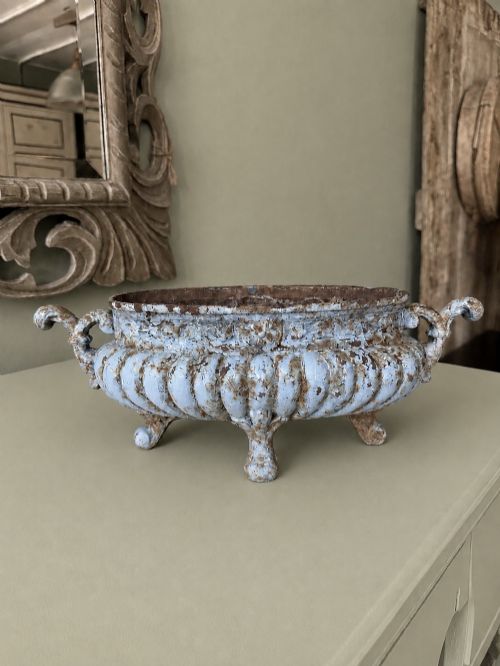
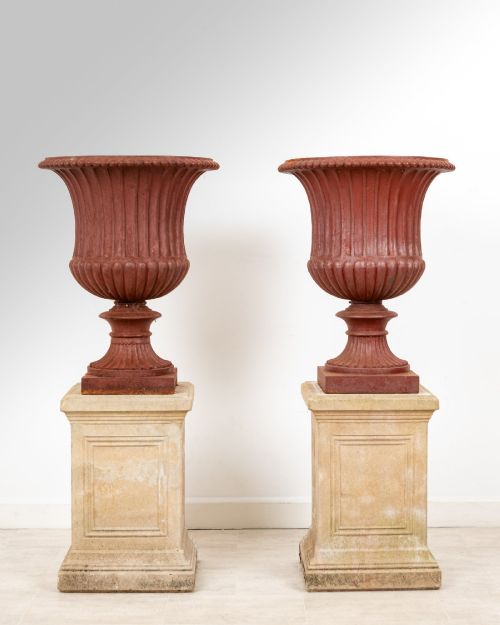
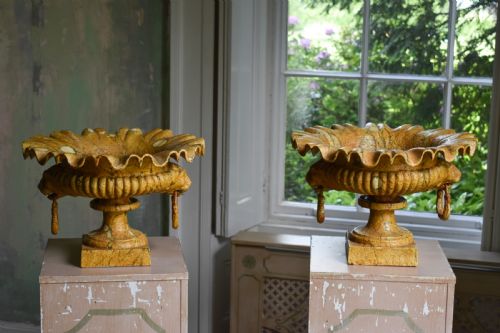
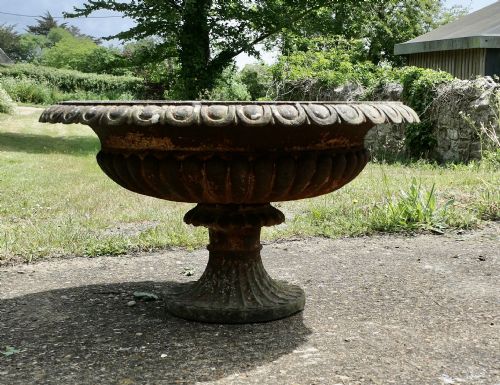
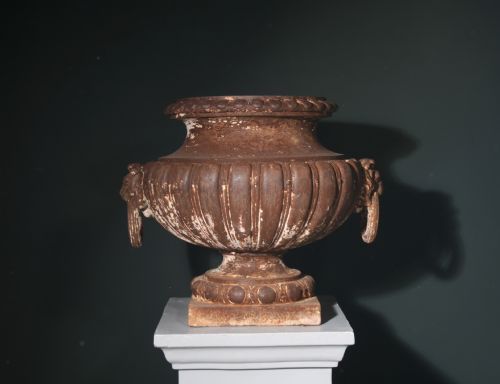
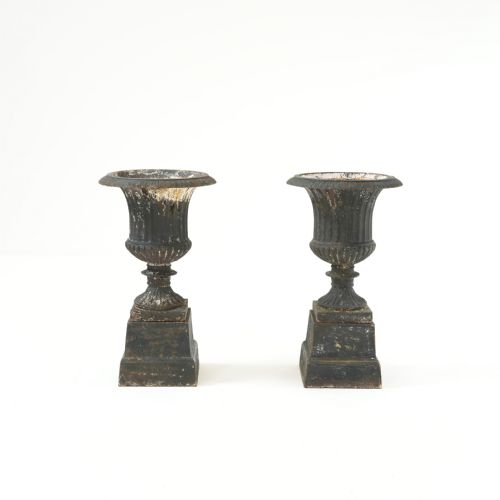
Fluted cast iron urns are garden vessels and planters designed to hold floral arrangements or small trees while adding architectural structure to outdoor spaces. These pieces appear in forms such as campana urns, jardinieres, and planters mounted upon matching plinths or stone pedestals.
The pieces listed here span the Georgian, Regency, and Victorian periods, alongside later nineteenth and early twentieth century examples. French Neoclassical and Victorian Classical styles dominate the selection, bringing classical ornamentation directly into garden settings.
How they were made
These vessels are produced using molten metal poured into moulds, yielding heavy structural bodies defined by crisp vertical fluting. Cast iron provides the necessary rigidity and strength to withstand outdoor environments over centuries.
Many examples incorporate applied paint surfaces or sit upon integrated stone pedestals and plinths to elevate the composition. The manufacturing process allows for deep relief detailing and precise classical proportions on both small jardinieres and large garden urns.
Fluted Cast Iron Urns Retail Price Guide 2026
Typical asking prices for fluted cast iron urns among the pieces listed under this phrase on Sellingantiques today, from the lower quarter to the upper quarter. They describe what is for sale here now, not the wider market.
Listings feature items spanning the Georgian, Regency, and Victorian periods alongside early twentieth century productions.
What varies in quality
The distinction between ordinary and superior examples lies in the crispness of the cast fluting and the overall proportion of the vessel. Sharper edge definition in the mouldings and heavier metal thickness denote a finer standard of production.
Original matching pairs mounted upon their correct pedestals or plinths command greater visual presence than single items or mismatched combinations. The integration of maker attributions or distinct foundry markings also separates standard production pieces from notable foundry work.
Andrew Handyside·Val D Osne Foundry
The Fluted Cast Iron Urns Glossary
- Campana urn
- A bell-shaped garden vessel with an everted rim and a tapering body that often rests on a socle base. This classical silhouette originates from ancient pottery and metalwork.
- Jardiniere
- An ornamental pot or receptacle designed specifically for holding plants or flowers. These items function as freestanding garden ornaments or tabletop planters.
- Plinth
- A heavy rectangular or square base that supports an urn or statue. These supports elevate the vessel to improve sightlines in a garden layout.
- Neoclassical
- A style of design drawing inspiration from the classical art and architecture of ancient Greece and Rome. This aesthetic emphasises symmetry, proportion, and restrained ornamentation.
- Socle
- A short plain plinth or pedestal supporting a vase, column, or urn. This architectural feature lifts the main body of the vessel clear of the ground.
Fluted Cast Iron Urns: Frequently Asked Questions
Can fluted cast iron urns stay outside all year?
Cast iron withstands outdoor elements reliably due to its robust metal construction.
Applying protective paint coatings helps prevent rust accumulation during wet winter months.
How do I plant directly in a cast iron urn?
Gardeners generally place a plastic liner inside the bowl to protect the interior metal from constant moisture.
Ensuring adequate drainage holes prevents water accumulation and protects the iron from internal corrosion.
How do I identify Victorian cast iron urns?
Victorian examples frequently display heavy campana proportions combined with classical fluting and foliage motifs.
Foundry marks and distinctive surface textures from nineteenth century sand casting also help determine the period.
Are these urns too heavy for a terrace?
These vessels possess substantial weight owing to their cast iron composition and frequent stone plinths.
Checking structural load capacities on elevated balconies ensures safe placement for heavy garden ornaments.