




Flush Mount Light
These flush mount light fixtures sit snug against the ceiling, bringing period character and bright illumination into rooms with lower ceiling heights.
Flush Mount Light
A flush mount light sits directly against the ceiling surface without a hanging drop, making these fittings ideal for rooms with lower vertical clearances. The selection spans compact Edwardian and Victorian glass fixtures up to expansive 1930s Art Deco domes and French plafonniers.
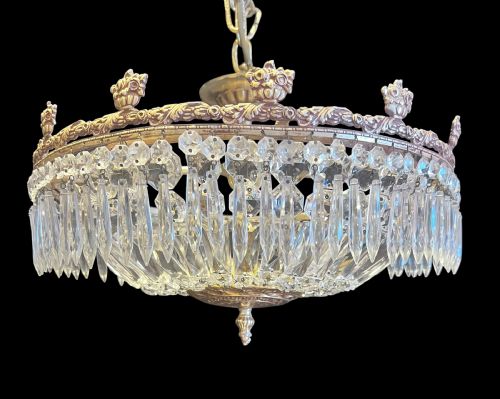
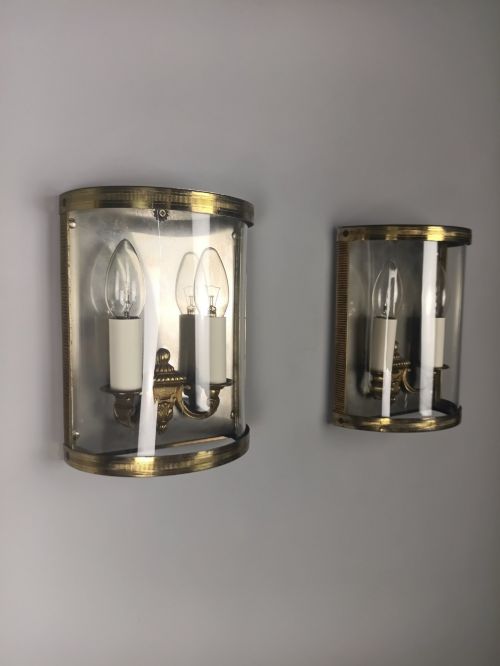
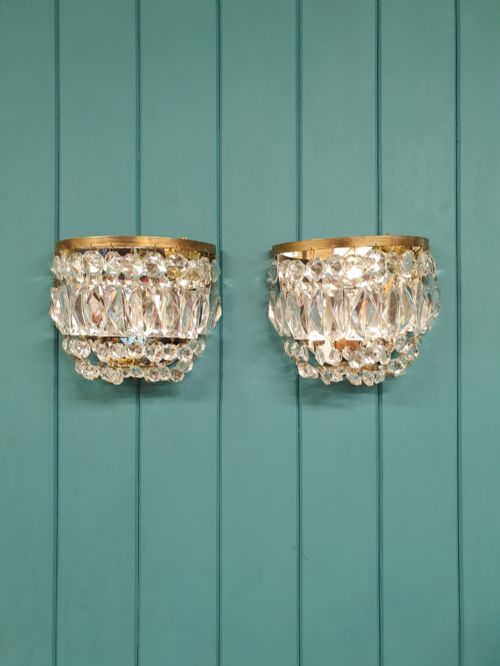
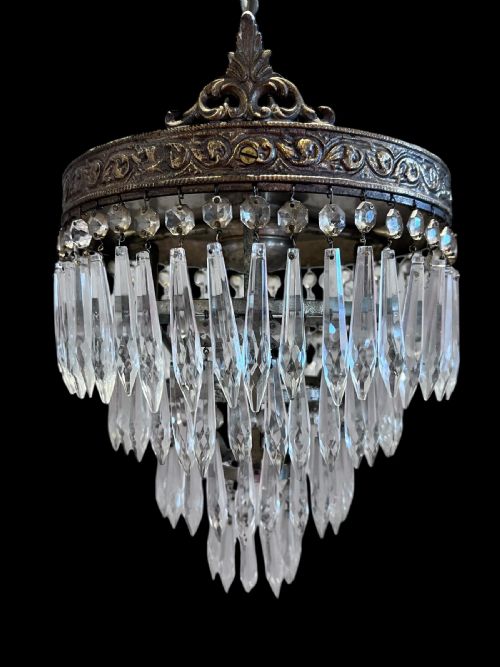
Buyers will encounter various forms here, ranging from pressed satin glass shades and opaline dishes to elaborate cut glass bag and tent chandeliers mounted directly overhead. French Empire style lanterns and gilt brass convex half wall lights also appear alongside ceiling-mounted variations.
The material palette draws heavily from early twentieth-century manufacturing, featuring brass, chrome, and copper frames holding clear, frosted, or etched crystal glass elements. Pieces frequently originate from French workshops spanning the late nineteenth century through the 1930s Art Deco period.
Distinctions in quality
Quality rests upon the weight and clarity of the glass, where deeply cut crystal and heavy pressed satin or opaline panes demonstrate superior handling of light compared to thinner alternatives. The crispness of the moulding on pressed glass pieces indicates the standard of the original atelier.
Metal components reveal craftsmanship through the sharpness of their casting and the richness of the original finish, whether unlacquered brass, gilt bronze, or polished copper. Hand-strung crystal drops and secure wirework indicate careful assembly and robust construction.
Coherence of design separates standard production from exceptional examples, particularly in French pieces where the harmony between the metal mount and the glass shade defines the visual impact.
Materials appearing across these ceiling fittings include opaline glass, pressed satin glass, gilt brass, and heavy cut crystal.
René Lalique·Jean Gauthier
The Flush Mount Light Glossary
- Plafonnier
- A ceiling-mounted bowl or shallow shade light fitting. This French term typically describes fixtures that sit close to the plaster.
- Bag chandelier
- A light fixture featuring rows of crystal beads hung in a tapered bag or basket shape. These designs concentrate sparkle directly beneath the ceiling.
- Opaline
- An opaque or translucent glass developed in the nineteenth century, often appearing in soft white or pastel tones. It diffuses bulb glare evenly across the room.
- Ormolu
- Gilt bronze ornamentation applied to furniture and lighting mounts. The technique creates a rich gold-coloured surface finish on cast metal.
- Satin glass
- Glass treated with acid or sandblasting to achieve a velvety, non-reflective matte texture. It was widely utilised during the Art Deco period for soft illumination.
Flush Mount Light: Frequently Asked Questions
How do I install a flush mount light?
These fixtures require secure attachment to a ceiling electrical box capable of supporting the weight of the metal frame and glass components.
Due to the vintage wiring and delicate crystal or glass elements, professional installation by an electrician ensures safety and proper load distribution.
Are these lights suitable for low ceilings?
Flush mount light fixtures attach directly to the ceiling surface without hanging chains or cords, preserving valuable vertical clearance.
This makes them the standard choice for hallways, bedrooms, and period rooms where hanging chandeliers would hang too low.
How do I clean antique glass shades?
Carefully remove glass bowls or shades from the metal frame when possible and wash them in lukewarm water with mild soap.
Avoid submerging wired metal frames or antique metalwork, wiping those clean with a dry or slightly damp cloth instead.
How do I date a glass ceiling light?
Examine the hardware materials, screw types, and glass moulding styles to determine the manufacturing era.
Edwardian and Victorian pieces often show heavy brass and hand-cut glass, while 1930s examples frequently display geometric Art Deco lines and pressed satin glass.