

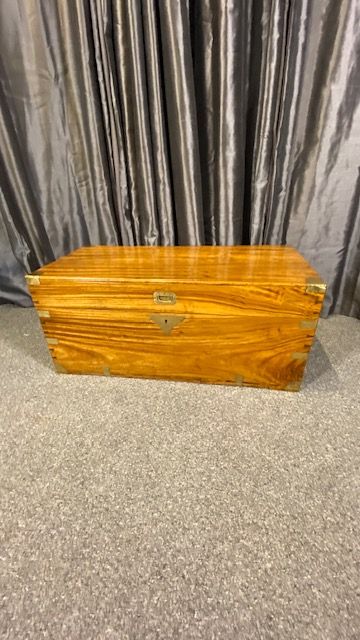
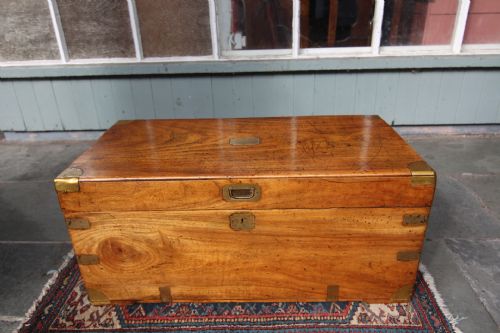





Flush Handle Wooden Chest
A flush handle wooden chest is a practical storage trunk designed for travel, combining robust timber with recessed hardware for transit.
Flush Handle Wooden Chest
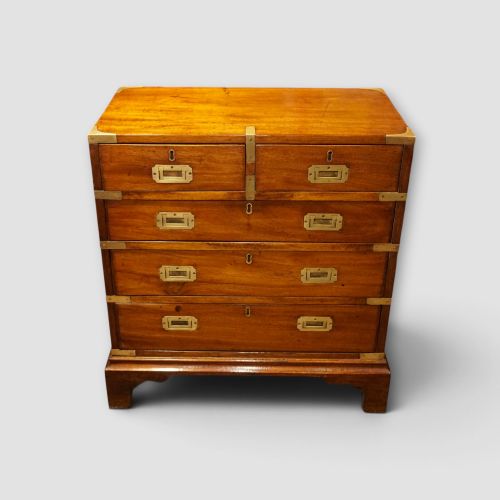
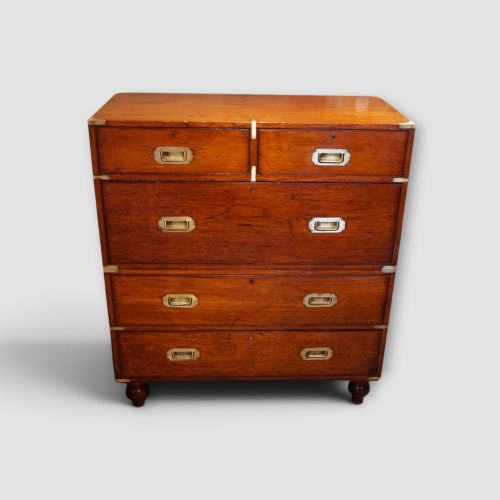
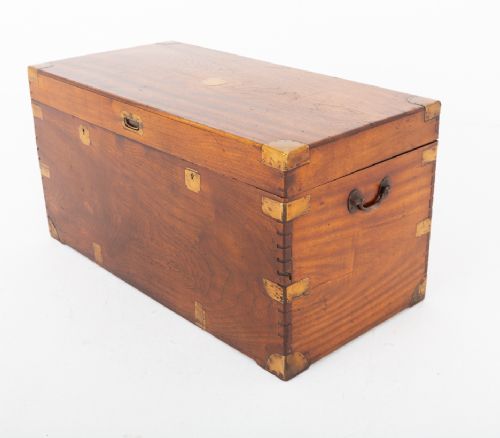
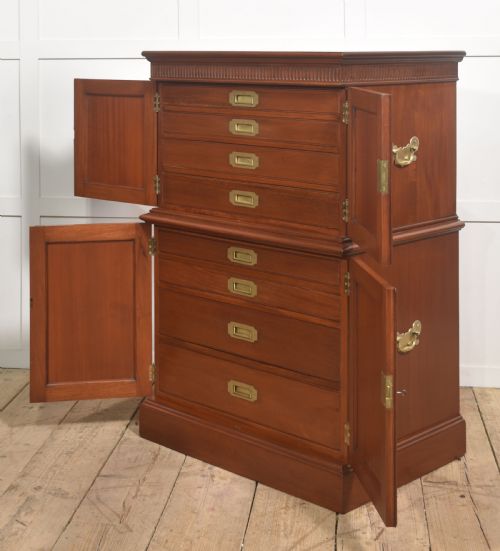
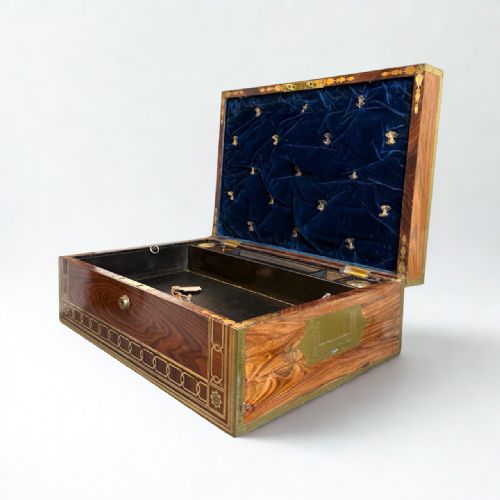
When you search for a flush handle wooden chest, you encounter sturdy campaign furniture and travel trunks originating from the nineteenth and early twentieth centuries. These pieces span simple blanket boxes to fitted secretaire chests and multi-drawer cabinets built for military officers and colonial transport.
Camphor wood and teak dominate the selection, often joined by mahogany, rosewood, and pitch pine in various Victorian styles. You meet solid timber trunks alongside sectional chests of drawers designed to separate for easy carriage on ships and marches.
How they were made
Carpenters constructed these trunks using dense tropical and domestic timbers such as camphorwood, teak, and mahogany to withstand harsh climates and heavy handling. Joints included sturdy dovetails that kept the box rigid during transit.
Brass fittings and iron brackets were inset flush into the timber surfaces to prevent snagging on ropes or storage spaces. Many trunks incorporated lined interiors, brass locks with functioning keys, and recessed carrying handles.
Flush Handle Wooden Chest Retail Price Guide 2026
Typical asking prices for flush handle wooden chest among the pieces listed under this phrase on Sellingantiques today, from the lower quarter to the upper quarter. They describe what is for sale here now, not the wider market.
Listings feature woods including camphor wood, teak, mahogany, rosewood, padouk, pitch pine, and walnut across the nineteenth and early twentieth centuries.
What varies in quality
Quality depends upon the choice of solid timber, the grain figuring, and the structural integrity of the joints and internal partitions. Better examples use heavy, well-seasoned woods like camphorwood or teak paired with thick brass hardware.
The precision of the flush-mounted hardware and the presence of original working locks and keys distinguish finer pieces. Division into functional modular sections, such as two-part campaign chests with fitted secretaire drawers, also indicates higher workshop standards.
Army And Navy
The Flush Handle Wooden Chest Glossary
- Campaign chest
- A modular piece of furniture made in sections for easy transport by military officers. These chests feature recessed brass handles and corner brackets.
- Camphorwood
- An aromatic timber native to Asia, valued for its insect-repellent properties and distinct scent. It was widely used for trunks and military boxes.
- Secretaire
- A cabinet or chest incorporating a pull-down writing drawer fitted with small compartments and pigeonholes. This provides a compact desk surface within a travel trunk.
- Recessed handle
- A metal grip set flush into the surface of the wood so it does not project outward. This design protects the hardware from damage during movement.
- Dovetail
- A joint formed by interlocking wedge-shaped fingers of wood. It provides strong tensile resistance for corners of boxes and drawers.
Flush Handle Wooden Chest: Frequently Asked Questions
What is a flush handle wooden chest used for?
These chests served as durable luggage and storage containers for officers travelling across the British Empire. Their recessed hardware allowed them to be packed tightly into ships and wagons without catching.
Today, they function well as coffee tables, blanket boxes, or statement storage furniture in domestic settings.
How do I identify a campaign chest?
Campaign chests are characterised by their sectional construction, brass corner brackets, and inset flush handles. They usually separate into two or more stacked boxes for transport.
Materials commonly include teak, camphorwood, and mahogany with integrated lock plates and carrying grips.
Why use camphorwood for trunks?
Camphorwood produces a natural aroma that repels moths and insects, making it an ideal timber for storing blankets and clothing. The wood is also naturally resilient to moisture.
Many nineteenth-century trunks utilised this timber specifically to protect garments during long sea voyages.
How should I care for a wooden trunk?
Keep the timber away from direct heat sources and sudden humidity changes to prevent wood splitting. Regular dusting and occasional wax application help maintain the finish.
Avoid using harsh chemical polishes on antique brass hardware and wood surfaces.