

Flush Brass Handles
Flush brass handles are essential components of campaign furniture designed to sit level with the wood surface so nothing catches during transit.
Flush Brass Handles
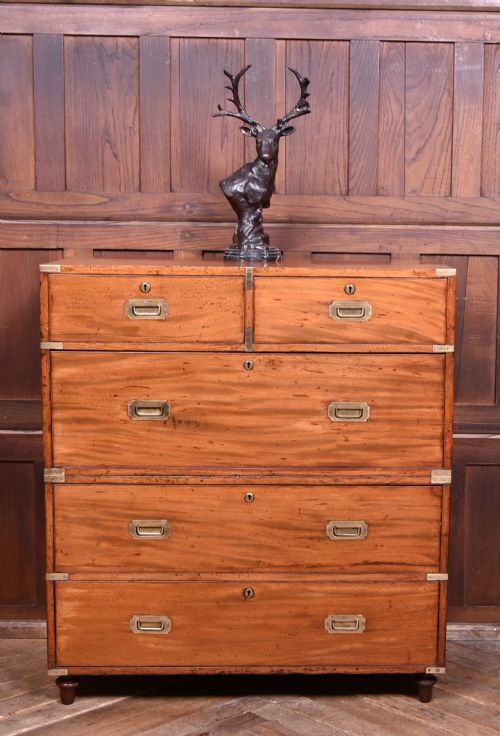
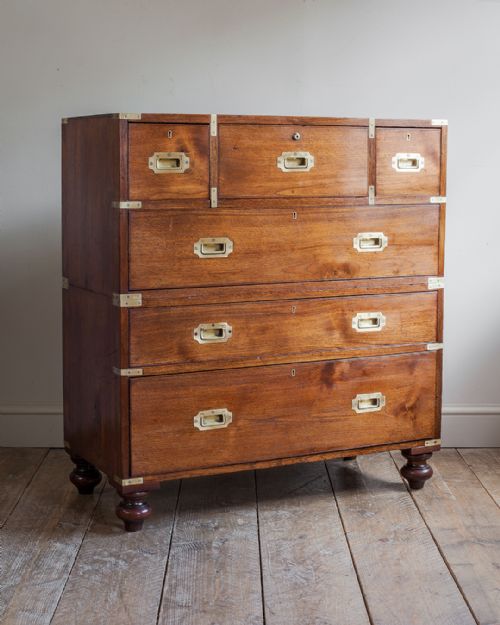
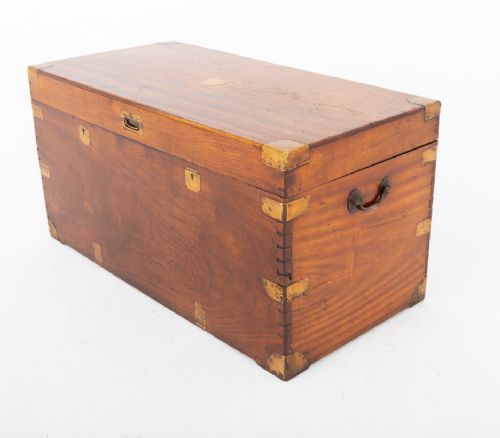
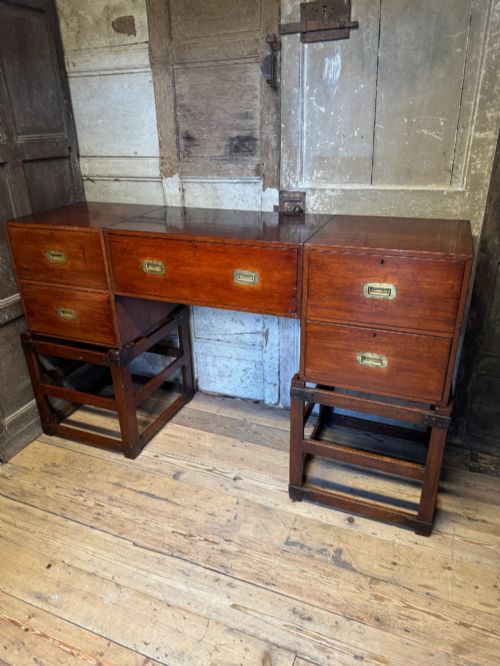
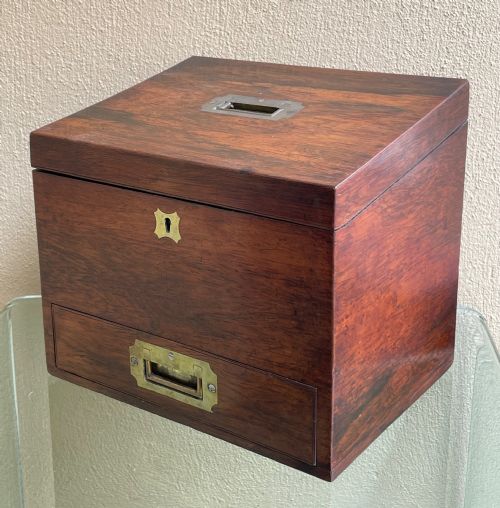
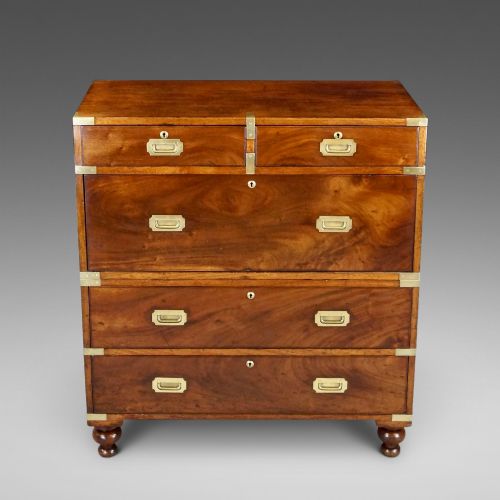
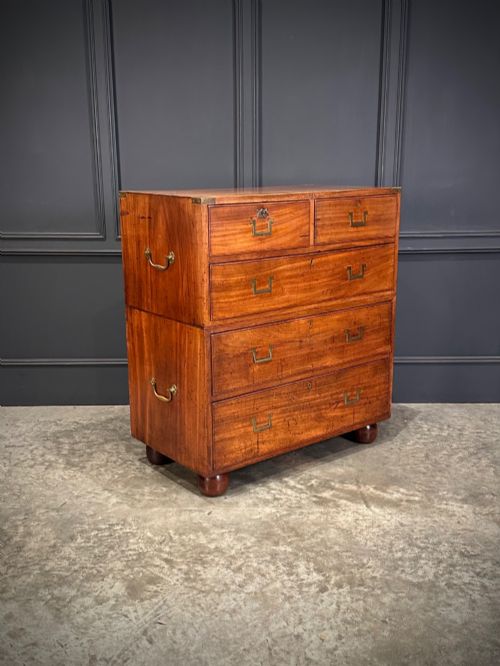
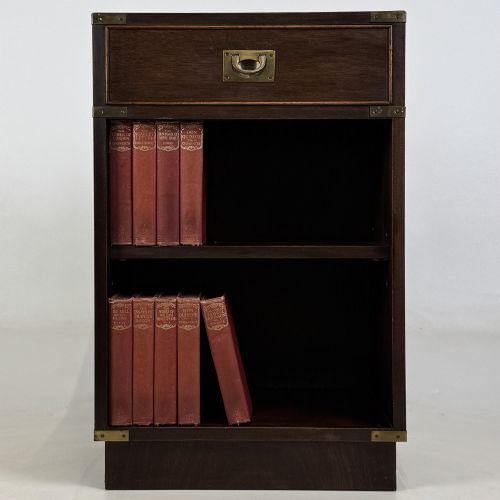
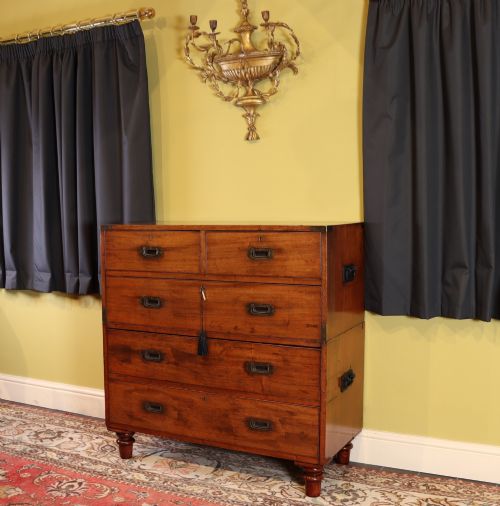
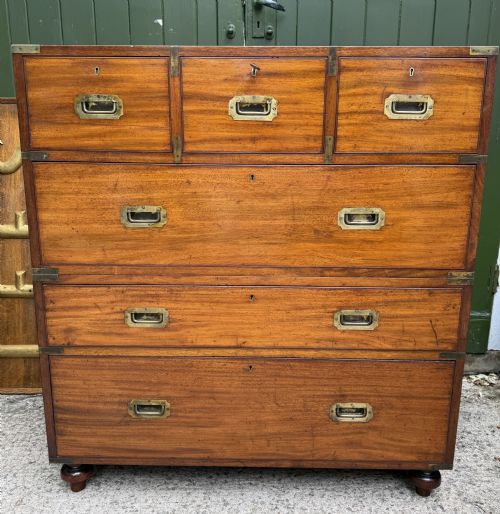
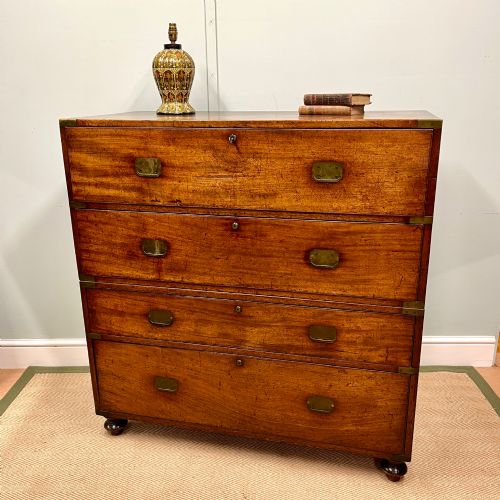
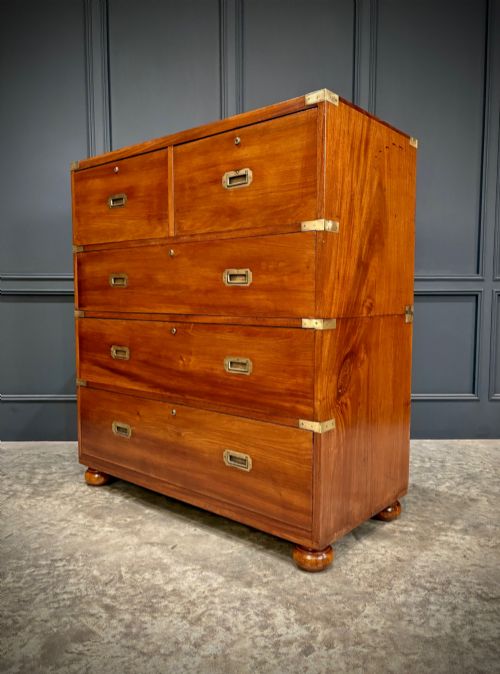
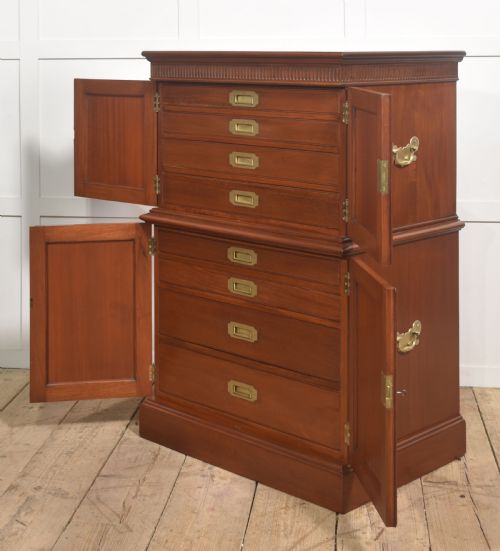
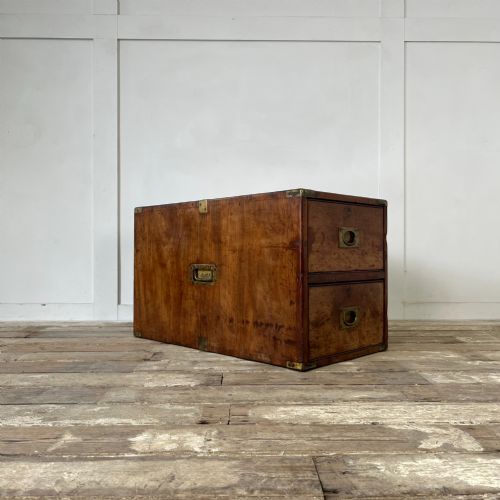
When you search for flush brass handles, you encounter heavy brass hardware set into military chests, secretaire desks, and travel trunks built to withstand the rigours of 19th-century colonial transport. These recessed fittings ensure that drawer fronts and box lids remain entirely flat, preventing snagging in transit and allowing pieces to be packed tightly together. Most examples on this page date from the Victorian period, originating from campaign furniture made for officers on the move.
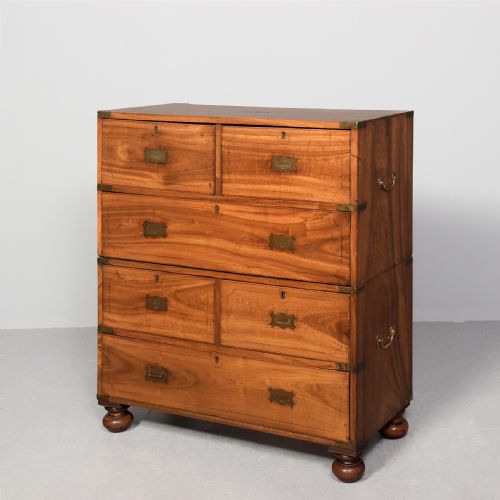
The dominant forms featuring flush brass handles are two-part chests of drawers, often constructed in dense timbers like mahogany, teak, and camphor wood. You also find them on writing slopes, correspondence boxes, and small cabinets where space efficiency is paramount. These items range from compact desktop storage to large, towering chests, all unified by their reliance on brass hardware that sits flush with the timber.
Materials and Construction
Makers formed flush brass handles by casting and turning solid brass, then mortising them directly into the surrounding timber so the outer plate remained level with the drawer or lid face. This method required precise carpentry to ensure the recessed ring or drop handle folded neatly into its housing without protruding. The metal was frequently secured with tiny brass screws that matched the plate.
The surrounding timber provides the robust housing necessary to hold these recessed brass fixtures under stress. Dense hardwoods such as mahogany, teak, and camphor wood were chosen because they resist warping and take crisp rebates around the hardware. Iron and leather appear in supporting roles for corner brackets and carrying straps, but brass remains the primary metal for operational hardware.
Some camphor wood trunks retain a faint, lingering aroma that kept insects away from officers' uniforms on long sea voyages.
Standards of Quality
Quality in flush brass handles and their host pieces is defined by the precision of the joinery and the weight of the metalwork. Superior examples feature thick cast brass plates that sit immovably flush within tight, clean mortises in the timber. Lesser pieces show loose hinges, thin stamped brass that bends under use, or gaps around the recessed edges.
The choice of timber and the complexity of the interior fittings further distinguish the standard of the work. Top-tier pieces utilise solid mahogany, teak, or camphor wood throughout the main structure and internal drawers, rather than thin veneers over secondary woods. A well-executed secretaire drawer with internal compartments paired with heavy brass mountings indicates superior craftsmanship.
S. W. Silver & Co. London & Liverpool·Ross & Co.
The Flush Brass Handles Glossary
- Campaign furniture
- Portable furnishings made for military officers and travellers during the 18th, 19th, and early 20th centuries. These items typically break down into sections for easy transport.
- Secretaire chest
- A chest of drawers featuring a pull-out writing drawer with a drop-front and internal pigeonholes. It combines storage with a compact writing desk.
- Two-part chest
- A modular cabinet built in separate upper and lower sections that stack together. This construction facilitated loading onto pack animals or ships.
- Mortise
- A cavity or recess cut into a piece of timber to receive a corresponding projection, such as the housing for a flush handle. It requires careful chisel work for a tight fit.
Flush Brass Handles: Frequently Asked Questions
What is a campaign chest?
A campaign chest is a portable set of drawers designed to separate into multiple sections for military transport. They are reinforced with brass corners and fitted with flush handles to prevent damage on the move.
These chests were built for officers on active service or colonial posting. Their sturdy construction and clever modular design made them enduringly popular for domestic use after active service ended.
Why are flush brass handles used?
Flush brass handles sit completely level with the wood surface so they do not catch on ropes, canvas covers, or tight spaces during transport. This recessed design creates a flat face on drawers and trunks.
Craftised from durable brass, these fittings endure frequent handling while resisting rust. Their low profile protects both the furniture and surrounding items from snagging.
How do I date a campaign piece?
Dating relies on timber choices, construction techniques, and the style of the brass hardware. Pieces from the Regency era and early 19th century often feature simpler recessed rings, while later Victorian examples display more elaborate shaped plates.
Examining the secondary woods inside the drawers and the style of the dovetails also helps narrow the decade. Cabinetmakers marked their work less frequently than silversmiths, so physical characteristics remain the primary guide.
Can I use these in a modern home?
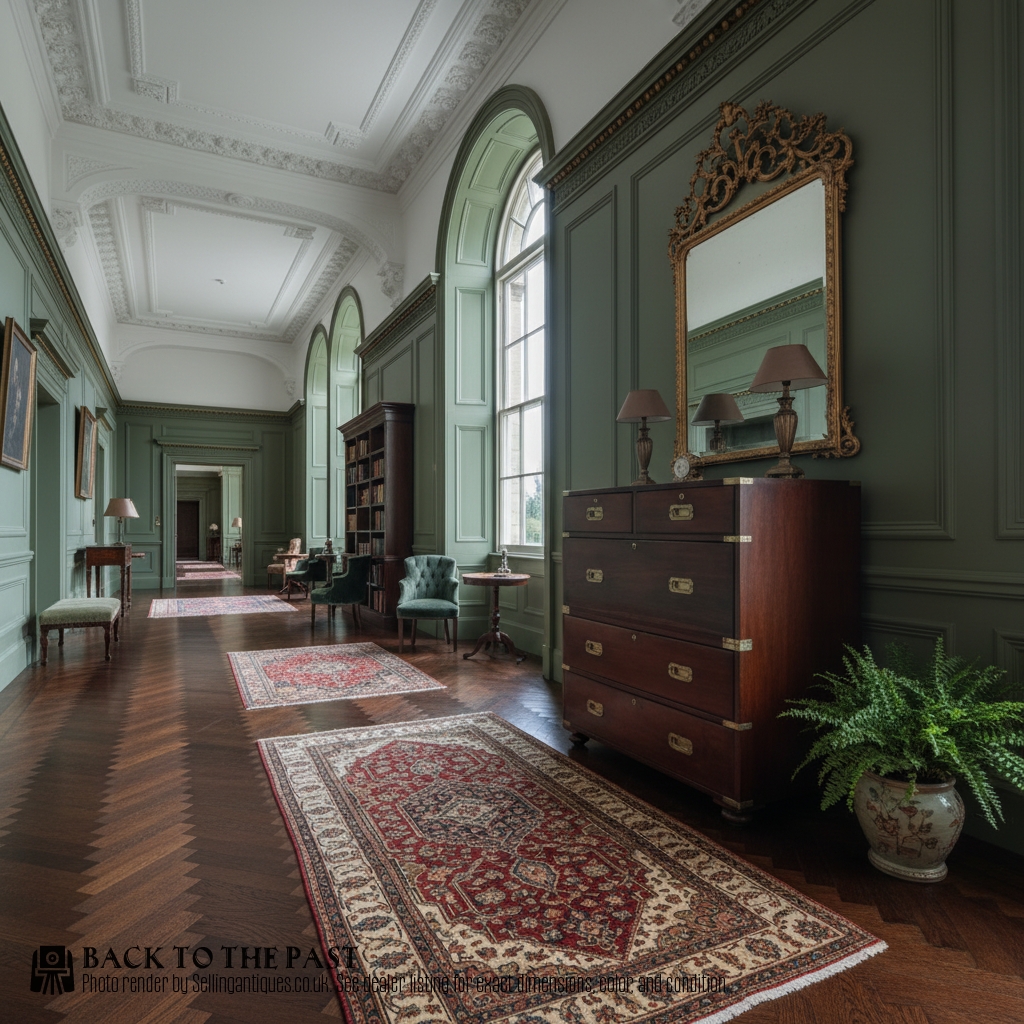
These pieces suit modern interiors because their flat fronts and modular proportions fit neatly into bedrooms, hallways, or studies. The warm tones of teak and mahogany complement various design schemes.
Their robust construction means they handle daily use well as bedside tables or living room storage. The compact footprint of many campaign items makes them practical for smaller rooms.