

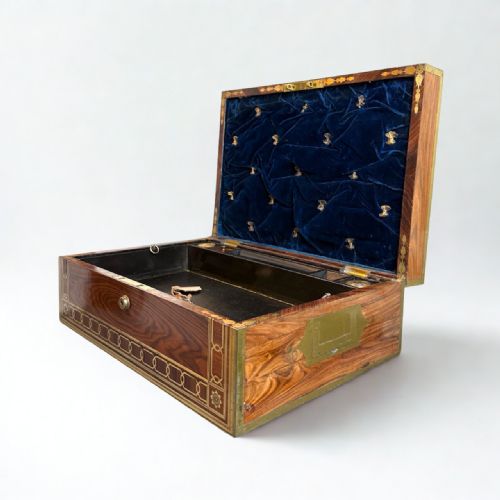
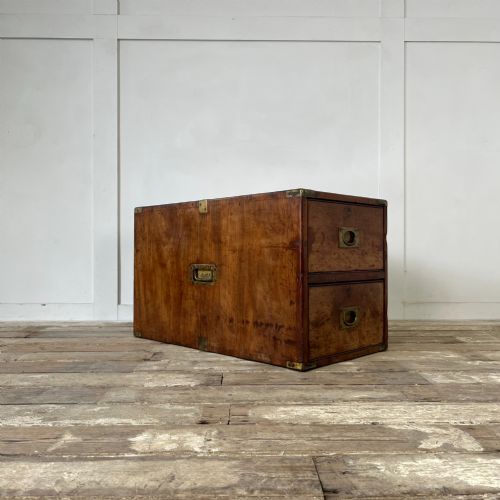


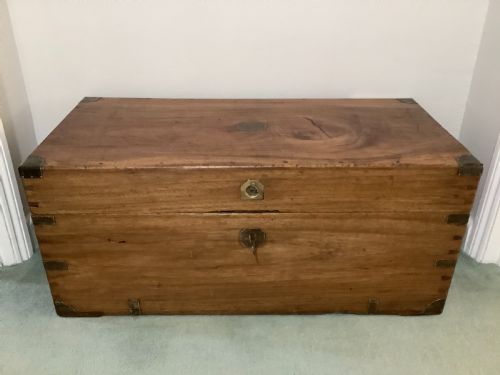


Flush Brass Campaign Box
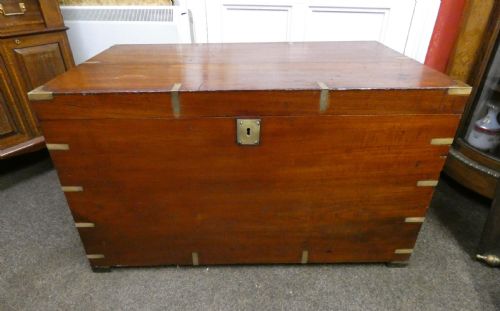
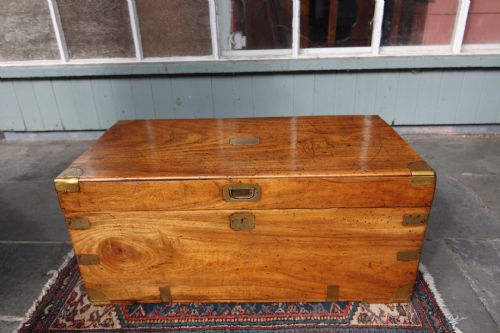
A flush brass campaign box is a portable piece of military furniture designed for officers on the move, combining practical storage with recessed metal hardware.
Flush Brass Campaign Box
A flush brass campaign box brings together the functional utility of travel furniture and the rich cabinetmaking of the nineteenth century. Buyers searching for a flush brass campaign box typically find robust wooden trunks, chests, writing slopes, and desktop storage designed to withstand colonial or military deployment.
The inventory on this page consists predominantly of nineteenth-century pieces from the Victorian era, including trunks, chests, and writing boxes. These items originated to serve travelling officers who required secure storage that could endure rough transit without protruding handles or hinges catching on transport webbing.
How they were made
Cabinetmakers constructed these pieces from dense, durable timbers such as camphor wood, teak, mahogany, and rosewood to resist moisture and heavy handling. Iron reinforcement often complemented the primary structure, providing additional rigidity to corners and edges during long journeys.
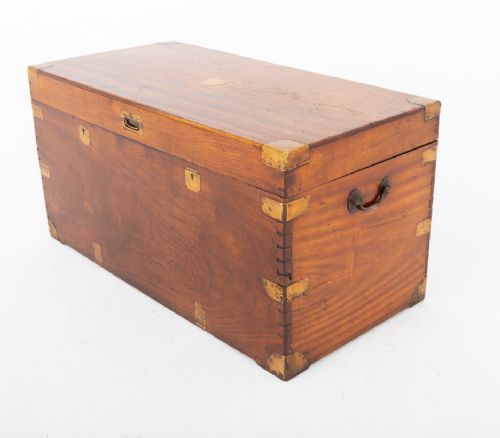
Brass hardware, including handles, corners, and escutcheons, was set flush into the wood surfaces so that nothing projected beyond the plane of the box. This specialised fitting required precise mortising and skill, ensuring the metal sat completely level with the surrounding timber.
Materials recorded across the inventory include camphor wood, teak, mahogany, rosewood, brass, and iron.
What varies in quality
Quality depends upon the choice of timber and the grain figure visible across the panels, with solid camphorwood or figured rosewood commanding greater visual presence. The precision with which the brass mounts are inset into the wood further distinguishes standard field pieces from finer domestic or officer commissions.
The integrity of the internal fittings, such as secret compartments within writing slopes and original locking mechanisms with keys, dictates the preservation level of a piece. Heavier section timber and robust dovetail joinery indicate superior construction intended for demanding service.
The Flush Brass Campaign Box Glossary
- Campaign box
- A portable piece of furniture designed for military officers, featuring knockdown construction or strong transport handles. These items were built to travel across continents during the nineteenth century.
- Flush brass
- Hardware such as handles or hinges inset directly into the wood so the outer surface remains completely flat. This design prevents the metal from snagging on ropes or canvas covers during transport.
- Camphor wood
- An aromatic timber frequently utilised for nineteenth-century trunks and chests due to its natural insect-repellent properties. The wood often exhibits a pronounced grain and distinctive scent.
- Writing slope
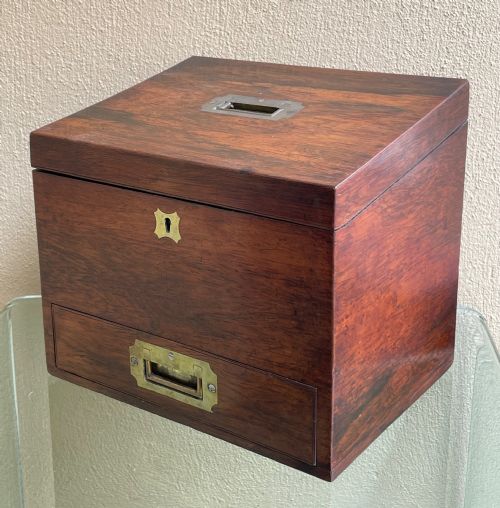
- A portable box with an angled lid that opens to reveal a desk surface, inkwells, and compartments for stationery. Officers used these compact units for correspondence in the field.
Flush Brass Campaign Box: Frequently Asked Questions
What is a flush brass campaign box?
A flush brass campaign box is a portable nineteenth-century storage container built for military officers on active service. The metal fittings are set level into the timber to prevent snagging during transport.
These items range from large travel trunks and blanket chests down to compact desktop writing slopes and correspondence boxes. Their construction prioritises durability and efficient organisation over fixed domestic furniture.
How were these boxes used?
Officers utilised these trunks and boxes to transport uniforms, maps, personal papers, and writing materials during colonial campaigns and voyages. The heavy wooden construction protected contents from moisture, dust, and rough handling.
Smaller boxes functioned as portable desks, allowing commanders to write letters and maintain records while stationed away from permanent headquarters. The integrated locks provided necessary security for valuable documents and personal effects.
Which woods are most common?
Camphor wood appears most frequently in this selection, valued for its characteristic aroma and resistance to insects during tropical deployment. Teak, mahogany, and rosewood also feature prominently across the available trunks and writing slopes.
These dense hardwoods were chosen for their structural strength and stability under extreme environmental conditions. Solid timber construction ensured the boxes could endure repeated loading onto carts and ships.
How do I date these pieces?
Dating relies primarily on the recorded period of production, which spans the nineteenth century and the Victorian era, alongside specific construction methods. Pieces often date around eighteen-fifty or the later decades of the eighteen-eighties and nineties.
Stylistic cues, the presence of specific brass hardware styles, and the type of secondary timbers used inside help narrow down the decade of manufacture. Hallmarks on locks or accompanying original keys can also offer reliable chronological markers.