
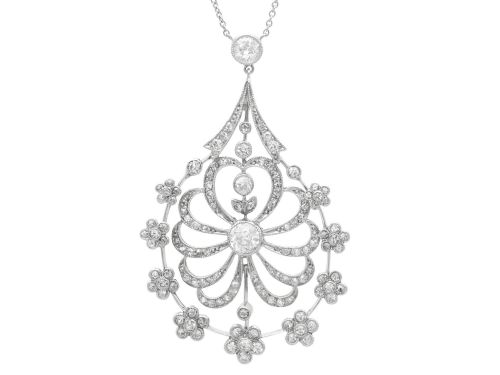
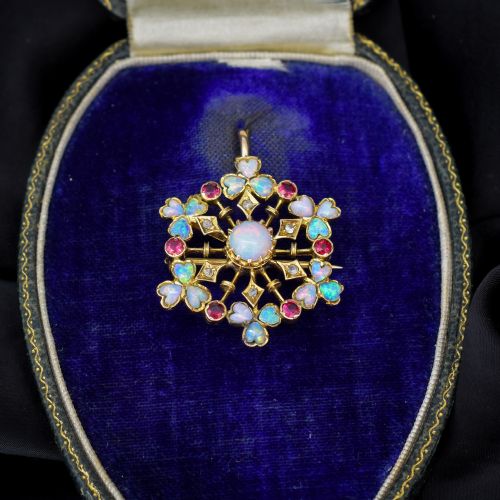


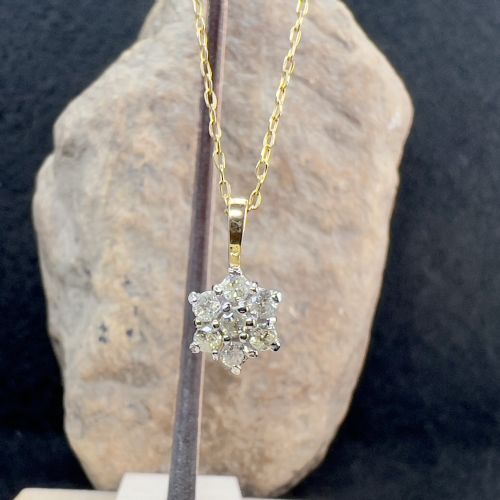


Flower Cluster Diamond Pendant
These flower cluster diamond pendant pieces bring together classic stone-setting traditions and precious metals, offering a distinct ornamental centrepiece for the neck.
Flower Cluster Diamond Pendant
A flower cluster diamond pendant combines central diamond arrangements with surrounding gems to form a floral motif suspended from a chain. Pieces appearing on this page span the Victorian era, the Edwardian period, and mid-century decades up to the 1960s.
The physical form varies from convertible brooch and pendant combinations to dedicated necklace pendants and charms. Materials paired with the primary diamonds include rubies, sapphires, opals, peridots, pearls, and enamel set in platinum, silver, and various carats of gold.
Makers working within Victorian, Edwardian, and contemporary styles utilise traditional jewellery techniques to mount stones in gold and silver settings. The resulting items range from multi-carat platinum showpieces to delicate nine-carat gold starburst designs.
Materials and construction
Metals such as platinum, silver, and gold provide the structural framework for mounting diamonds and coloured gemstones. Early pieces frequently combine silver settings on gold backing to enhance the brilliance of old-cut stones.
Gemstone selection relies on diamonds paired with accent stones like rubies, sapphires, opals, and pearls to build the characteristic floral cluster shape. Metal purities span from nine-carat and fifteen-carat up to eighteen-carat gold alongside platinum.
Listings feature periods from the nineteenth century through to the 1960s, utilising diamond, gold, silver, platinum, ruby, opal, and peridot.
Distinctions in quality
The standard of a flower cluster diamond pendant rests on the integration of the metalwork and the selection of the stones. Heavier metal content, such as platinum or high-carat gold, elevates the structural integrity of the mounting.
The presence of substantial diamond carat weights, alongside complementary natural gemstones like rubies or sapphires, separates more elaborate examples from simpler nine-carat iterations. Original configurations that retain convertible brooch and pendant fittings demonstrate superior historical craftsmanship.
The Flower Cluster Diamond Pendant Glossary
- Cluster
- A stone arrangement where smaller gems encircle a larger central stone to form a unified shape. This layout defines the floral aesthetic seen across Victorian and Edwardian examples.
- Old cut
- A historical diamond cutting style characterised by a high crown, small table, and deep pavilion. These cuts catch candlelight and gaslight differently than modern brilliant cuts.
- Rose cut
- A flat-based stone with a domed top covered in triangular facets resembling an unopened rosebud. It appears frequently in nineteenth-century floral and starburst designs.
- Convertible
- A piece designed to serve multiple functions, such as operating as both a brooch and a pendant. These versatile mounts often feature detachable bails or pin stems.
- Hallmark
- An official stamp indicating metal purity and origin stamped onto the precious metal. These marks help identify the era and composition of gold and silver items.
Flower Cluster Diamond Pendant: Frequently Asked Questions
How do I wear a convertible pendant?
Convertible pieces feature hidden loops or pin stems that allow the item to transition between a brooch and a necklace pendant. You simply attach a chain through the bail for neckwear or secure the pin fastening for lapel display.
Ensure the clasp mechanism remains secure when switching between formats to protect the antique mountings and stone settings during daily wear.
What metals are used in these pendants?
Makers constructed these items using platinum, silver, and various carats of gold including nine-carat, fifteen-carat, and eighteen-carat varieties. Nineteenth-century examples often combine silver on top of gold to keep diamond settings bright.
Mid-century pieces frequently utilise nine-carat yellow gold for lightweight pendant necklace designs featuring smaller diamond and ruby clusters.
Can these pendants be worn daily?
Living with antique jewellery involves balancing enjoyment with the gentle care required by older settings and softer stones like opals or pearls. Solid gold and platinum mountings from the Victorian era onward offer good durability for regular use.
Store the items separately from other jewellery to prevent scratching and remove them before participating in rigorous physical activities.