
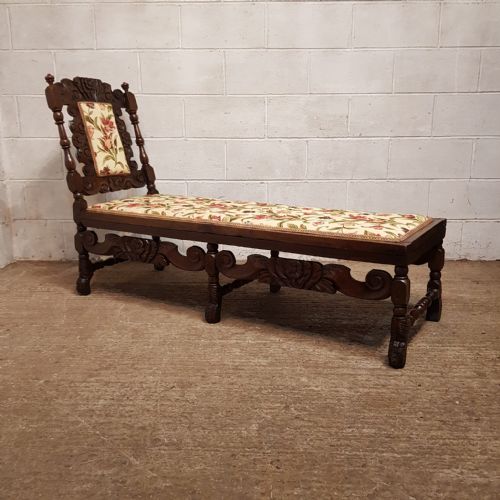


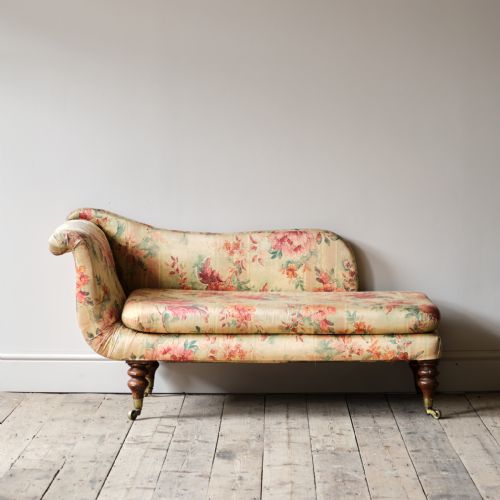


Floral Upholstered Chaise
These floral upholstered chaise examples are nineteenth-century reclining seats built for long sitting rooms, offering a structured surface combined with fabric covers.
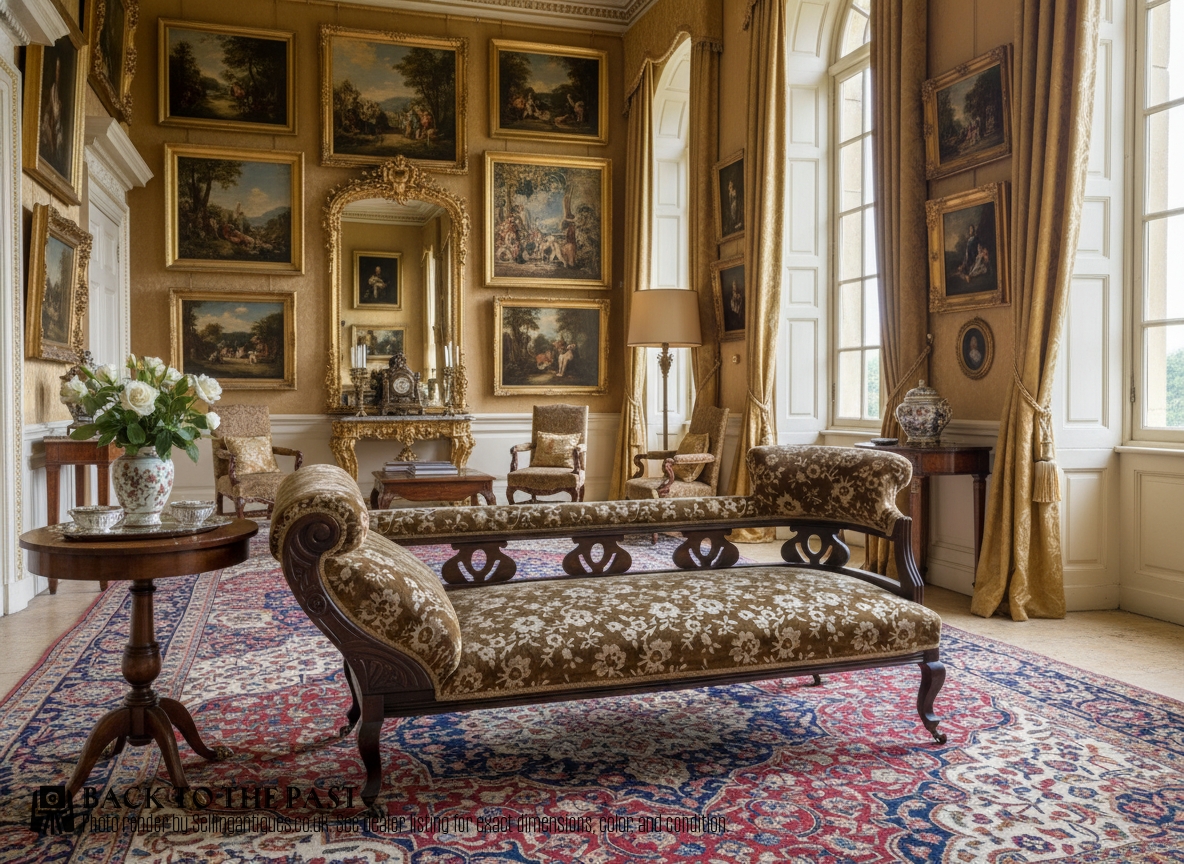
Floral Upholstered Chaise
A floral upholstered chaise is an elongated seating form designed for partial reclining, originating in various nineteenth-century workshop traditions. These pieces combine wooden frames with fabric covers, creating a hybrid between a chair and a sofa.
The versions most commonly met on this page date from the Victorian period, alongside earlier Regency and William IV pieces. They appear under names such as daybeds, settees, and couches, often featuring carved woodwork and patterned textiles.
Makers and makers' manners recorded in the evidence range from Gillows and Howard and Sons to H. Goodall & Sons of Newcastle. Their output defines the standard forms found within this category.
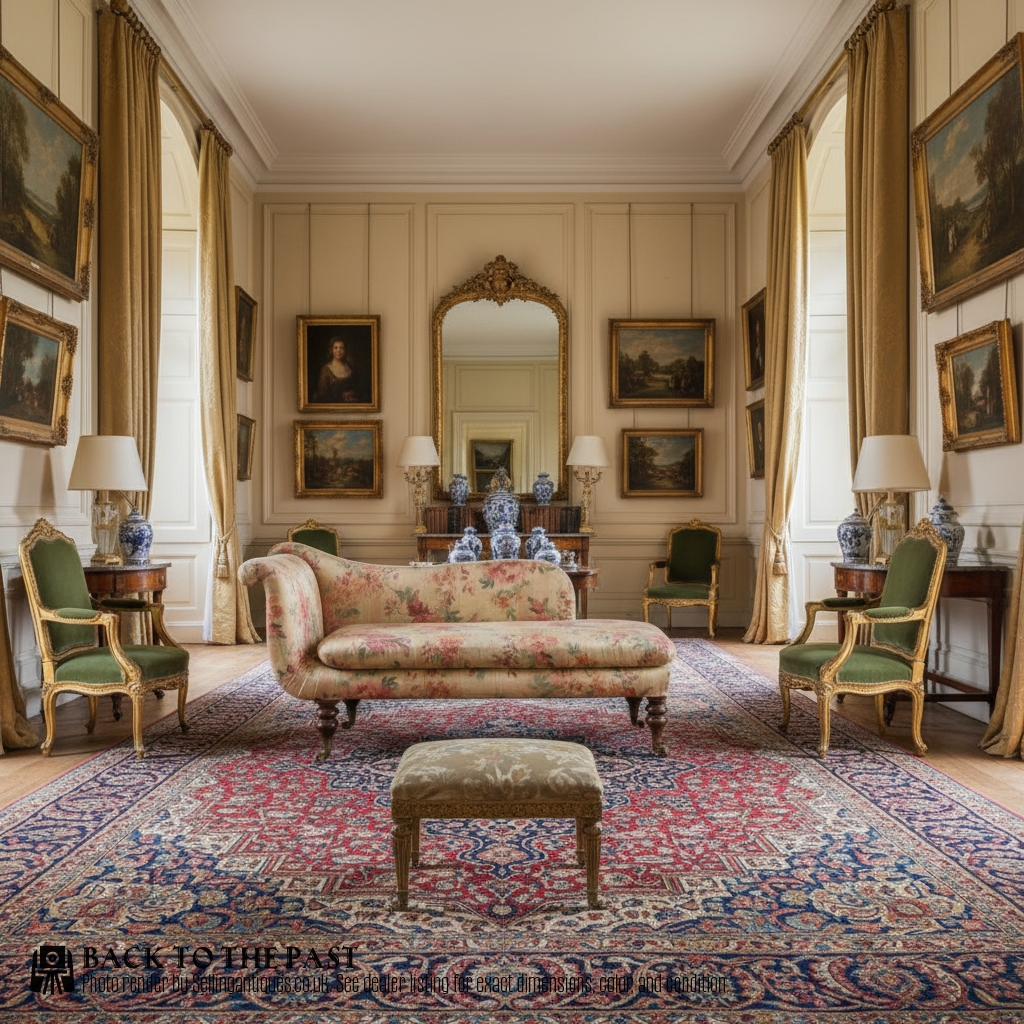
How they were made
Frames are constructed from dense timbers such as mahogany, walnut, rosewood, oak, and general timber. These woods are shaped through cabinet-making techniques and sometimes accented with brass fittings.
Upholstery involves fabric and fabric upholstery applied over supportive internal padding. Surviving examples show embroidered floral patterns and pale gold or cream textiles secured to the wooden structures.
Some nineteenth-century occupants demanded a reversible box beneath their daybed just to hide extra cushions.
What varies in quality
The quality of a piece rests primarily on the crispness of the timber carving and the structural integrity of the frame. Denser woods like rosewood and mahogany generally indicate higher workshop standards than softer or plainer timbers.
Upholstery execution and the selection of fabric quality also divide standard items from finer productions. Pieces attributed to notable makers demonstrate superior joinery and more refined proportions.
H. Goodall & Sons·Gillows·Howard and Sons
The Floral Upholstered Chaise Glossary
- Daybed
- A bed or long seat used for resting during the day, often sharing forms with the nineteenth-century chaise. They appear across Regency and Victorian periods.
- Ottoman
- A piece of furniture with a padded seat, sometimes designed as a box for storage. Reversible box ottoman daybeds combine seating with compartment utility.
- Regency
- An architectural and design style dating from the early nineteenth century. It precedes the Victorian era and is known for classical restraint and elegant timber framing.
- William IV
- A transitional design period spanning the early to mid-nineteenth century. It bridges late Regency curves and heavy Victorian proportions.
Floral Upholstered Chaise: Frequently Asked Questions
What is a floral upholstered chaise?
A floral upholstered chaise is a nineteenth-century reclining seat upholstered in patterned fabric.
These pieces were constructed by cabinet-makers during the Victorian and Regency periods for comfortable daytime resting.
How were these daybeds used?
They were used in drawing rooms and parlours for reclining without retiring to a bedroom.
The single raised end supported the head while the long seat allowed the legs to stretch out.
How do I date a Victorian chaise?
Dating relies on timber choices, such as rosewood or walnut, and stylistic cues like carved oak or mahogany frame details.
Reference points include documented workshop labels and stylistic transitions from Regency to late Victorian designs.
What woods were used for frames?
Frames were built using dense hardwoods including mahogany, walnut, rosewood, and oak.
Timbers were selected for their strength to support the heavy internal padding and daily reclining use.