





Floral Upholstered Carver
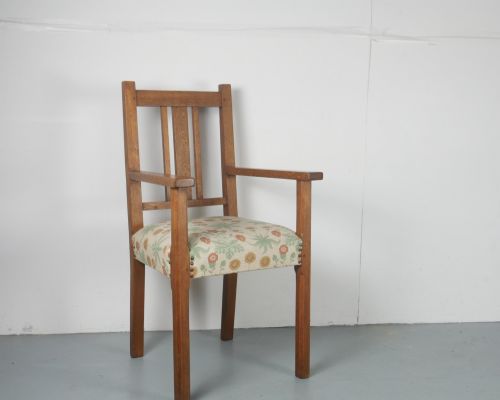
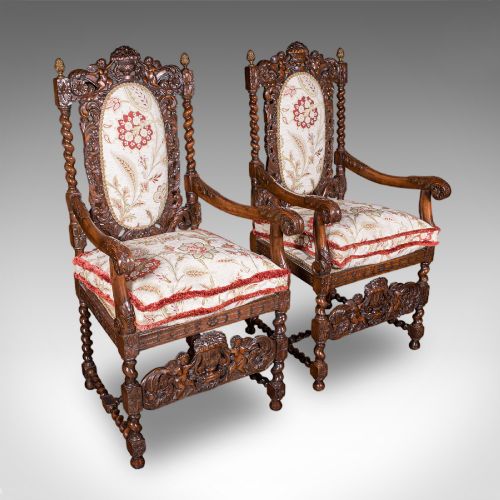
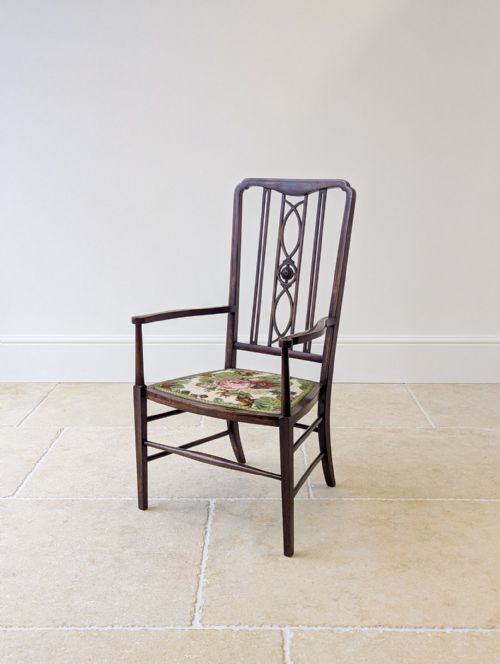
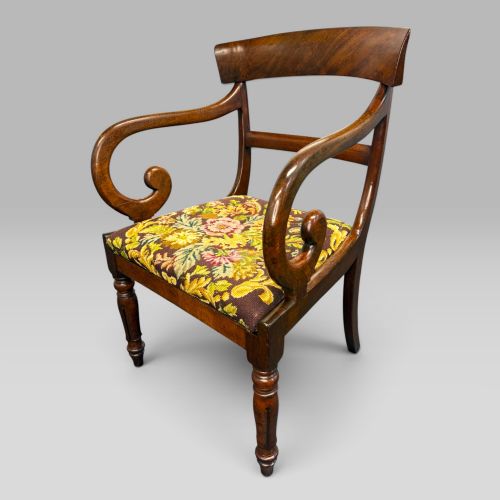
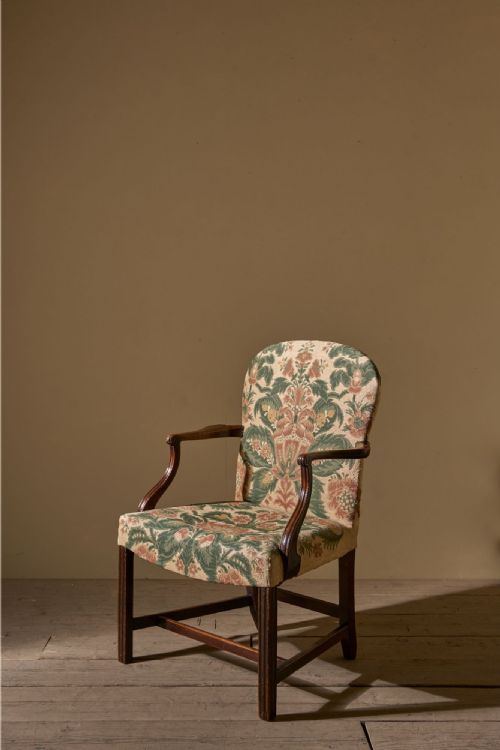
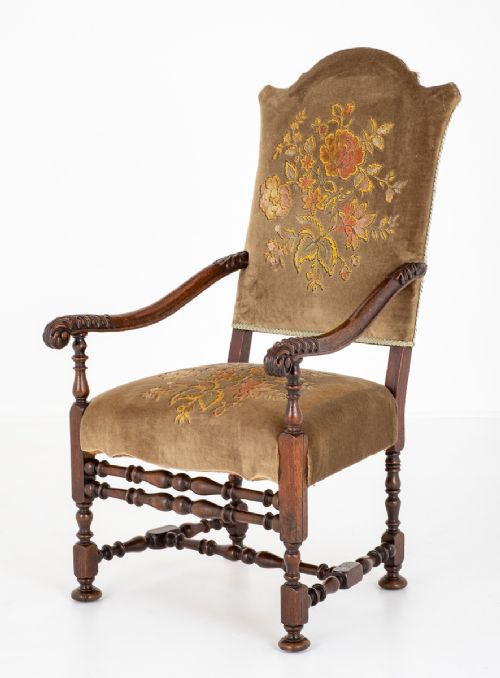
These floral upholstered carver chairs bring period character and practical seating together, combining supportive armrests with decorative textile panels.
Floral Upholstered Carver
When you search for a floral upholstered carver, you are looking at armchairs designed with integrated armrests, often used as desk chairs, dining chairs, or occasional seating. The selection spans centuries of cabinet-making, featuring formal eighteenth-century designs alongside nineteenth-century interpretations and twentieth-century revivals.
The versions you are most likely to meet on this page include mahogany and oak frames dating from the Georgian and Edwardian eras, frequently paired with floral tapestry or patterned fabric seats. These pieces range from restrained vernacular seating to elaborate marquetry-inlaid elbow chairs with painted or polished wooden surfaces.
Distinctions in quality
The distinction between standard production and superior work lies in the crispness of the timber carving and the precision of the marquetry inlay. Finer examples display meticulous attention to proportion, clean joinery, and high-grade decorative elements such as detailed floral painted motifs.
Materials also differentiate the range, with dense figured mahogany and substantial oak frames holding greater presence than simpler utility woods. The complexity of the chair design, from straightforward elbow supports to elaborate high backs and curved arms, dictates the overall execution.
Floral Upholstered Carver Retail Price Guide 2026
Typical asking prices for floral upholstered carver among the pieces listed under this phrase on Sellingantiques today, from the lower quarter to the upper quarter. They describe what is for sale here now, not the wider market.
Listings feature oak and mahogany woods alongside diverse upholstery fabrics including tapestry and painted finishes.
Jas Shoolbred·Louis Majorelle
The Floral Upholstered Carver Glossary
- Carver
- An armchair, typically designed with arms to match a set of dining chairs for the head of the table. These seats also served frequently at desks or as occasional pieces.
- Marquetry
- A decorative technique of applying veneer pieces to a structure to form intricate pictorial patterns. This method frequently employs contrasting woods on chair backs and rails.
- Elbow chair
- An alternative term for a carver or armchair, referencing the supportive rests for the arms. Such chairs appear across Georgian, Victorian, and Edwardian periods.
- Polychrome
- Decoration executed in multiple colours, often seen on eighteenth-century painted wooden frames. This technique highlights floral motifs and structural details.
- Tapestry fabric
- A heavy, hand- or machine-woven textile featuring pictorial or floral designs used for upholstery. It provides a durable and decorative surface for seat pads.
Floral Upholstered Carver: Frequently Asked Questions
What is a carver chair used for?
Carver chairs traditionally served as the principal seats at the head and foot of a dining table, featuring armrests for added comfort during long meals. They also functioned widely as desk chairs or standalone occasional armchairs in domestic rooms.
Because of their supportive armrests and sturdy timber construction, these chairs adapt well to modern sitting spaces as accent seating. They offer a functional blend of upright support and decorative period presence.
How do I identify a Georgian carver?
Georgian carvers typically exhibit robust mahogany frames with restrained proportions, often incorporating carved details like shell motifs or plain splats. The craftsmanship reflects eighteenth-century priorities of structural balance and refined joinery.
Later pieces influenced by this era may replicate these structural traits, but genuine period examples show specific timber ageing and traditional construction methods beneath the upholstery.
What is marquetry on a chair?
Marquetry is an artisanal technique where thin veneers of different coloured woods are fitted together to create ornamental patterns on the wooden surface. On these chairs, it frequently appears on the high backs or splats.
This decorative method adds visual depth to the timber framework, distinguishing more elaborate workshop productions from plain structural seating.
Are these chairs suitable for daily use?
These antique and vintage carvers are constructed from solid hardwoods like oak and mahogany, making them structurally sound for regular domestic seating. Many feature stable joinery designed to withstand daily weight and movement.
Depending on the age of the fabric, some pieces may benefit from modern reupholstery to ensure everyday comfort while preserving the historic wooden frame.